Virginia SOL VS.8.a
The Standard
- VS.8
- The student will apply history and social science skills to explain the reconstruction of Virginia following the Civil War by
describing what the Thirteenth, Fourteenth, and Fifteenth Amendments to the Constitution accomplished
Virginia Standards of Learning for History and Social Science
Teacher's field guide
What This Standard Means
What Students Need to Do
- Students match each amendment to the change it made after the Civil War. They explain that slavery ended, citizenship and equal protection expanded, and racial barriers to voting became unconstitutional.
What Mastery Looks Like
- A student can identify each amendment by number and explain its effect in their own words. They can match a legal or historical example to the correct amendment.
Common Misconceptions
- Students often mix up the Thirteenth and Fifteenth Amendments or think the Fourteenth ended slavery. Some think the Fifteenth gave women voting rights or immediately stopped unfair voting practices.
How to Assess It
- Exit ticket: Match the Thirteenth, Fourteenth, and Fifteenth Amendments with slavery, citizenship, and voting rights, then explain one match.
Lesson moves
Ways to Teach It
Give pairs three amendment cards and three outcome cards to match, then place the matches on a Reconstruction timeline.
Write which amendment changed citizenship most directly, then support the answer with words from a short amendment summary.
Play Amendment Corners by reading a scenario and having students move to Thirteenth, Fourteenth, or Fifteenth, then explain their choice.
Compare a modern voter registration form with the Fifteenth Amendment and identify the protected right shown in the form.
Free download
Printable VS.8.a Worksheet
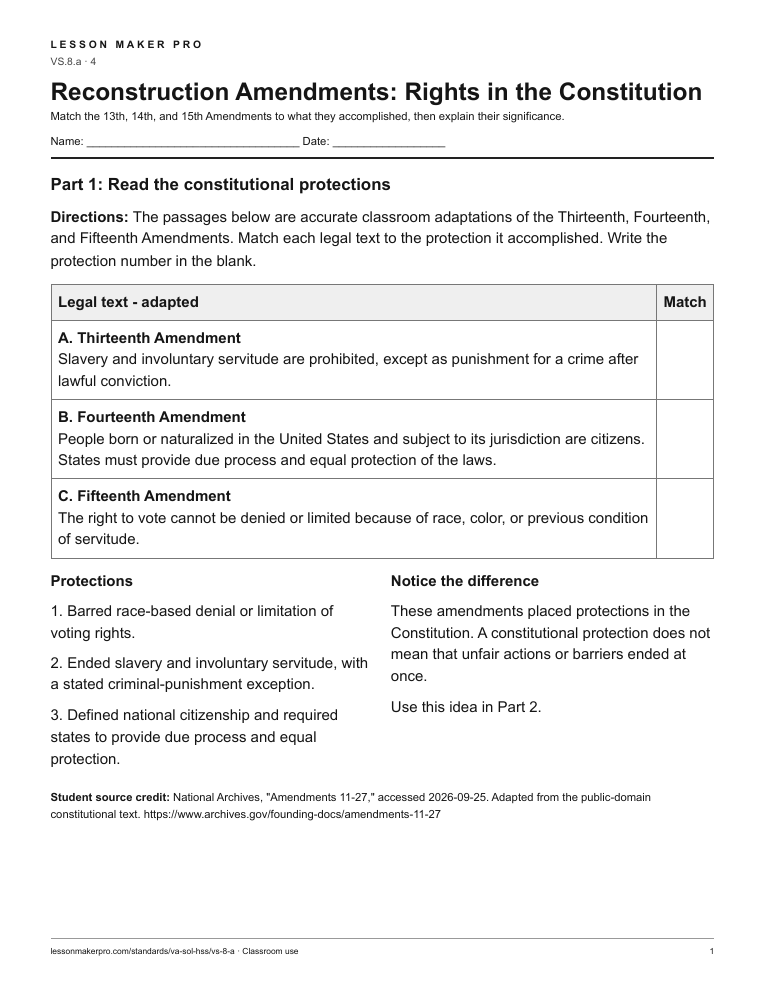
A ready-to-print activity worksheet aligned to VS.8.a, with an answer key for the teacher on its own page. No account needed.
PDF, US Letter, prints cleanly in black and white.
Download the worksheetKeep exploring
Related Standards
- CE.6.b
describing the rights and privileges guaranteed by the First Amendment, including freedoms of religion, speech, press, assembly, and petition, the rights guaran...
- USII.2.b
analyzing the goals and effects of the Reconstruction Amendments, the Freedmen’s Bureau, and civil rights policies that changed the meaning of citizenship in th...
- VS.8.e
describing the effect of the Supreme Court’s decision in Plessy v. Ferguson
- 3.1.b
describing the rights guaranteed to citizens in the First Amendment
Turn this exact standard into a lesson
Grade, subject, topic, and the complete standard are prefilled. Create one free, no account needed.
Also for this standard:Make a WorksheetMake a QuizMake a Sub Lesson