Virginia SOL 2.5.d
The Standard
- 2.5
- The student will use history and social science skills to identify the geographic location, use of resources, and contributions of Indigenous people past and present, including
understanding tribal sovereignty, and the importance of land, history, and culture.
Virginia Standards of Learning for History and Social Science
Teacher's field guide
What This Standard Means
What Students Need to Do
- Students explain that Tribal Nations are present-day communities with the authority to govern themselves. They describe how land connects a nation to its history, resources, traditions, and community life.
What Mastery Looks Like
- A student can explain sovereignty in their own words and give an example, such as making community rules or choosing leaders. They can explain why a particular place, tradition, or historical account matters to a named Tribal Nation.
Common Misconceptions
- Students may think Tribal Nations existed only in the past or that all tribes share one culture. They may think sovereignty means total independence from every other government. They may view land only as property, missing connections to ancestors, stories, resources, and community life.
How to Assess It
- Exit ticket: A Tribal Nation creates rules for a cultural center on its land. What does this show about sovereignty, and why might the center matter?
Lesson moves
Ways to Teach It
Build a class web with cards labeled government, land, history, language, and traditions, using sourced examples from one Virginia Tribal Nation.
Ask, "Why might a Tribal Nation protect a river, place name, or language?" and have students support one answer with evidence.
Play a card sort using community rules, language classes, and river care, then label each government, culture, land, or overlap.
Visit an official Virginia Tribal Nation website and record one current government service, cultural program, or land care project.
Free download
Printable 2.5.d Worksheet
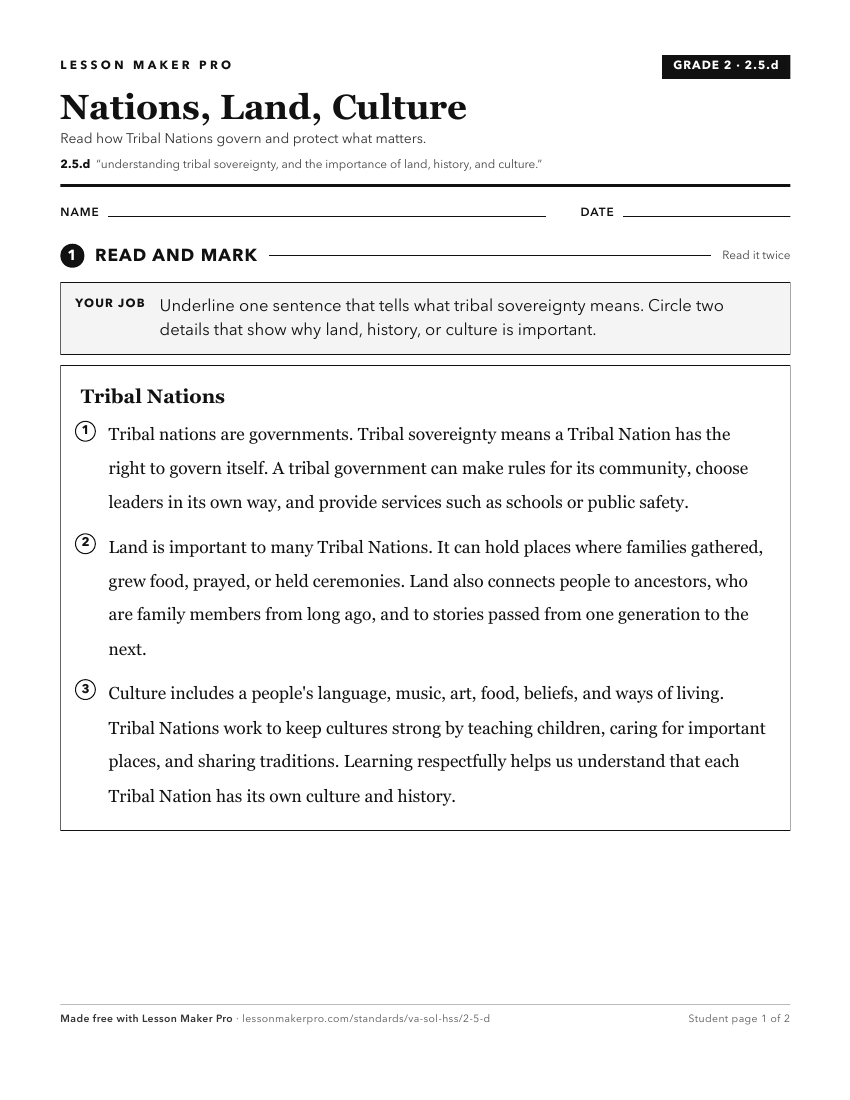
A ready-to-print activity worksheet aligned to 2.5.d, with an answer key for the teacher on its own page. No account needed.
PDF, US Letter, prints cleanly in black and white.
Download the worksheetKeep exploring
Related Standards
- 2.5
The student will use history and social science skills to identify the geographic location, use of resources, and contributions of Indigenous people past and pr...
- VS.2.c
describing the diversity among the Indigenous nations
- WG.14.a
identifying and describing characteristics that contribute to cultural identity, cultural groups, and cultural landscapes
- 2.5.b
Indigenous nations and tribes of the Plains
Turn this exact standard into a lesson
Grade, subject, topic, and the complete standard are prefilled. Create one free, no account needed.
Also for this standard:Make a WorksheetMake a QuizMake a Sub Lesson