Virginia SOL 5.RI.2.C
The Standard
Determine the author’s purpose(s) and describe how the author’s perspective (e.g., beliefs, assumptions, biases) influences the meaning of the text.
Virginia Standards of Learning for English · Craft and Style
Teacher's field guide
What This Standard Means
What Students Need to Do
- Students identify what an author wants readers to know, believe, feel, or do, including more than one purpose. They use word choice and selected details to infer beliefs, assumptions, or bias.
What Mastery Looks Like
- Students name a clear primary purpose and any secondary purpose. They cite specific words or details that reveal the author’s perspective and explain how it shapes the message.
Common Misconceptions
- Students may label every informational text as simply “to inform” and stop there. They may confuse perspective with topic or assume bias means every claim is false.
How to Assess It
- Give students a short article arguing for later school start times. Ask: “What is the author trying to accomplish, and how does one belief shape the message?”
Lesson moves
Ways to Teach It
Give pairs two reports about the same event; students highlight loaded words in one color and emphasized or omitted details in another.
Write: Which belief seems to guide the author, and how does one sentence reveal it?
Play Purpose and Perspective Match by pairing passage cards with purpose cards, then defending each match with a quoted clue.
Compare a cereal advertisement with its nutrition label, then explain how the company’s goal shapes the claims and details it presents.
Free download
Printable 5.RI.2.C Worksheet
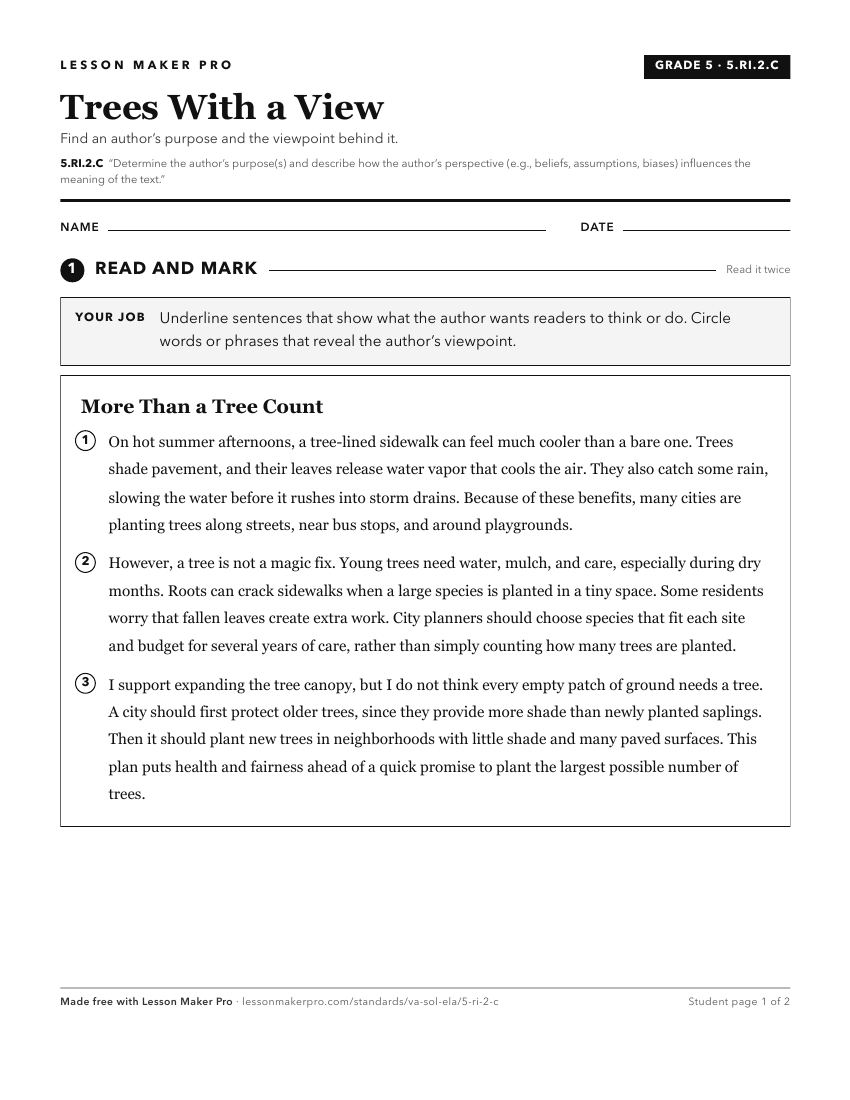
A ready-to-print activity worksheet aligned to 5.RI.2.C, with an answer key for the teacher on its own page. No account needed.
PDF, US Letter, prints cleanly in black and white.
Download the worksheetKeep exploring
Related Standards
- 3.RI.2.C
Identify the author’s purpose for writing, including what the author wants to answer, explain, or describe.
- 7.RI.2.C
Analyze how an author’s purpose(s) reflects the author’s perspective (e.g., beliefs, assumptions, biases) and influences the meaning of an informational text.
- 11.RI.2.A
Examine how textual elements and organizational patterns contribute to meaning and the author’s purpose.
- 6.RI.2.C
Explain how an author establishes and conveys a perspective or purpose in an informational text.
Turn this exact standard into a lesson
Grade, subject, topic, and the complete standard are prefilled. Create one free, no account needed.
Also for this standard:Make a WorksheetMake a QuizMake a Sub Lesson