Virginia SOL 3.RV.1.D
The Standard
Use the context of a sentence to apply knowledge of homophones.
Virginia Standards of Learning for English · Vocabulary Development and Word Analysis
Teacher's field guide
What This Standard Means
What Students Need to Do
- Students use words around an unfamiliar blank or homophone to decide which meaning fits. They select the spelling that matches that meaning.
What Mastery Looks Like
- Students choose the correct spelling of a homophone to complete a sentence. They explain which nearby words helped them identify the intended meaning.
Common Misconceptions
- Students may choose a word because it sounds right without checking its meaning. They may also confuse common sets such as there, their, and they’re, or to, too, and two.
How to Assess It
- Exit ticket: Complete “We left ___ backpacks over ___ by the door” with their or there, then underline the clue for each choice.
Lesson moves
Ways to Teach It
Give pairs homophone cards and sentence strips, then have students place each card in the sentence where its meaning fits.
Ask students to write one sentence with sea and one with see, then explain the context clues to a partner.
Play Homophone Bingo by reading sentences aloud while students cover the correctly spelled word on their boards.
Have students proofread a mock class announcement and correct homophone errors such as no for know and right for write.
Free download
Printable 3.RV.1.D Worksheet
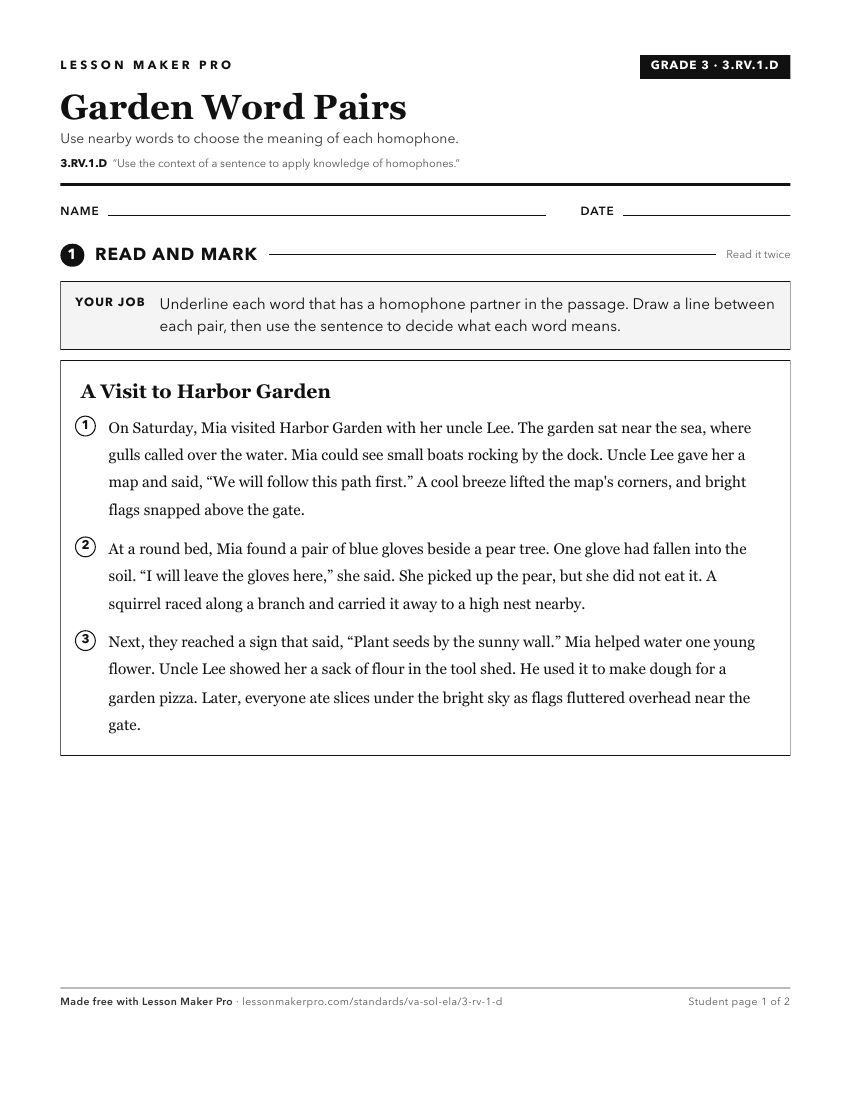
A ready-to-print activity worksheet aligned to 3.RV.1.D, with an answer key for the teacher on its own page. No account needed.
PDF, US Letter, prints cleanly in black and white.
Download the worksheetKeep exploring
Related Standards
Turn this exact standard into a lesson
Grade, subject, topic, and the complete standard are prefilled. Create one free, no account needed.
Also for this standard:Make a WorksheetMake a QuizMake a Sub Lesson