Virginia SOL 12.C.1.A.iii
The Standard
Summarizing points of agreement and disagreement.
Virginia Standards of Learning for English · Communication, Listening, and Collaboration
Teacher's field guide
What This Standard Means
What Students Need to Do
- Students listen closely, track each speaker’s position, and identify where ideas align or conflict. They summarize those points fairly without adding their own judgment.
What Mastery Looks Like
- Students give a brief, neutral account of the group’s shared views and disputed points. They attribute ideas accurately and distinguish disagreements about claims, evidence, or reasoning.
Common Misconceptions
- Students may mix their own opinion into the summary or describe disagreement as personal conflict. They may also claim consensus when only some speakers agreed, or overlook differences in reasoning.
How to Assess It
- After a five-minute group discussion, ask students to write one point of agreement, one point of disagreement, and a speaker statement supporting each.
Lesson moves
Ways to Teach It
Give groups color-coded claim cards to sort into agreement, disagreement, and unresolved question columns after discussing a short editorial.
Discuss whether schools should limit student phone use, then write a neutral three-sentence summary of the group’s agreements and disagreements.
Run a paraphrase relay where each student restates the previous speaker’s position before adding a new point.
Read a local meeting transcript and identify where participants agree on the problem but disagree about the proposed solution.
Free download
Printable 12.C.1.A.iii Worksheet
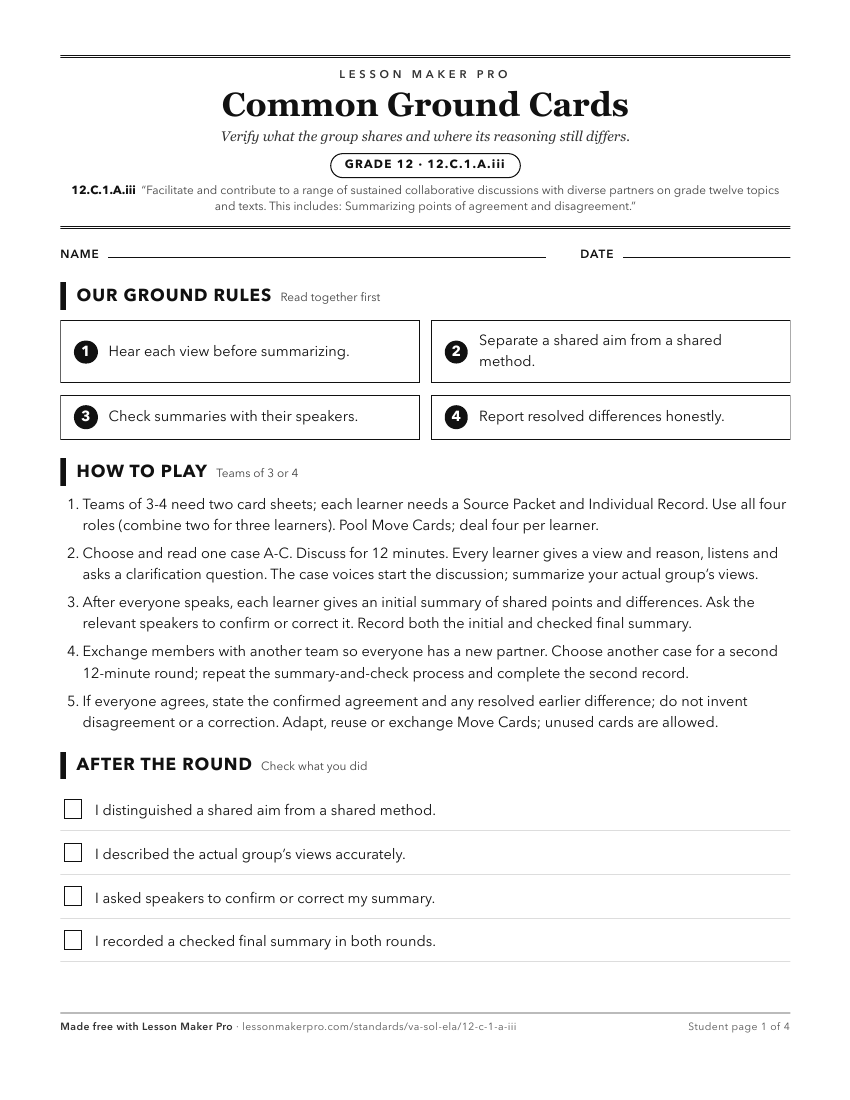
A ready-to-print activity worksheet aligned to 12.C.1.A.iii, with an answer key for the teacher on its own page. No account needed.
PDF, US Letter, prints cleanly in black and white.
Download the worksheetKeep exploring
Related Standards
Turn this exact standard into a lesson
Grade, subject, topic, and the complete standard are prefilled. Create one free, no account needed.
Also for this standard:Make a WorksheetMake a QuizMake a Sub Lesson