Texas TEKS 6.11.A
The Standard
- 6.11
- The student understands that the nature of citizenship varies among societies
describe and compare roles and responsibilities of citizens in various contemporary societies, including the United States
Texas Essential Knowledge and Skills for Social Studies
Teacher's field guide
What This Standard Means
What Students Need to Do
- Students use current examples to explain what people must do by law and how they can take part in civic life. They compare countries, noting shared expectations and differences tied to laws and government systems.
What Mastery Looks Like
- A student can compare examples such as paying taxes, voting, jury service, and national service across two or more countries. The student labels each example as required or voluntary and supports claims with a reliable source.
Common Misconceptions
- Students often assume voting, jury service, and military service are required everywhere. They may confuse rights with responsibilities, treat all residents as citizens, or rely on stereotypes instead of current evidence.
How to Assess It
- Exit ticket: Compare the United States with one studied country. List one shared responsibility, one difference, and whether each example is required or voluntary.
Lesson moves
Ways to Teach It
Sort action cards for the United States and Australia into legally required, voluntary civic role, or not limited to citizens.
Write a response to: Should voting be compulsory? Use one fact from Australia and one from the United States.
Play Country Match by pairing citizen duty cards with source cards from the United States, Japan, Brazil, and Australia.
Compare official government page excerpts about voting and jury service, then explain how those rules affect an adult citizen.
Free download
Printable 6.11.A Worksheet
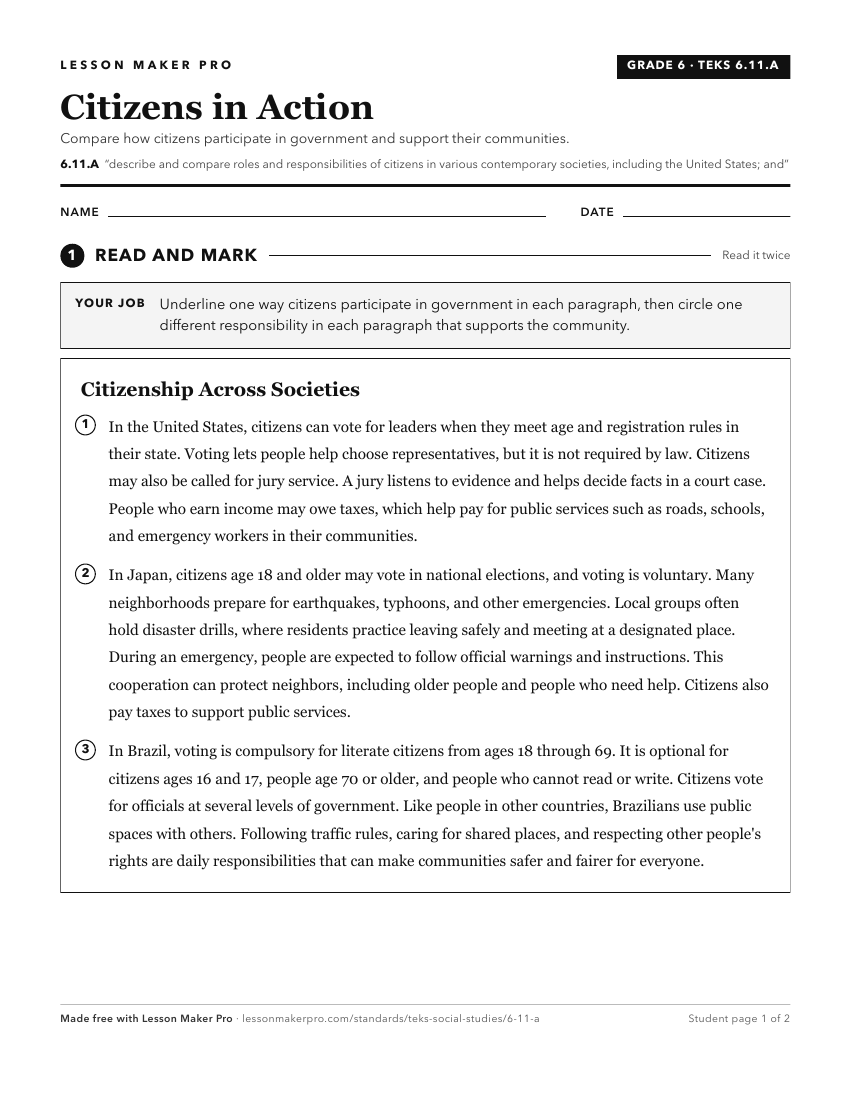
A ready-to-print activity worksheet aligned to 6.11.A, with an answer key for the teacher on its own page. No account needed.
PDF, US Letter, prints cleanly in black and white.
Download the worksheetKeep exploring
Related Standards
- 6.12.A
identify and explain the duty of civic participation in societies with representative governments
- 6.12.B
explain relationships among rights, responsibilities, and duties in societies with representative governments
- 6.11.B
explain how opportunities for citizens to participate in and influence the political process vary among various contemporary societies
- 6.12
The student understands the relationship among individual rights, responsibilities, duties, and freedoms in societies with representative governments
Turn this exact standard into a lesson
Grade, subject, topic, and the complete standard are prefilled. Create one free, no account needed.
Also for this standard:Make a WorksheetMake a QuizMake a Sub Lesson