Texas TEKS 3.3
TEKS Knowledge Statement (Expectation Cluster)
Geography. The student understands how humans adapt to and/or modify the physical environment. The student is expected to: describe similarities and differences in the physical environment, including climate, landforms, natural resources, and natural hazards; identify and compare how people in different communities adapt to or modify the physical environment in which they live such as deserts, mountains, wetlands, and plains; and describe the effects of human processes such as building new homes, conservation, and pollution in shaping the landscape.
Texas Essential Knowledge and Skills for Social Studies
Cluster contents
Student Expectations in This Statement
3.3 is a TEKS knowledge and skills statement. These are the student expectations under it.
- 3.3.A
describe similarities and differences in the physical environment, including climate, landforms, natural resources, and natural hazards
- 3.3.B
identify and compare how people in different communities adapt to or modify the physical environment in which they live such as deserts, mountains, wetlands, an...
- 3.3.C
describe the effects of human processes such as building new homes, conservation, and pollution in shaping the landscape.
Teacher's field guide
What This Cluster Means
What Students Need to Do
- Students compare places by climate, terrain, resources, and natural risks. They explain how communities respond to local conditions and change their surroundings. They describe benefits and harms caused by development, protection efforts, and pollution.
What Mastery Looks Like
- Given maps or photos of two communities, students identify similarities and differences using visible evidence. They explain one way people adjust their lives and one way people change the land, including the results.
Common Misconceptions
- Students may confuse daily weather with climate, or natural hazards with natural resources. They may think adapting always means changing the land. They may also assume every human-made change is harmful.
How to Assess It
- Show photos of a mountain town and a wetland community. Ask students to name one physical difference, one community response, and one effect on the landscape.
Lesson moves
Ways to Teach It
Build desert and wetland communities in trays of sand, clay, and water, then add homes and roads and label their effects.
Write a response to this prompt: Where should a family build near a river, and what risks and resources should they consider?
Sort action cards into adapt, modify, or both, then match each action to a desert, mountain, wetland, or plain.
Compare local aerial photos from two years, then mark new buildings, protected land, and places where runoff or pollution might increase.
Free download
Printable 3.3 Worksheet
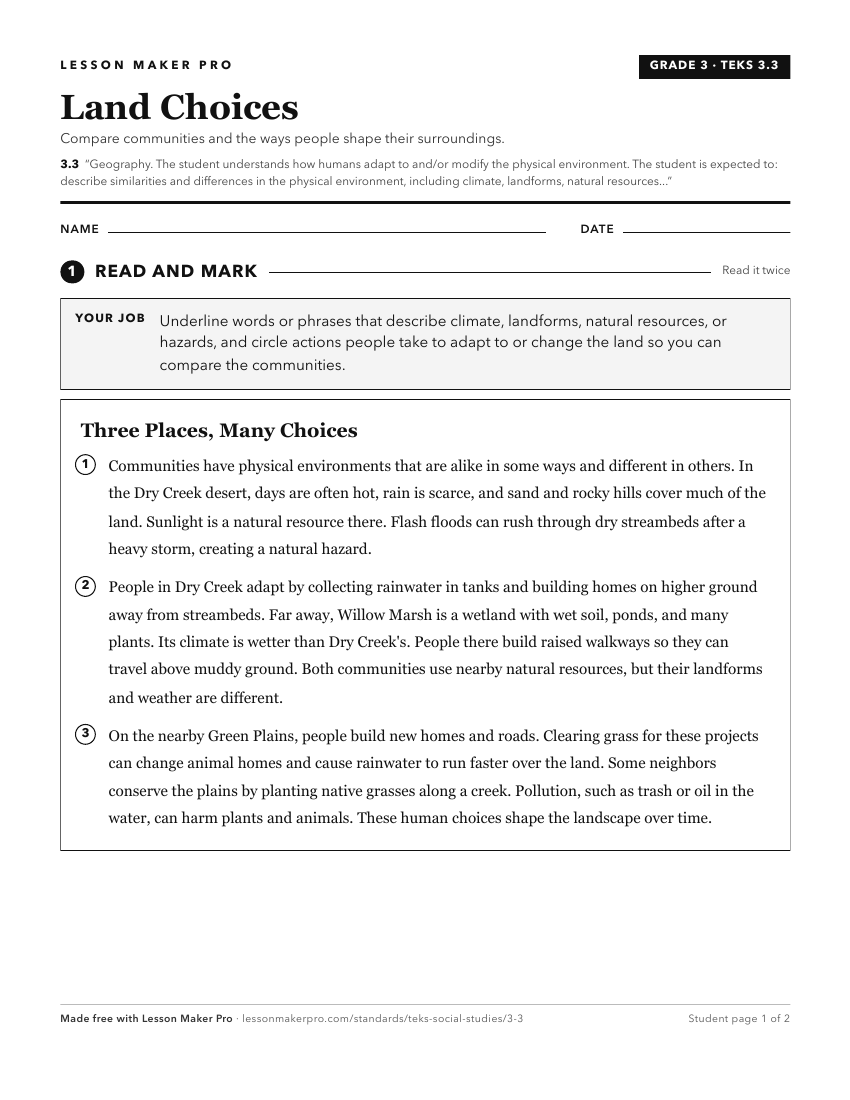
A ready-to-print activity worksheet aligned to 3.3, with an answer key for the teacher on its own page. No account needed.
PDF, US Letter, prints cleanly in black and white.
Download the worksheetKeep exploring
Related Standards
- 8.11
Geography. The student understands the physical characteristics of North America and how humans adapted to and modified the environment through the mid-19th cen...
- 4.8
Geography. The student understands how people adapt to and modify their environment. The student is expected to:
- 5.8
Geography. The student understands how people adapt to and modify their environment. The student is expected to:
- 2.5
Geography. The student understands how humans use and modify the physical environment. The student is expected to:
Turn this cluster into a lesson
Grade, subject, topic, and the complete cluster are prefilled. Create one free, no account needed.
Also for this cluster:Make a WorksheetMake a QuizMake a Sub Lesson