Texas TEKS 8.10.C
The Standard
- 8.10
- The student knows that interactions between Earth, ocean, and weather systems impact climate.
describe the interactions between ocean currents and air masses that produce tropical cyclones, including typhoons and hurricanes.
Texas Essential Knowledge and Skills for Science
Teacher's field guide
What This Standard Means
What Students Need to Do
- Students explain how warm ocean currents heat and moisten the air above them. They connect rising moist air, lower pressure, condensation, and rotating winds to cyclone formation and strengthening. They recognize that hurricanes and typhoons are the same type of storm in different regions.
What Mastery Looks Like
- Students can label a diagram showing warm water, moist rising air, low pressure, clouds, and rotating winds. They can predict where a tropical cyclone may strengthen or weaken using ocean temperature and air mass data.
Common Misconceptions
- Students may think ocean currents push the storm along, rather than mainly supplying or removing heat. They may also think hurricanes and typhoons are different storm types, or that any warm day can produce one.
How to Assess It
- Give students a map showing a storm crossing warm water, cool water, and land. Ask them to predict where it will strengthen or weaken and explain why in two sentences.
Lesson moves
Ways to Teach It
Set cups of warm and cool water under plastic wrap, compare condensation, and connect the result to moisture entering a developing storm.
Ask students to explain why a cyclone weakens over land even when the surrounding air remains warm.
Have teams arrange cards showing warm current, evaporation, rising air, condensation, low pressure, and rotating winds into a correct sequence.
Use a current NOAA sea surface temperature map to identify areas where a tropical cyclone could gain energy.
Free download
Printable 8.10.C Worksheet
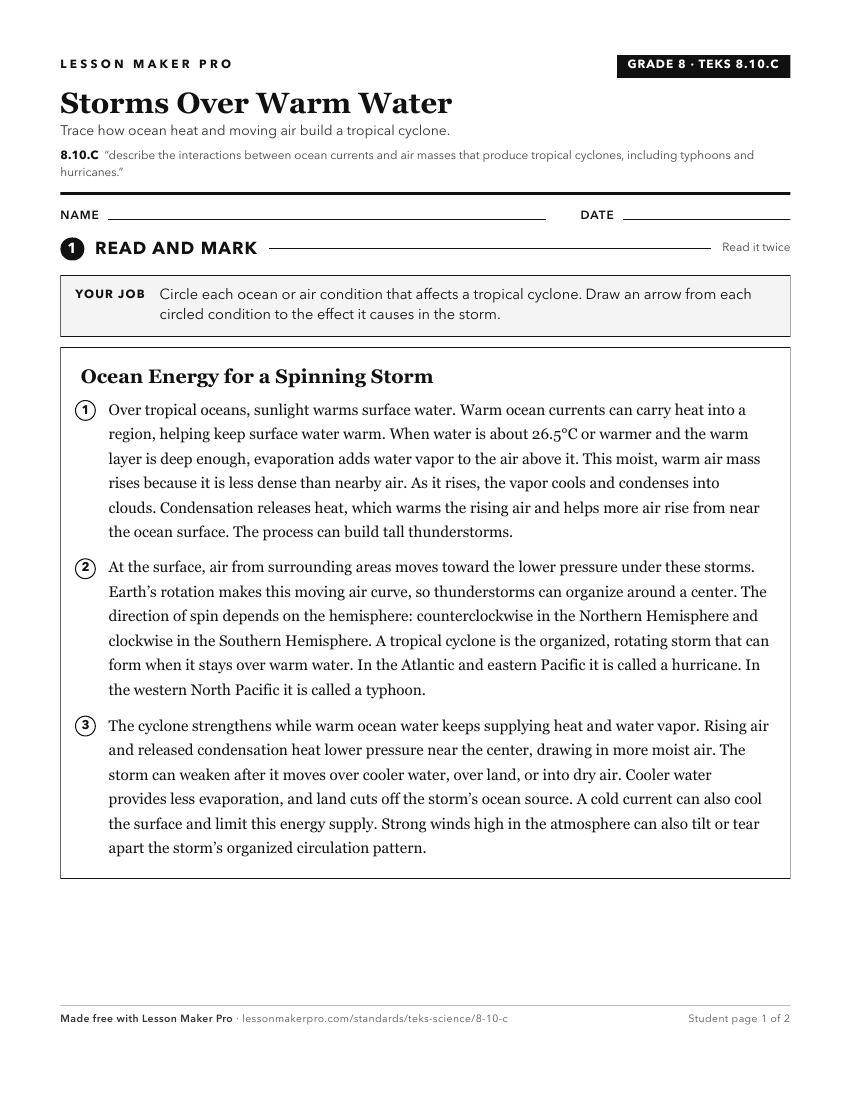
A ready-to-print activity worksheet aligned to 8.10.C, with an answer key for the teacher on its own page. No account needed.
PDF, US Letter, prints cleanly in black and white.
Download the worksheetKeep exploring
Related Standards
- 5.10.A
explain how the Sun and the ocean interact in the water cycle and affect weather
- 8.10.B
identify global patterns of atmospheric movement and how they influence local weather
- 8.10
The student knows that interactions between Earth, ocean, and weather systems impact climate.
- 8.10.A
describe how energy from the Sun, hydrosphere, and atmosphere interact and influence weather and climate
Turn this exact standard into a lesson
Grade, subject, topic, and the complete standard are prefilled. Create one free, no account needed.
Also for this standard:Make a WorksheetMake a QuizMake a Sub Lesson