Texas TEKS 6.10.C
The Standard
- 6.10
- Earth and space. The student understands the rock cycle and the structure of Earth. The student is expected to:
describe how metamorphic, igneous, and sedimentary rocks form and change through geologic processes in the rock cycle.
Texas Essential Knowledge and Skills for Science
Teacher's field guide
What This Standard Means
What Students Need to Do
- Students explain how cooling, heat, pressure, weathering, erosion, deposition, compaction, cementation, and melting produce different rocks. They trace more than one possible path through the cycle.
What Mastery Looks Like
- Students can label a rock cycle diagram with rock types and the processes between them. Given any starting rock, they can explain a valid sequence that changes it into another type.
Common Misconceptions
- Students may think rocks move through the cycle in one fixed order. They may confuse sediment with sedimentary rock or think heat always causes melting instead of metamorphism.
How to Assess It
- Give students this exit prompt: "Start with granite and show one way it could become sandstone, labeling each process in order."
Lesson moves
Ways to Teach It
Press grated crayons into layers for compaction, warm without melting for metamorphism, then melt and cool until solid for igneous rock formation.
Write how granite could become sandstone, naming each process and the material formed at each step.
Sort rock type, process, and condition cards into valid pathways, then challenge a partner to find a different pathway.
Examine photos of granite countertops, slate tiles, and sandstone buildings, then match each material to its formation process.
Free download
Printable 6.10.C Worksheet
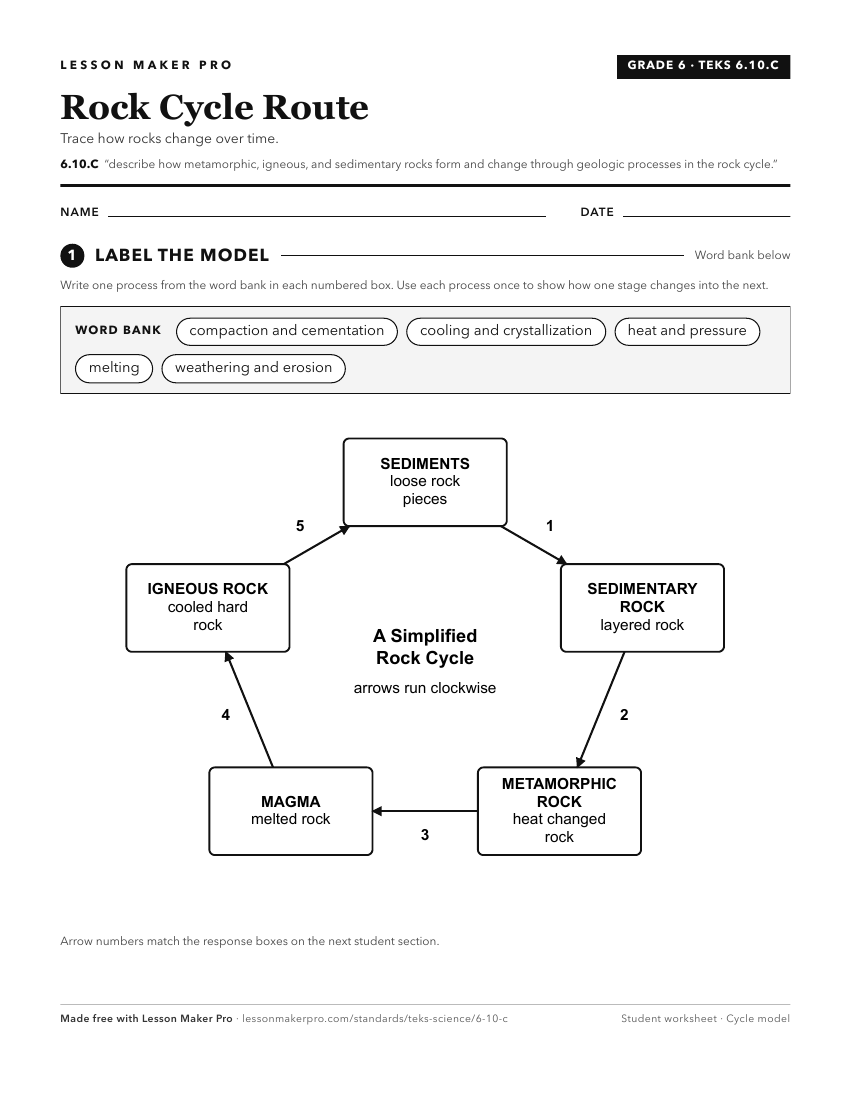
A ready-to-print activity worksheet aligned to 6.10.C, with an answer key for the teacher on its own page. No account needed.
PDF, US Letter, prints cleanly in black and white.
Download the worksheetKeep exploring
Related Standards
- K.10.A
describe and classify rocks by the observable properties of size, shape, color, and texture
- 6.10
Earth and space. The student understands the rock cycle and the structure of Earth. The student is expected to:
- 5.10.B
model and describe the processes that led to the formation of sedimentary rocks and fossil fuels
- 4.10.B
model and describe slow changes to Earth's surface caused by weathering, erosion, and deposition from water, wind, and ice
Turn this exact standard into a lesson
Grade, subject, topic, and the complete standard are prefilled. Create one free, no account needed.
Also for this standard:Make a WorksheetMake a QuizMake a Sub Lesson