Texas TEKS 5.5.D
The Standard
- 5.5
- Recurring themes and concepts. The student understands that recurring themes and concepts provide a framework for making connections across disciplines. The student is expected to:
examine and model the parts of a system and their interdependence in the function of the system
Texas Essential Knowledge and Skills for Science
Teacher's field guide
What This Standard Means
What Students Need to Do
- Students identify the parts within a system and explain the job of each part. They create models showing how the parts interact and predict how changing one part affects the whole system.
What Mastery Looks Like
- A student can label a system model with parts, jobs, and connections. The student can use the model to explain why the system works or what happens when a part fails.
Common Misconceptions
- Students may list parts without showing how they affect one another. They may think systems must be machines, or that removing one part will not change the system's function.
How to Assess It
- Exit ticket: Draw a battery-powered flashlight system and label the battery, wires, switch, and bulb. Explain what happens if the switch is removed.
Lesson moves
Ways to Teach It
Give pairs a battery, bulb, switch, and wires to build a circuit, then sketch how each part helps the bulb light.
Ask students to write: Which part of our classroom door system could fail, and how would that change the whole system?
Play System Match with cards showing parts, jobs, and effects of removal from a bicycle, plant, and simple circuit.
Have students map the school lunch line, then predict how a broken register or missing tray station affects service.
Free download
Printable 5.5.D Worksheet
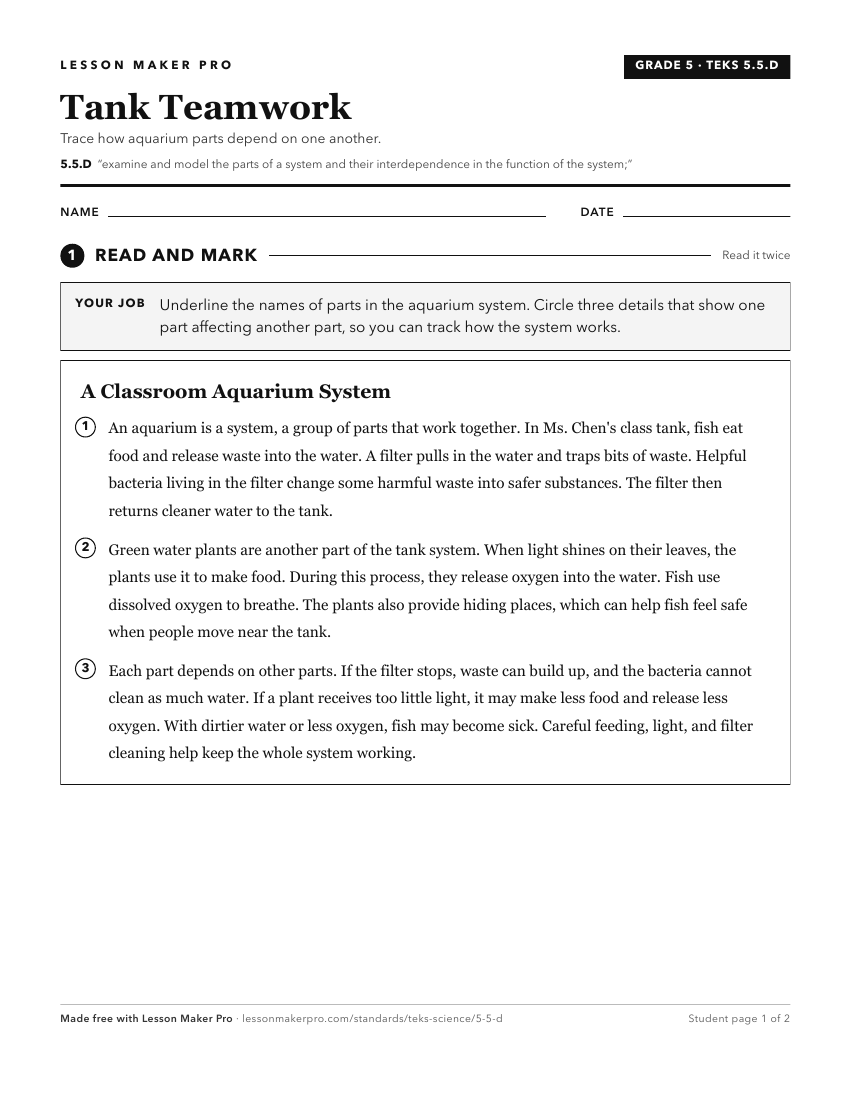
A ready-to-print activity worksheet aligned to 5.5.D, with an answer key for the teacher on its own page. No account needed.
PDF, US Letter, prints cleanly in black and white.
Download the worksheetKeep exploring
Related Standards
Turn this exact standard into a lesson
Grade, subject, topic, and the complete standard are prefilled. Create one free, no account needed.
Also for this standard:Make a WorksheetMake a QuizMake a Sub Lesson