Texas TEKS 4.8.B
The Standard
- 4.8
- Force, motion, and energy. The student knows that energy is everywhere and can be observed in cycles, patterns, and systems. The student is expected to:
identify conductors and insulators of thermal and electrical energy
Texas Essential Knowledge and Skills for Science
Teacher's field guide
What This Standard Means
What Students Need to Do
- Students identify whether common materials conduct thermal energy, electrical energy, both, or neither. They use observations from heat and circuit tests to sort materials as conductors or insulators.
What Mastery Looks Like
- Students correctly classify metal, wood, plastic, rubber, and glass using test results. They explain that conductors transfer energy readily, while insulators limit its transfer.
Common Misconceptions
- Students may think a conductor creates heat or electricity rather than transfers energy. They may also think insulators stop all energy transfer or that objects feeling cold are always insulators.
How to Assess It
- Give students results from heat and circuit tests for metal, plastic, and wood. Ask them to label each material and cite one result as evidence.
Lesson moves
Ways to Teach It
Place metal, wood, and plastic spoons in warm water, then compare how quickly each handle warms.
Ask students why a cooking pot uses metal for the pan but plastic or wood for the handle.
Play a sorting game with material cards labeled thermal conductor, thermal insulator, electrical conductor, or electrical insulator.
Examine a power cord and cooking pan, then identify how each material protects people or transfers energy.
Free download
Printable 4.8.B Worksheet
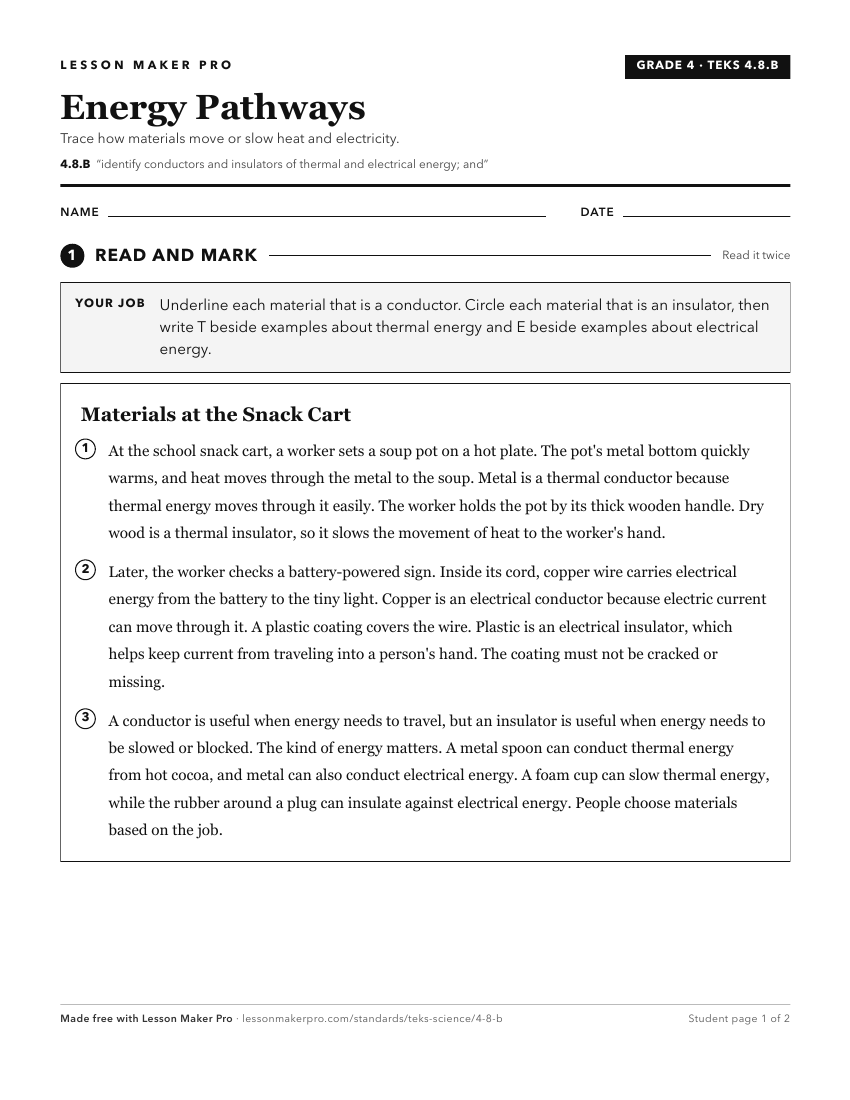
A ready-to-print activity worksheet aligned to 4.8.B, with an answer key for the teacher on its own page. No account needed.
PDF, US Letter, prints cleanly in black and white.
Download the worksheetKeep exploring
Related Standards
Turn this exact standard into a lesson
Grade, subject, topic, and the complete standard are prefilled. Create one free, no account needed.
Also for this standard:Make a WorksheetMake a QuizMake a Sub Lesson