Texas TEKS 2.3.C
The Standard
- 2.3
- Scientific and engineering practices. The student develops evidence-based explanations and communicates findings, conclusions, and proposed solutions. The student is expected to:
listen actively to others' explanations to identify important evidence and engage respectfully in scientific discussion.
Texas Essential Knowledge and Skills for Science
Teacher's field guide
What This Standard Means
What Students Need to Do
- Students listen to a classmate’s science explanation and pick out observations or measurements that support the speaker’s idea. They take turns, refer to what was said, and ask polite questions when they need more information.
What Mastery Looks Like
- A student can accurately restate a partner’s main idea and name at least one supporting observation or measurement. The student waits for a turn, disagrees without insulting anyone, and asks a question tied to the explanation.
Common Misconceptions
- Students may repeat the speaker’s conclusion instead of naming the observation that supports it. They may interrupt to share their own idea or reject evidence because their prediction was different.
How to Assess It
- Read aloud: “The plant by the window grew 4 centimeters, while the plant in the closet grew 1 centimeter, so light helped the plant grow.” Students write the evidence they heard and one respectful response or question.
Lesson moves
Ways to Teach It
Give pairs ice cubes on metal and cloth; one student reports observations, while the partner records two supporting observations before switching roles.
Use the prompt, “Tell your partner which soil kept the most water, then restate one observation your partner shared.”
Play Evidence Echo: read a claim and three details, then teams earn a point by repeating only the detail that supports the claim.
Show a short weather report, then ask students to name the forecast, evidence the reporter used, and one respectful follow-up question.
Free download
Printable 2.3.C Worksheet
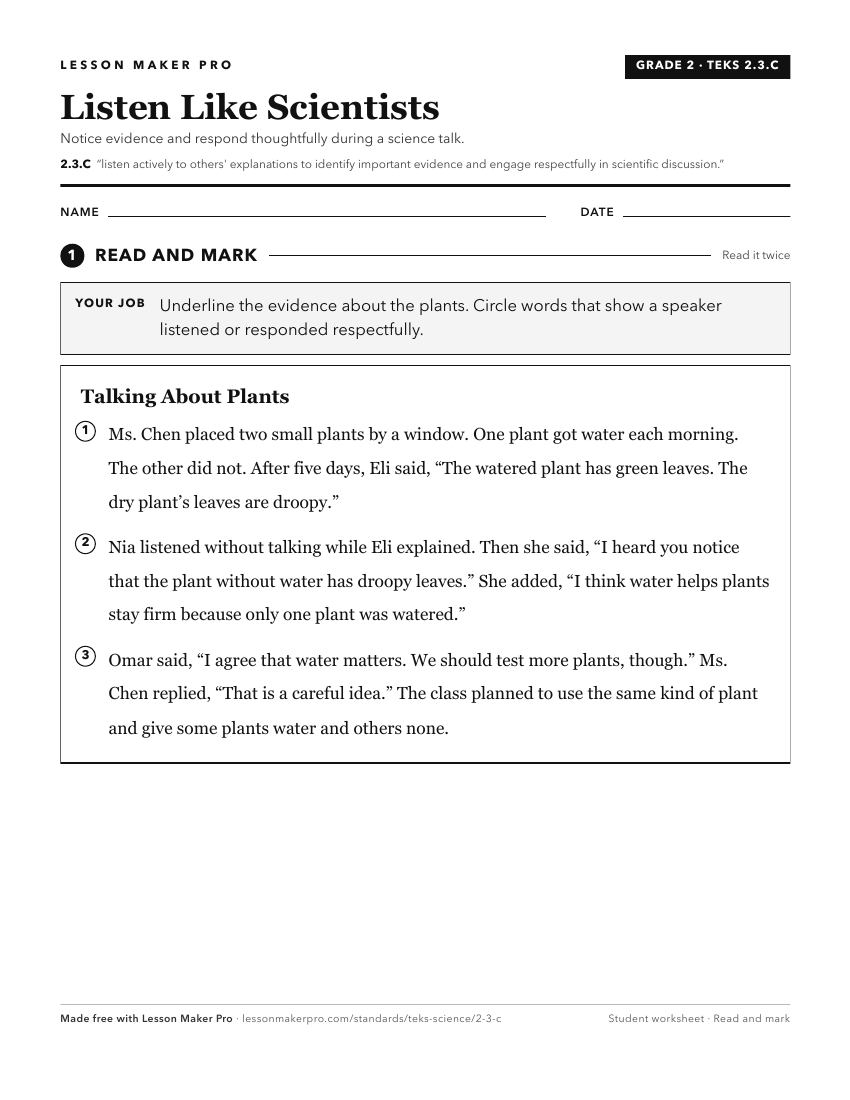
A ready-to-print activity worksheet aligned to 2.3.C, with an answer key for the teacher on its own page. No account needed.
PDF, US Letter, prints cleanly in black and white.
Download the worksheetKeep exploring
Related Standards
- 4.3.C
listen actively to others' explanations to identify relevant evidence and engage respectfully in scientific discussion.
- 1.3.C
The 1st Grade version of this standard.
- K.3.C
The Kindergarten version of this standard.
- 5.3.C
listen actively to others' explanations to identify relevant evidence and engage respectfully in scientific discussion.
Turn this exact standard into a lesson
Grade, subject, topic, and the complete standard are prefilled. Create one free, no account needed.
Also for this standard:Make a WorksheetMake a QuizMake a Sub Lesson