Texas TEKS 1.6.A
The Standard
- 1.6
- Matter and its properties. The student knows that objects have physical properties that determine how they are described and classified. The student is expected to:
classify objects by observable physical properties, including, shape, color, and texture, and attributes such as larger and smaller and heavier and lighter
Texas Essential Knowledge and Skills for Science
Teacher's field guide
What This Standard Means
What Students Need to Do
- Students observe familiar objects and describe what they notice. They sort objects into groups and compare them using size and weight words.
What Mastery Looks Like
- Students can choose a clear sorting rule and place each object correctly. They can explain their rule and compare two objects accurately.
Common Misconceptions
- Students may think the biggest object is always the heaviest. They may change sorting rules midway or confuse texture words such as smooth and rough.
How to Assess It
- Give each student four classroom objects. Say, “Sort these objects in one way, then explain your rule and compare two objects.”
Lesson moves
Ways to Teach It
Set out buttons, blocks, fabric scraps, and toy animals for students to sort into labeled hoops, then explain each group.
Ask, “Can two objects look different but belong in the same group?” Students draw an example and explain their thinking.
Play Mystery Sort by showing grouped picture cards and having teams identify the sorting rule before adding another card.
Compare grocery items by appearance, feel, size, and weight, then discuss how shoppers use these observations when choosing products.
Free download
Printable 1.6.A Worksheet
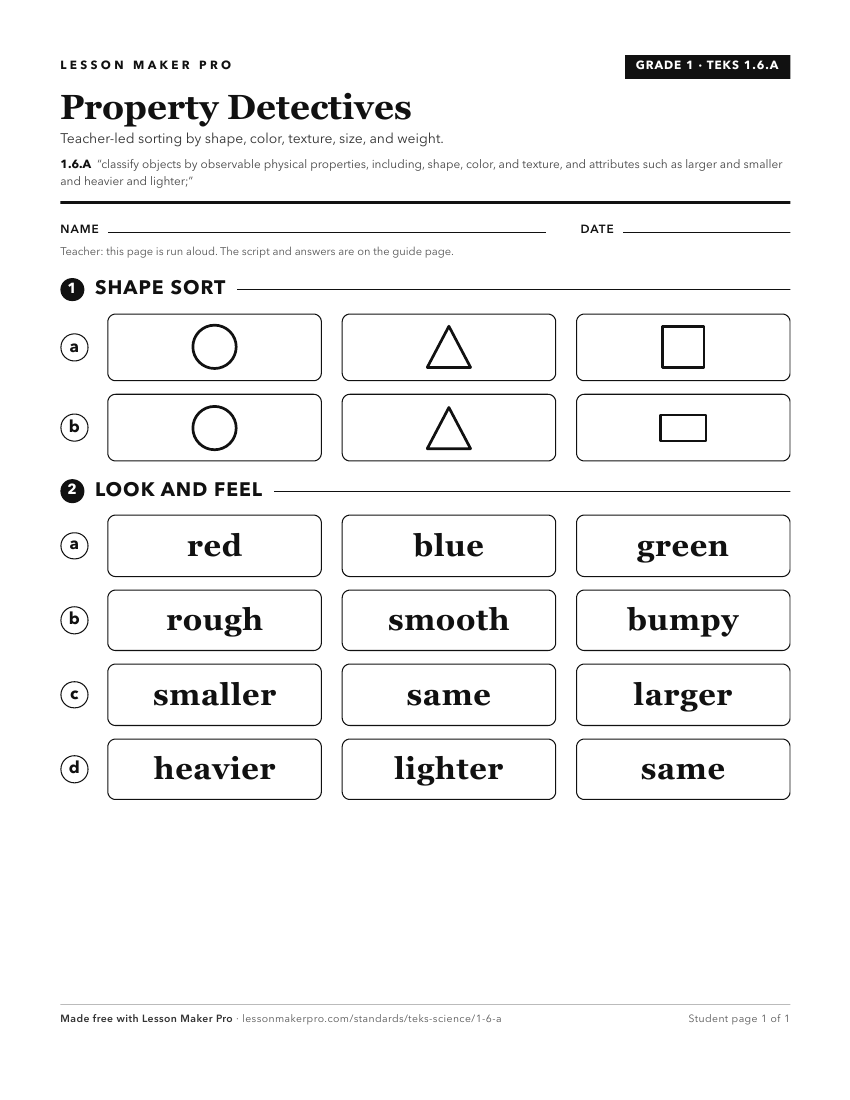
A ready-to-print activity worksheet aligned to 1.6.A, with an answer key for the teacher on its own page. No account needed.
PDF, US Letter, prints cleanly in black and white.
Download the worksheetKeep exploring
Related Standards
- 2.6.A
classify matter by observable physical properties, including texture, flexibility, and relative temperature, and identify whether a material is a solid or liqui...
- K.10.A
describe and classify rocks by the observable properties of size, shape, color, and texture
- 4.6.A
classify and describe matter using observable physical properties, including temperature, mass, magnetism, relative density (the ability to sink or float in wat...
- K.6
The student knows that objects have physical properties that determine how they are described and classified. The student is expected to identify and record obs...
Turn this exact standard into a lesson
Grade, subject, topic, and the complete standard are prefilled. Create one free, no account needed.
Also for this standard:Make a WorksheetMake a QuizMake a Sub Lesson