TEKS Math 1.2.G
The Standard
represent the comparison of two numbers to 100 using the symbols >, <, or =
Texas Essential Knowledge and Skills for Mathematics
Teacher's field guide
What This Standard Means
What Students Need to Do
- Students compare two numbers from 0 to 100 and choose the correct comparison symbol. They use tens, ones, or a number line to explain which number is greater.
What Mastery Looks Like
- A student correctly writes number sentences such as 47 > 39 and 62 = 62. The student reads each sentence aloud and explains the choice using tens and ones.
Common Misconceptions
- Students may think the symbol points to the greater number. Some compare only the ones digits, so they may claim 29 is greater than 31.
How to Assess It
- Exit ticket: Complete 38 __ 42, 56 __ 56, and 71 __ 69. Choose one answer and explain it using tens and ones.
Lesson moves
Ways to Teach It
Have students build 34 and 43 with base-ten blocks, then place the correct symbol card between the models.
Ask, “Mia says 28 is greater than 41 because 8 is greater than 1. Is she correct?”
Partners draw four digit cards, make two two-digit numbers, compare them, and earn a point for a correct symbol and explanation.
Compare the numbers of two classroom supplies, such as 26 crayons and 31 markers, then write and read the number sentence.
Free download
Printable 1.2.G Worksheet
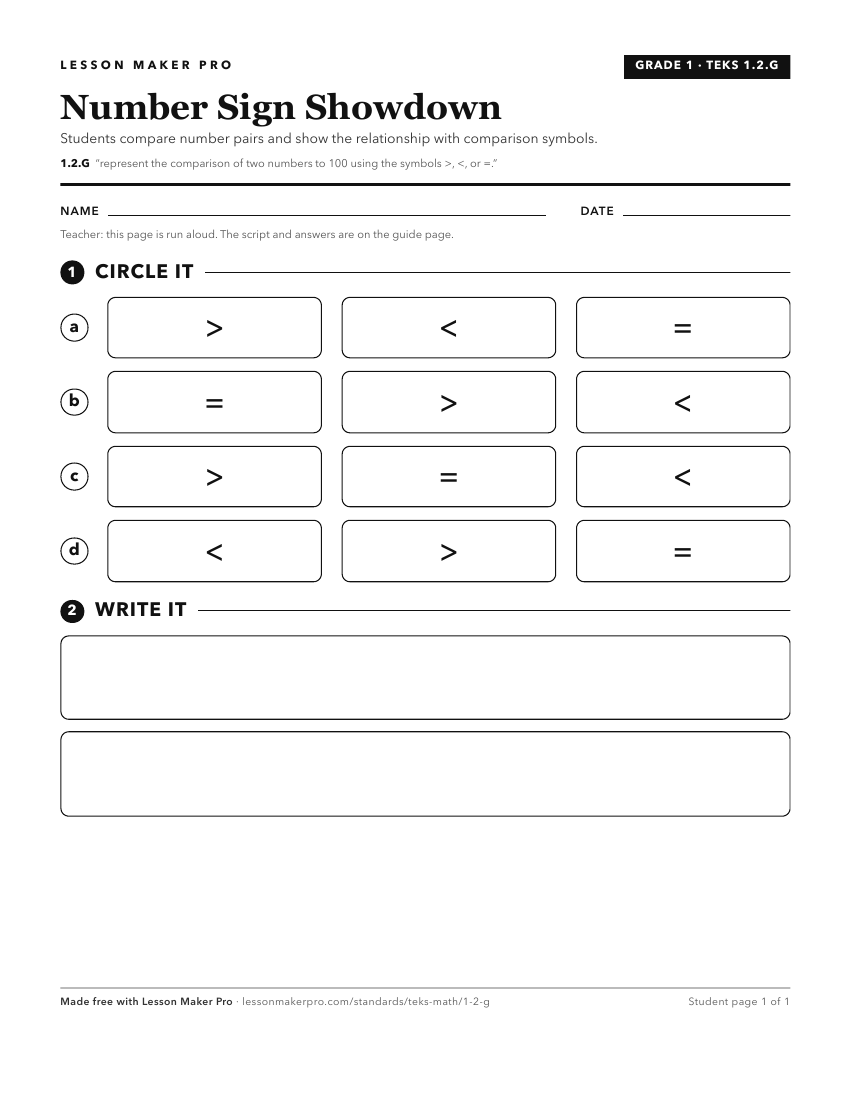
A ready-to-print activity worksheet aligned to 1.2.G, with an answer key for the teacher on its own page. No account needed.
PDF, US Letter, prints cleanly in black and white.
Download the worksheetKeep exploring
Related Standards
- 4.2.C
compare and order whole numbers to 1,000,000,000 and represent comparisons using the symbols >, <, or =
- 3.2.D
compare and order whole numbers up to 100,000 and represent comparisons using the symbols >, <, or =
- 5.2.B
compare and order two decimals to thousandths and represent comparisons using the symbols >, <, or =
- 4.3.D
compare two fractions with different numerators and different denominators and represent the comparison using the symbols >, =, or <
Turn this exact standard into a lesson
Grade, subject, topic, and the complete standard are prefilled. Create one free, no account needed.
Also for this standard:Make a WorksheetMake a QuizMake a Sub Lesson