TEKS ELAR K.5.B
The Standard
generate questions about text before, during, and after reading to deepen understanding and gain information with adult assistance
Texas Essential Knowledge and Skills for English Language Arts and Reading
Teacher's field guide
What This Standard Means
What Students Need to Do
- Students ask relevant questions before, during, and after listening to or reading a text. With adult help, they use those questions to clarify ideas and find information.
What Mastery Looks Like
- A student asks relevant questions using the cover, pictures, events, and new information. With teacher prompts, the student asks questions at several points and explains how an answer helped.
Common Misconceptions
- Children may make comments instead of asking questions, or ask questions unrelated to the book. They may also think questions are only asked before reading or only when they feel confused.
How to Assess It
- Read a short picture book aloud, pausing once midway. Ask each child to give one question before reading, one during reading, and one after reading.
Lesson moves
Ways to Teach It
Give children three sticky notes labeled before, during, and after, then help them draw or write one book question on each.
Pause during a read-aloud and ask, "What are you wondering now, and which picture or words made you wonder that?"
Play Question Sort by having children place question cards under before reading, during reading, or after reading headings.
Show a class lunch menu and have children ask questions before viewing details, while examining it, and after choosing a meal.
Free download
Printable K.5.B Worksheet
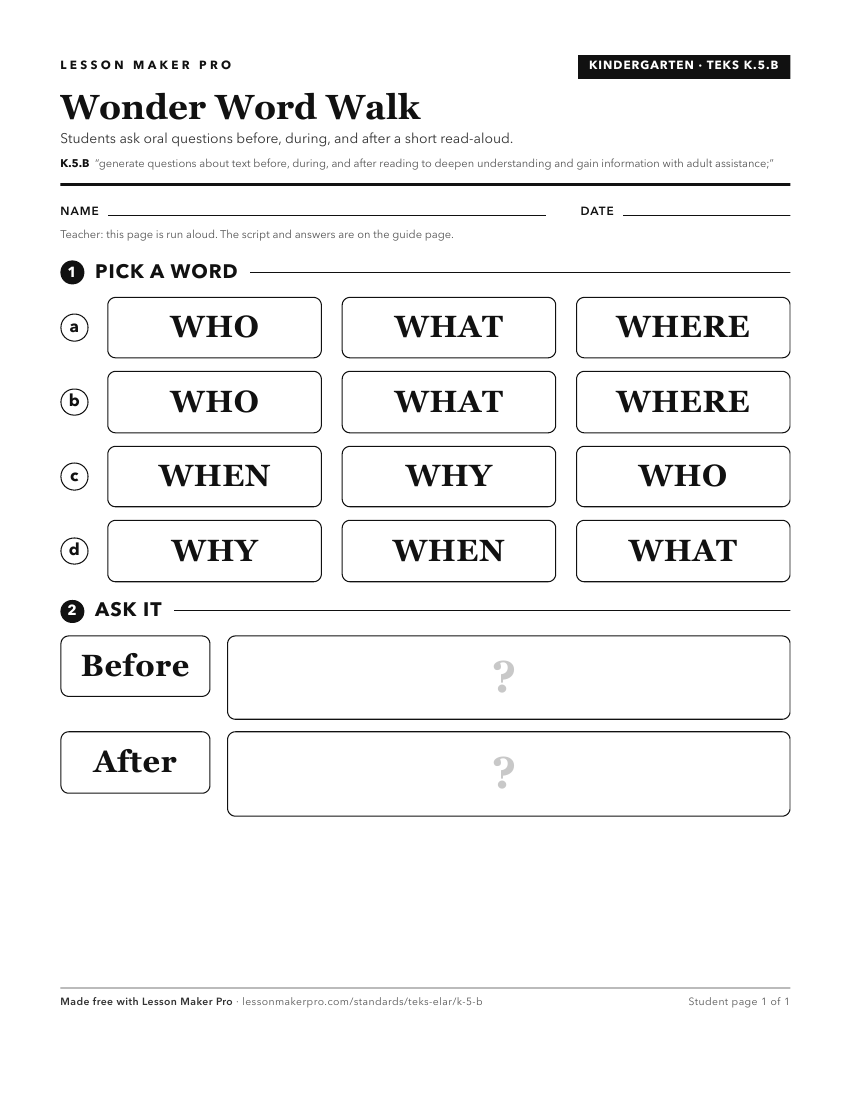
A ready-to-print activity worksheet aligned to K.5.B, with an answer key for the teacher on its own page. No account needed.
PDF, US Letter, prints cleanly in black and white.
Download the worksheetKeep exploring
Related Standards
- 2.6.B
generate questions about text before, during, and after reading to deepen understanding and gain information;
- 6.5.B
generate questions about text before, during, and after reading to deepen understanding and gain information;
- 1.6.B
The 1st Grade version of this standard.
- 3.6.B
generate questions about text before, during, and after reading to deepen understanding and gain information;
Turn this exact standard into a lesson
Grade, subject, topic, and the complete standard are prefilled. Create one free, no account needed.
Also for this standard:Make a WorksheetMake a QuizMake a Sub Lesson