TEKS ELAR 6.5.B
The Standard
generate questions about text before, during, and after reading to deepen understanding and gain information
Texas Essential Knowledge and Skills for English Language Arts and Reading
Teacher's field guide
What This Standard Means
What Students Need to Do
- Students generate useful questions before, during, and after reading. They use those questions to clarify ideas, make inferences, track understanding, and identify information they still need.
What Mastery Looks Like
- Before reading, students use titles and headings to ask questions that set a purpose. During and after reading, they ask deeper questions, revise earlier ones, and use the text to find answers.
Common Misconceptions
- Students may ask only yes-or-no questions or questions answered by one obvious detail. They may stop asking once reading begins or fail to revisit unanswered questions.
How to Assess It
- Give students a short article in three sections. Have them write one question before reading, one during reading, and one after reading, then answer one with evidence.
Lesson moves
Ways to Teach It
Give students three colors of sticky notes to record questions before, during, and after reading, then sort them as answered or unanswered.
Ask students to explain in writing which question most improved their understanding and cite the sentence that helped answer it.
Play Question Ladder, where pairs earn points for moving from factual questions to inference and synthesis questions about a shared passage.
Read a school announcement and have students ask questions before, during, and after reading to decide what action they need to take.
Free download
Printable 6.5.B Worksheet
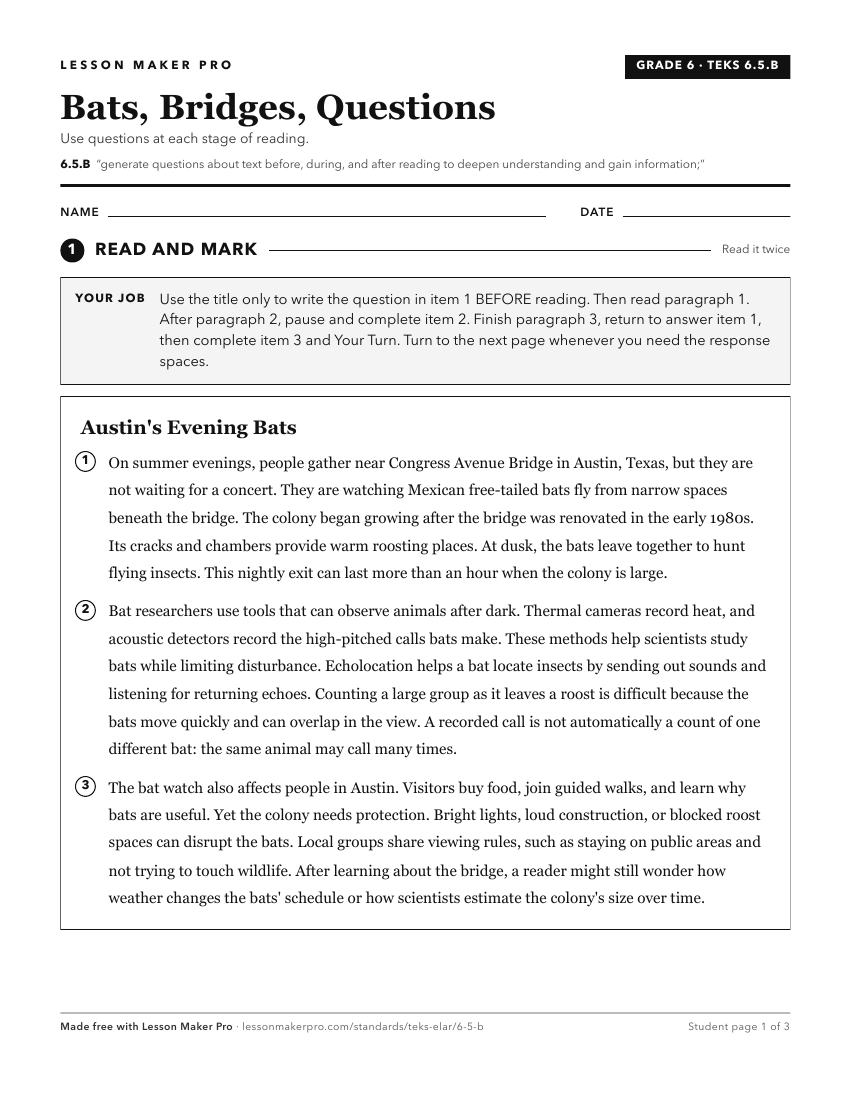
A ready-to-print activity worksheet aligned to 6.5.B, with an answer key for the teacher on its own page. No account needed.
PDF, US Letter, prints cleanly in black and white.
Download the worksheetKeep exploring
Related Standards
Turn this exact standard into a lesson
Grade, subject, topic, and the complete standard are prefilled. Create one free, no account needed.
Also for this standard:Make a WorksheetMake a QuizMake a Sub Lesson