TEKS ELAR 8.5.B
The Standard
generate questions about text before, during, and after reading to deepen understanding and gain information
Texas Essential Knowledge and Skills for English Language Arts and Reading
Teacher's field guide
What This Standard Means
What Students Need to Do
- Students ask purposeful questions at different points in a reading. They use answers and new evidence to revise earlier thinking, clear up confusion, and identify missing information.
What Mastery Looks Like
- A student writes relevant questions before reading, pauses to ask about unclear or surprising details, and asks broader questions after reading. The student answers when evidence is available and marks questions that require another source.
Common Misconceptions
- Students may treat every question as a recall question or ask questions unrelated to the text. They may stop after writing questions instead of searching for evidence, revising them, or noting which remain unanswered.
How to Assess It
- Give students a short article with only its title visible at first. Have them write one question before reading, one during reading, and one after reading, then answer one with evidence.
Lesson moves
Ways to Teach It
Give each student three sticky-note colors for questions asked before, during, and after reading, then place notes beside the relevant lines.
Discuss: Which question changed your understanding most, and what sentence or detail helped you answer it?
Play Question Ladder: teams earn one point for a relevant question and another for answering it with text evidence.
Use a bus schedule or event flyer, and have students list questions they would ask before acting on the information.
Free download
Printable 8.5.B Worksheet
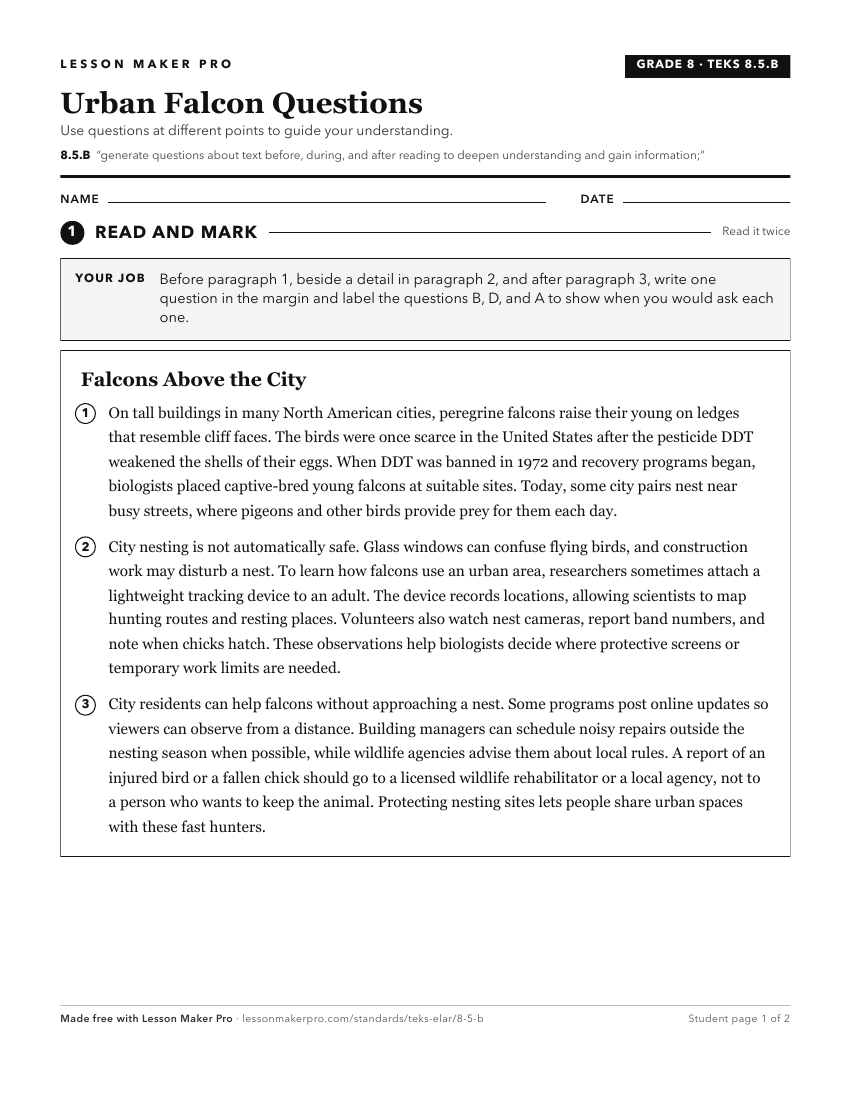
A ready-to-print activity worksheet aligned to 8.5.B, with an answer key for the teacher on its own page. No account needed.
PDF, US Letter, prints cleanly in black and white.
Download the worksheetKeep exploring
Related Standards
Turn this exact standard into a lesson
Grade, subject, topic, and the complete standard are prefilled. Create one free, no account needed.
Also for this standard:Make a WorksheetMake a QuizMake a Sub Lesson