TEKS ELAR K.5.A
The Standard
establish purpose for reading assigned and self-selected texts with adult assistance
Texas Essential Knowledge and Skills for English Language Arts and Reading
Teacher's field guide
What This Standard Means
What Students Need to Do
- Before reading, students say why they are reading or listening. With teacher help, they choose a purpose such as learning facts, enjoying a story, or answering a question.
What Mastery Looks Like
- Given a book cover or reading task, students can name a sensible reason for reading. Afterward, they can tell whether the text met that purpose.
Common Misconceptions
- Students may confuse a reading purpose with a prediction about what will happen. They may also say, “Because my teacher told me,” instead of naming what they want to learn or enjoy.
How to Assess It
- Show students the cover of a picture book and ask, “Why might we read this book?” Have each student name one clear purpose.
Lesson moves
Ways to Teach It
Give pairs three books to sort into baskets labeled learn, enjoy, and follow directions, then ask them to explain each choice.
Before a read-aloud, ask, “Are we reading to learn, enjoy a story, or answer a question?” and record student reasons.
Play Purpose Match by having students pair book-cover cards with purpose cards and explain each match.
Show a picture recipe and a storybook, then ask which one someone would read to make a snack and why.
Free download
Printable K.5.A Worksheet
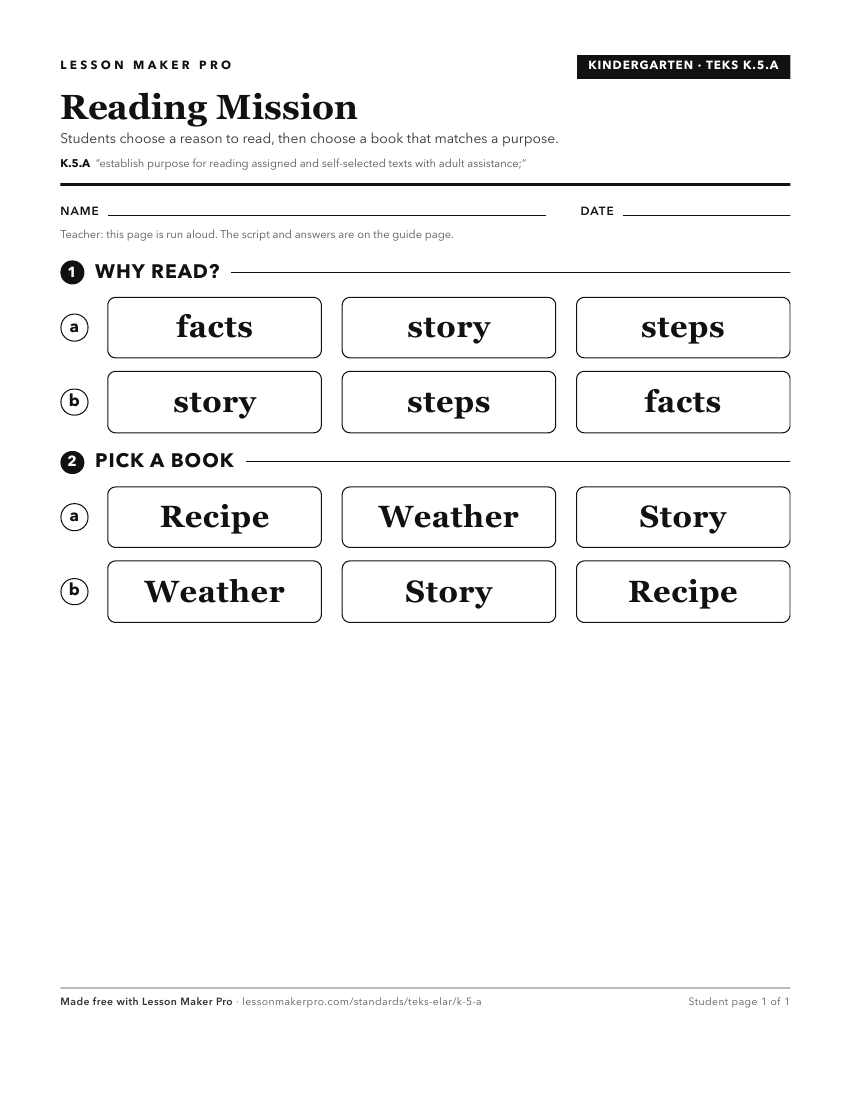
A ready-to-print activity worksheet aligned to K.5.A, with an answer key for the teacher on its own page. No account needed.
PDF, US Letter, prints cleanly in black and white.
Download the worksheetKeep exploring
Related Standards
Turn this exact standard into a lesson
Grade, subject, topic, and the complete standard are prefilled. Create one free, no account needed.
Also for this standard:Make a WorksheetMake a QuizMake a Sub Lesson