TEKS ELAR 3.6.A
The Standard
establish purpose for reading assigned and self-selected texts
Texas Essential Knowledge and Skills for English Language Arts and Reading
Teacher's field guide
What This Standard Means
What Students Need to Do
- Students decide why they are reading before they begin. They name a clear purpose, such as learning facts, answering a question, following directions, or enjoying a story.
What Mastery Looks Like
- Students state a specific reason for reading before they begin. They choose a purpose that fits the text and task, then explain how that purpose guides their attention.
Common Misconceptions
- Students may say their purpose is simply “to read” or “to finish.” They may confuse purpose with predicting what the text will be about.
How to Assess It
- Give students a short article titled “How Bees Help Gardens.” Ask them to write one clear reading purpose and explain what information they will look for.
Lesson moves
Ways to Teach It
Place a story, recipe, map, and animal article at stations, then have students write a fitting reading purpose for each.
Ask, “How would your reading change if you read the same article for fun, facts, or directions?”
Play Purpose Match by pairing text cards with purpose cards, then have partners defend each match.
Have students choose a library book and write whether they will read to learn, enjoy, answer a question, or complete a task.
Free download
Printable 3.6.A Worksheet
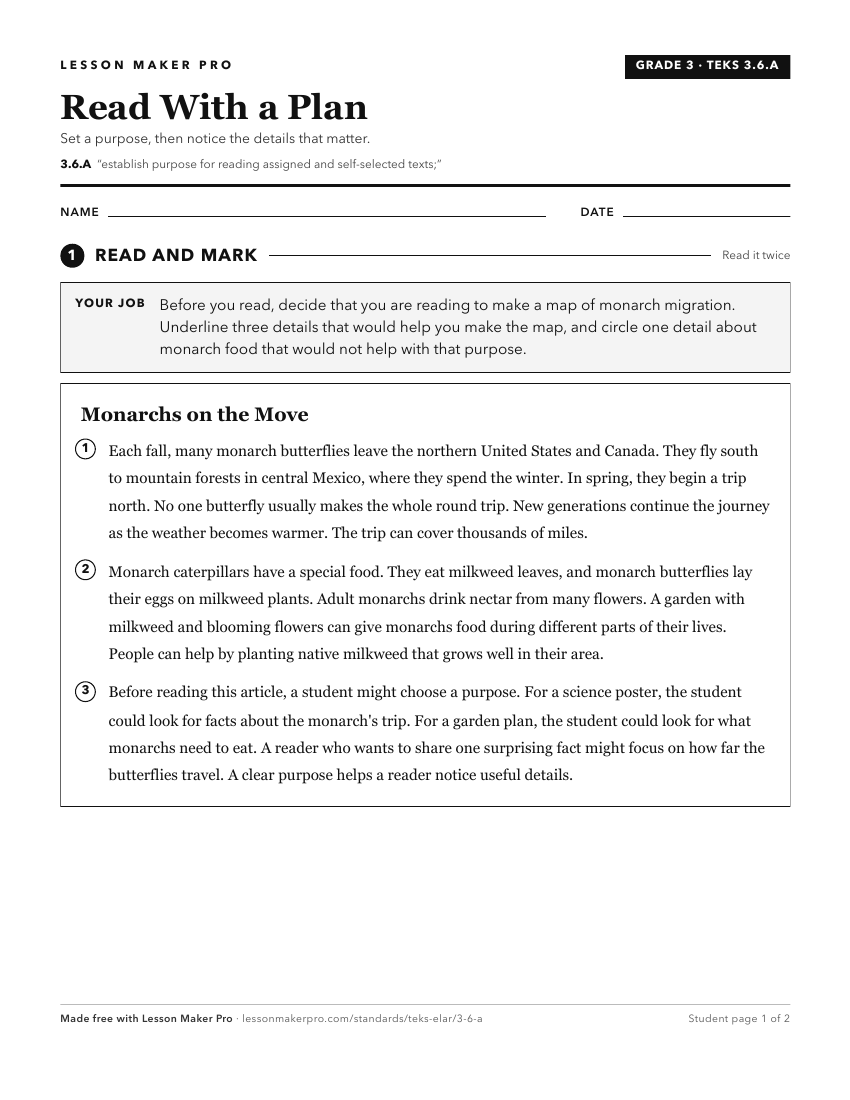
A ready-to-print activity worksheet aligned to 3.6.A, with an answer key for the teacher on its own page. No account needed.
PDF, US Letter, prints cleanly in black and white.
Download the worksheetKeep exploring
Related Standards
Turn this exact standard into a lesson
Grade, subject, topic, and the complete standard are prefilled. Create one free, no account needed.
Also for this standard:Make a WorksheetMake a QuizMake a Sub Lesson