TEKS ELAR 5.6.A
The Standard
establish purpose for reading assigned and self-selected texts
Texas Essential Knowledge and Skills for English Language Arts and Reading
Teacher's field guide
What This Standard Means
What Students Need to Do
- Students decide what they need or want to get from a text before reading. They use the assignment, text type, title, and their own interests to name a clear reading goal.
What Mastery Looks Like
- A student can state a specific purpose, such as finding evidence for a claim or reading a story for enjoyment. The student can explain how that purpose will guide what they notice, mark, or remember.
Common Misconceptions
- Students may name a broad action, such as “finish the chapter,” instead of a reason for reading. They may assume every assigned text has the same purpose or choose a purpose that does not fit the task.
How to Assess It
- Use this exit ticket: “For our assigned article, my purpose is ___. For the book I chose, my purpose is ___.” Students add one detail they will watch for in each text.
Lesson moves
Ways to Teach It
Place four short texts and purpose cards at stations; students match each text to a purpose and justify one match with a text feature.
Ask, “How would your reading change if you needed to teach this text, answer questions, or read for enjoyment?”
Play Purpose Match: teams draw a task card, choose the best text from a set, and explain their choice in ten seconds.
Compare reading a medicine label, a recipe, and a game review; students name the goal and what details matter for each.
Free download
Printable 5.6.A Worksheet
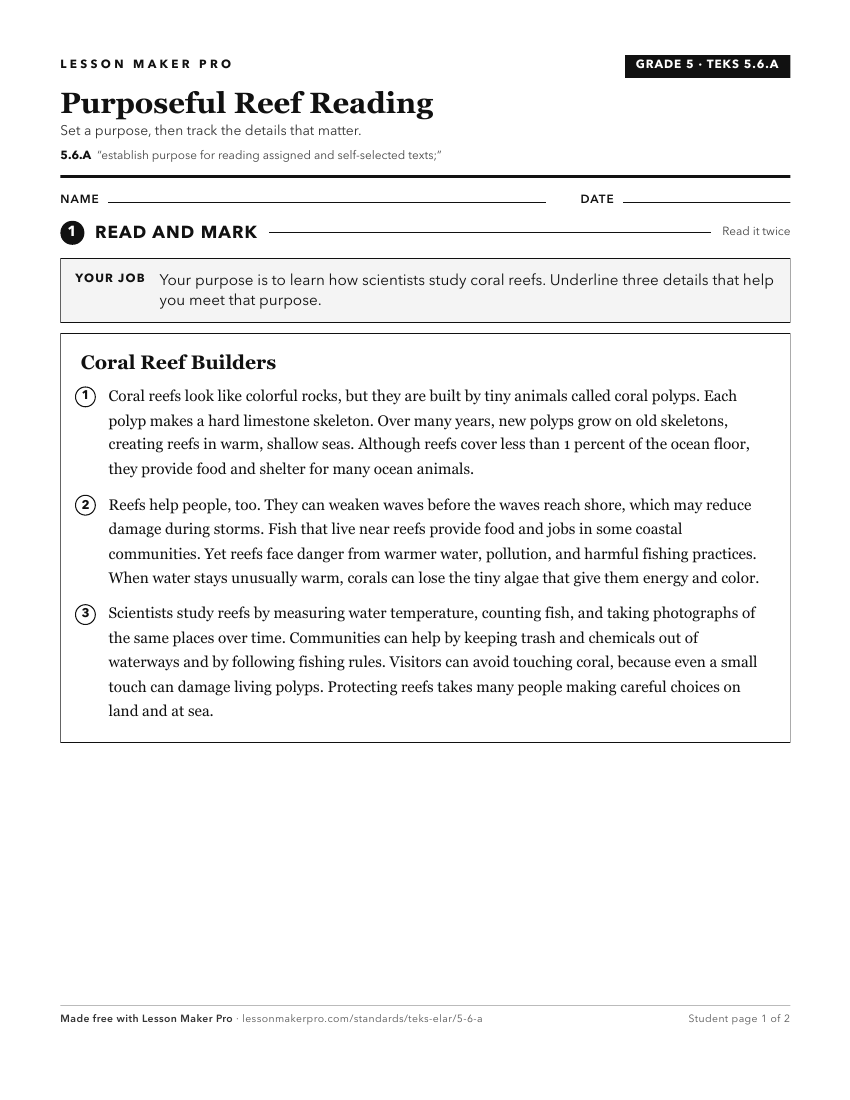
A ready-to-print activity worksheet aligned to 5.6.A, with an answer key for the teacher on its own page. No account needed.
PDF, US Letter, prints cleanly in black and white.
Download the worksheetKeep exploring
Related Standards
Turn this exact standard into a lesson
Grade, subject, topic, and the complete standard are prefilled. Create one free, no account needed.
Also for this standard:Make a WorksheetMake a QuizMake a Sub Lesson