TEKS ELAR 2.6.A
The Standard
establish purpose for reading assigned and self-selected texts
Texas Essential Knowledge and Skills for English Language Arts and Reading
Teacher's field guide
What This Standard Means
What Students Need to Do
- Before reading, students decide why they are reading, such as to learn facts, follow a story, or enjoy the words. They use directions, titles, covers, and personal interests to name a clear goal.
What Mastery Looks Like
- Students can state a specific purpose before reading. They can name what they will look for and explain afterward whether they met their goal.
Common Misconceptions
- Students may say their purpose is “because the teacher said so” or simply “to read.” They may confuse the topic, such as sharks, with the purpose, such as finding facts about sharks.
How to Assess It
- Show a book cover and give one reading task. Ask students to complete: “I will read this to ___, so I will pay attention to ___.”
Lesson moves
Ways to Teach It
Set out a story, recipe, animal article, and map, then have students place a purpose card beside each text.
Have students choose a classroom book and complete: “I picked this book because I want to read it to ___.”
Play Purpose Match by pairing text cards with goal cards, then asking partners to explain each match.
Compare why someone might read game directions, a lunch menu, a weather report, and a comic strip.
Free download
Printable 2.6.A Worksheet
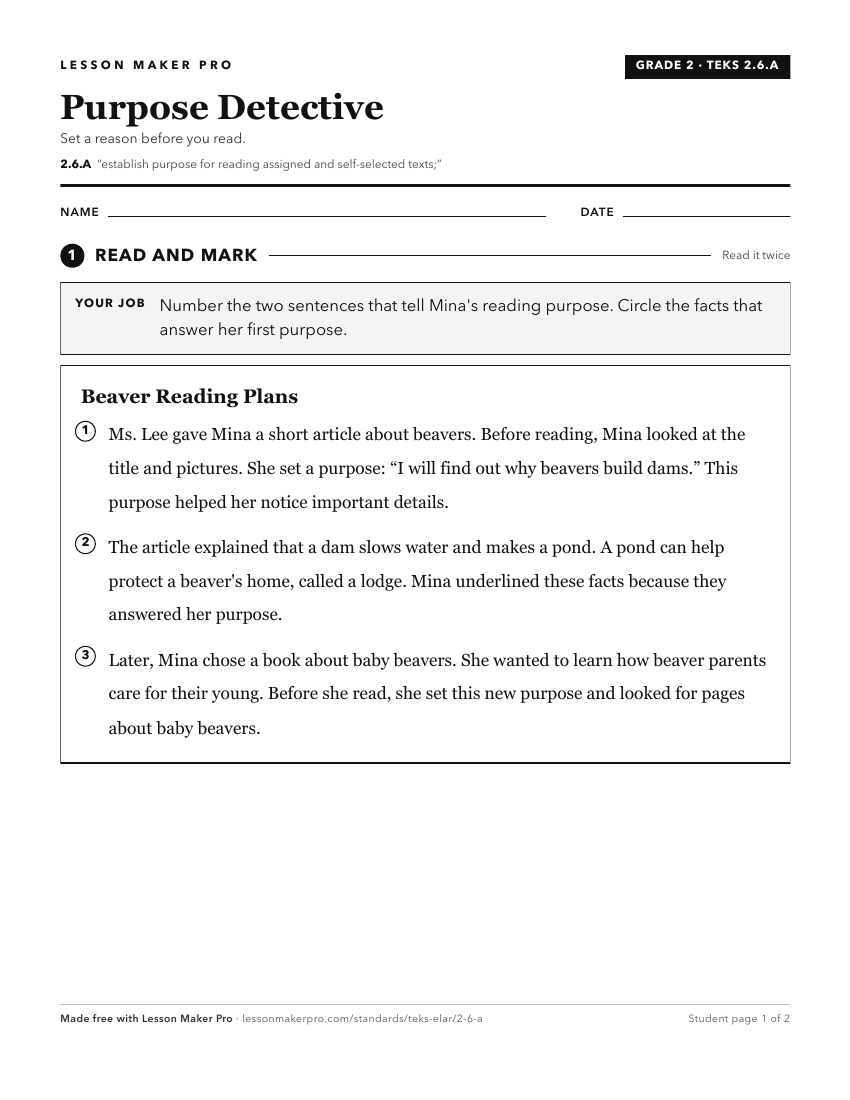
A ready-to-print activity worksheet aligned to 2.6.A, with an answer key for the teacher on its own page. No account needed.
PDF, US Letter, prints cleanly in black and white.
Download the worksheetKeep exploring
Related Standards
Turn this exact standard into a lesson
Grade, subject, topic, and the complete standard are prefilled. Create one free, no account needed.
Also for this standard:Make a WorksheetMake a QuizMake a Sub Lesson