TEKS ELAR K.1.E
The Standard
develop social communication such as introducing himself/herself, using common greetings, and expressing needs and wants.
Texas Essential Knowledge and Skills for English Language Arts and Reading
Teacher's field guide
What This Standard Means
What Students Need to Do
- Students greet others, say their names, and speak clearly in common school situations. They use words to tell others what they need or want.
What Mastery Looks Like
- A student can greet a classmate or adult and say their own name clearly. The student can use a complete phrase to ask for help, an item, or a turn.
Common Misconceptions
- Some students speak too softly, leave out their name, or use gestures without words. Others confuse a greeting with a request or demand an item instead of asking clearly.
How to Assess It
- Meet each student at the door and say, “Hello. What is your name, and what would you like to use today?” Check for a greeting, name, and clear request.
Lesson moves
Ways to Teach It
Give pairs puppets and name tags, then have each puppet greet, introduce itself, and ask for one classroom item.
Ask, “What can you say when you need help opening your lunch?” Let students share and compare clear responses.
Play Greeting Match, where students draw a picture card and give a fitting greeting or request to a partner.
Set up a pretend cafeteria line where students greet the server and ask for a food item or needed utensil.
Free download
Printable K.1.E Worksheet
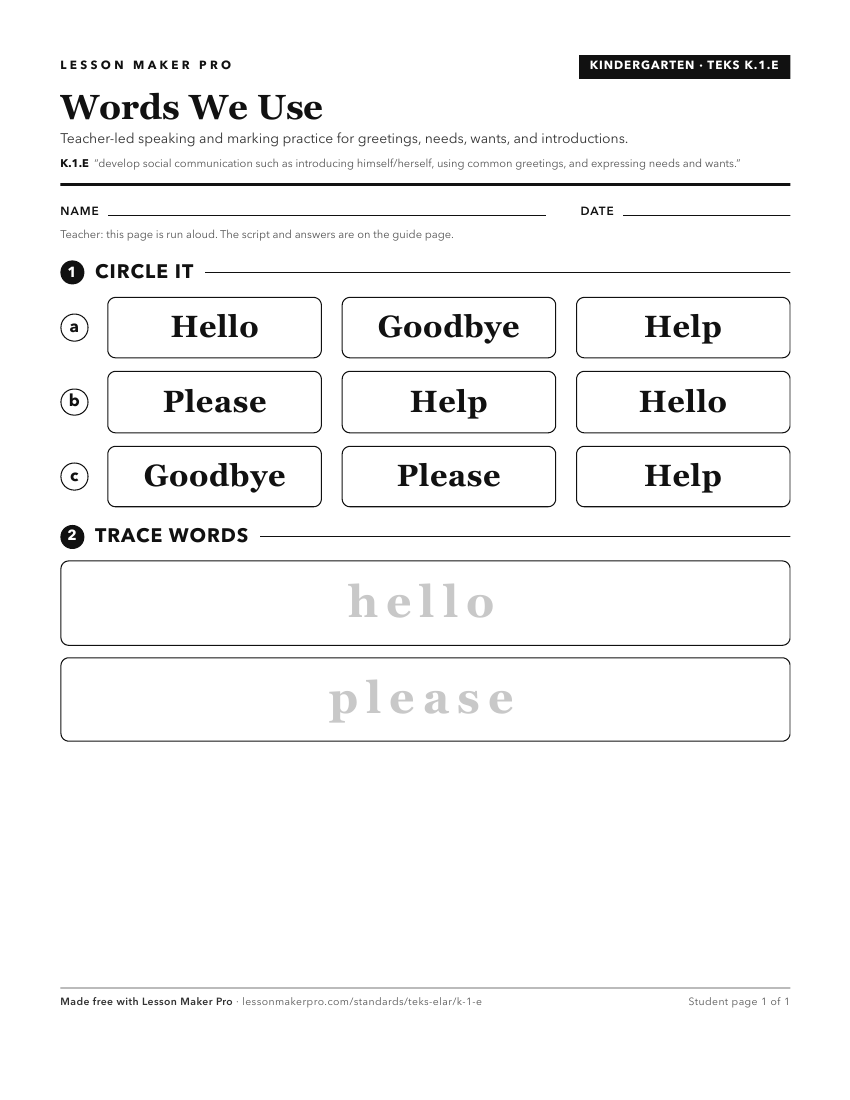
A ready-to-print activity worksheet aligned to K.1.E, with an answer key for the teacher on its own page. No account needed.
PDF, US Letter, prints cleanly in black and white.
Download the worksheetKeep exploring
Related Standards
- 1.1.E
develop social communication such as introducing himself/herself and others, relating experiences to a classmate, and expressing needs and feelings.
- 2.1.E
develop social communication such as distinguishing between asking and telling.
- 3.1.E
develop social communication such as conversing politely in all situations.
- 8.6.H
respond orally or in writing with appropriate register, vocabulary, tone, and voice;
Turn this exact standard into a lesson
Grade, subject, topic, and the complete standard are prefilled. Create one free, no account needed.
Also for this standard:Make a WorksheetMake a QuizMake a Sub Lesson