TEKS ELAR 6.12.E
The Standard
differentiate between primary and secondary sources
Texas Essential Knowledge and Skills for English Language Arts and Reading
Teacher's field guide
What This Standard Means
What Students Need to Do
- Students decide whether a source provides direct evidence from a person or time being studied or explains that evidence later. They support each decision with source details.
What Mastery Looks Like
- Students correctly sort interviews, letters, photographs, articles, and textbooks based on their relationship to the topic. They explain their choices using the source's creator, date, and purpose.
Common Misconceptions
- Students may think any old document is firsthand evidence. They may also classify sources by format, assuming all books are later accounts and all photographs are original evidence.
How to Assess It
- Give students a diary entry and a textbook paragraph about the same event. Ask them to label each source and explain one reason for each choice.
Lesson moves
Ways to Teach It
Give pairs source cards, such as diaries, textbooks, interviews, and biographies, to sort into firsthand evidence and later accounts.
Ask students to explain which source they would trust for an eyewitness's feelings and which they would use for historical context.
Play Source Sort Relay, with teams racing to place source cards under firsthand evidence or later account headings and defend each choice.
Compare a recorded sports interview with a news recap, then list what each source reveals about the same game.
Free download
Printable 6.12.E Worksheet
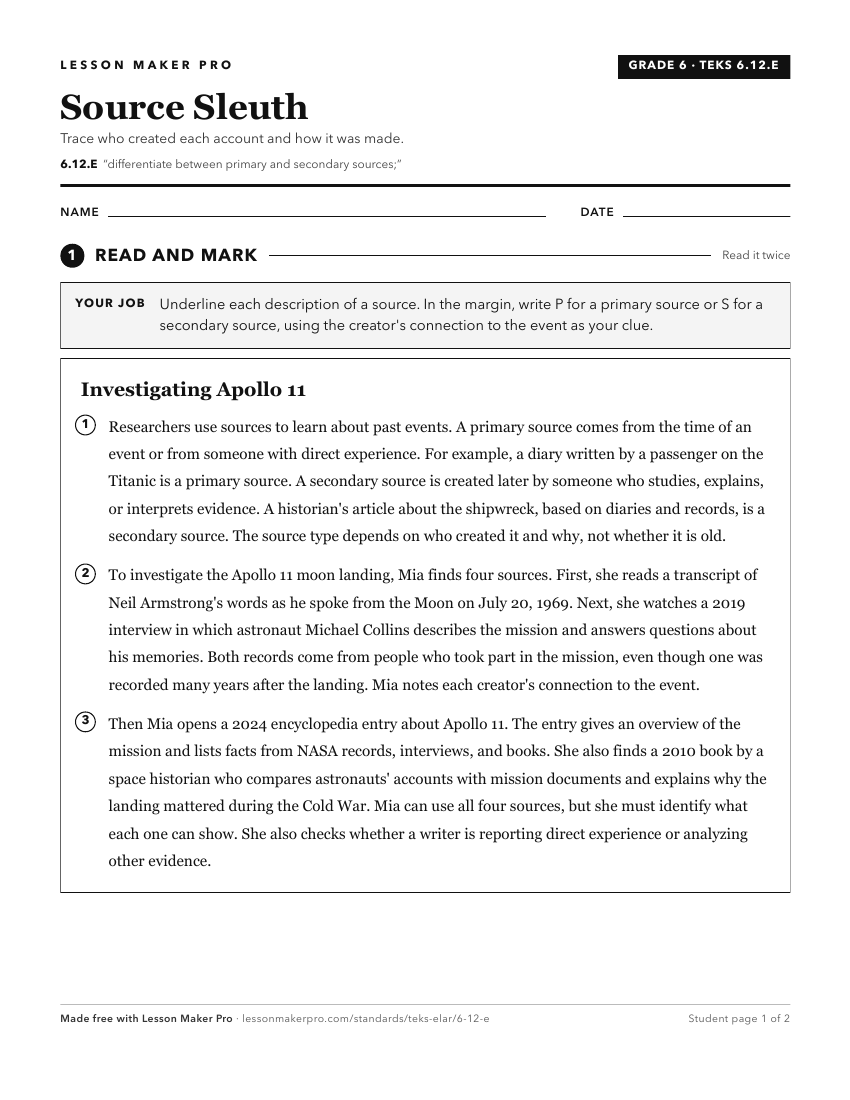
A ready-to-print activity worksheet aligned to 6.12.E, with an answer key for the teacher on its own page. No account needed.
PDF, US Letter, prints cleanly in black and white.
Download the worksheetKeep exploring
Related Standards
Turn this exact standard into a lesson
Grade, subject, topic, and the complete standard are prefilled. Create one free, no account needed.
Also for this standard:Make a WorksheetMake a QuizMake a Sub Lesson