TEKS ELAR 2.13.D
The Standard
identify primary and secondary sources
Texas Essential Knowledge and Skills for English Language Arts and Reading
Teacher's field guide
What This Standard Means
What Students Need to Do
- Students sort information sources by who created them and how close the creator was to the event. They explain their choice using clues such as firsthand experience, date, and purpose.
What Mastery Looks Like
- A student correctly labels an interview, diary, letter, artifact, or original photograph as firsthand evidence. The student labels a biography, textbook, or encyclopedia article as a later account and gives a clear reason.
Common Misconceptions
- Students may think any old item is firsthand evidence, or that every photograph is firsthand. They may also classify by print versus digital format instead of asking who made the source and when.
How to Assess It
- Give students four source cards: a diary entry, an interview transcript, a biography paragraph, and an encyclopedia page. Have them sort the cards and justify one choice.
Lesson moves
Ways to Teach It
Place source cards in two hoops, then have pairs sort a letter, original photograph, interview, textbook page, and biography.
Ask, “Which source would best show what recess was like 50 years ago, and why?” Students cite one source clue.
Play Source Detective: reveal one clue at a time, and teams hold up Primary or Secondary cards.
Compare a family member’s interview about a childhood event with a website article about life during that decade.
Free download
Printable 2.13.D Worksheet
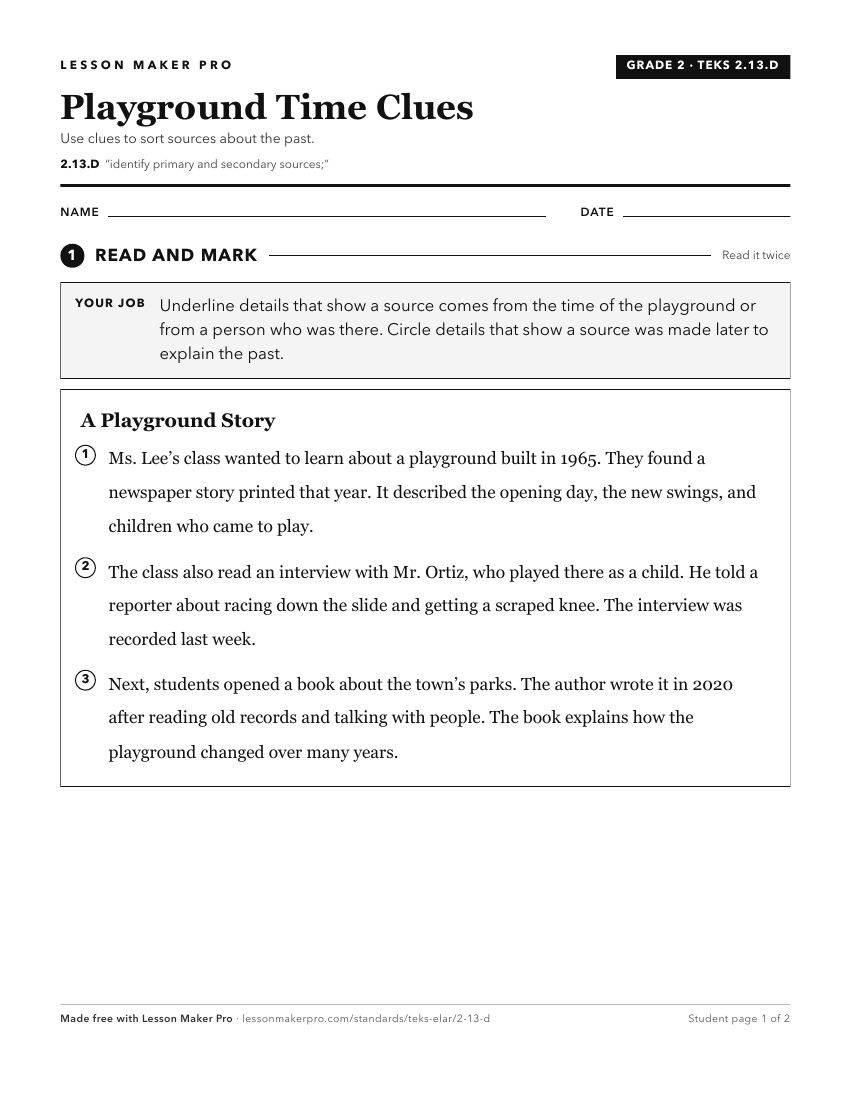
A ready-to-print activity worksheet aligned to 2.13.D, with an answer key for the teacher on its own page. No account needed.
PDF, US Letter, prints cleanly in black and white.
Download the worksheetKeep exploring
Related Standards
Turn this exact standard into a lesson
Grade, subject, topic, and the complete standard are prefilled. Create one free, no account needed.
Also for this standard:Make a WorksheetMake a QuizMake a Sub Lesson