TEKS ELAR 5.9.A
The Standard
demonstrate knowledge of distinguishing characteristics of well-known children's literature such as folktales, fables, legends, myths, and tall tales
Texas Essential Knowledge and Skills for English Language Arts and Reading
Teacher's field guide
What This Standard Means
What Students Need to Do
- Students sort familiar stories into folktales, fables, legends, myths, and tall tales. They identify genre clues and support each classification with details from the story.
What Mastery Looks Like
- A student can classify an unlabeled story as a folktale, fable, legend, myth, or tall tale. The student cites defining details and explains why a similar genre does not fit.
Common Misconceptions
- Students may call every old or magical story a myth. They may assume any talking animal makes a fable, even when no lesson is taught. They may treat legends as proven history or miss exaggeration in tall tales.
How to Assess It
- Exit ticket: Match five brief story summaries to folktale, fable, legend, myth, or tall tale. Underline one defining clue in each summary.
Lesson moves
Ways to Teach It
Sort illustrated story cards for Anansi, Aesop, King Arthur, Greek gods, and Paul Bunyan under genre labels, then add trait cards.
Read short excerpts from a Greek myth and a King Arthur legend, then write two clues that separate their genres.
Play Genre Detective: teams draw a story summary, name the genre, and earn a point only after citing a defining clue.
Collect a local legend from a family or community source, then compare its real place or person with facts from a reliable source.
Free download
Printable 5.9.A Worksheet
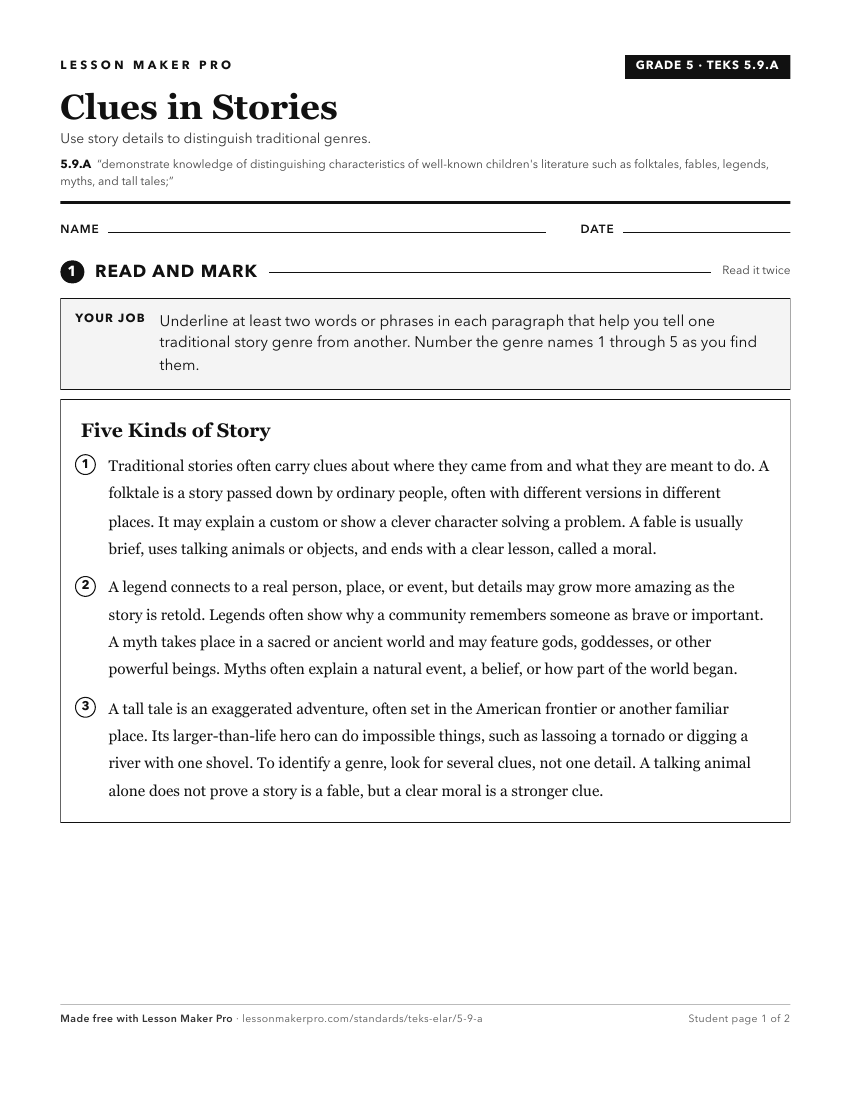
A ready-to-print activity worksheet aligned to 5.9.A, with an answer key for the teacher on its own page. No account needed.
PDF, US Letter, prints cleanly in black and white.
Download the worksheetKeep exploring
Related Standards
- 3.9.A
demonstrate knowledge of distinguishing characteristics of well-known children's literature such as folktales, fables, fairy tales, legends, and myths;
- 4.9.A
The 4th Grade version of this standard.
- K.8.A
demonstrate knowledge of distinguishing characteristics of well-known children's literature such as folktales, fables, fairy tales, and nursery rhymes;
- 2.9.A
demonstrate knowledge of distinguishing characteristics of well-known children's literature such as folktales, fables, and fairy tales;
Turn this exact standard into a lesson
Grade, subject, topic, and the complete standard are prefilled. Create one free, no account needed.
Also for this standard:Make a WorksheetMake a QuizMake a Sub Lesson