TEKS ELAR 4.9.A
The Standard
demonstrate knowledge of distinguishing characteristics of well-known children's literature such as folktales, fables, legends, myths, and tall tales
Texas Essential Knowledge and Skills for English Language Arts and Reading
Teacher's field guide
What This Standard Means
What Students Need to Do
- Students identify folktales, fables, legends, myths, and tall tales by their common traits. They compare characters, events, settings, and purposes to explain each genre choice.
What Mastery Looks Like
- Students correctly label a text as a folktale, fable, legend, myth, or tall tale. They cite character, plot, setting, or purpose as evidence and explain why another label fits less well.
Common Misconceptions
- Students may think any story with magic is a myth or any story with animals is a fable. They may treat legends as proven history and miss the deliberate exaggeration in tall tales.
How to Assess It
- Give students five short story summaries and ask them to label each genre, then underline one detail that supports each choice.
Lesson moves
Ways to Teach It
Have pairs sort story summary cards by genre, then attach trait cards that justify each group.
Ask students to write: How are fables and myths alike, and what detail helps you tell them apart?
Play Genre Clue Bingo using clues such as talking animals, gods, heroic deeds, cultural traditions, morals, and extreme exaggeration.
Students interview a family member about a traditional story, then identify which genre traits appear in the retelling.
Free download
Printable 4.9.A Worksheet
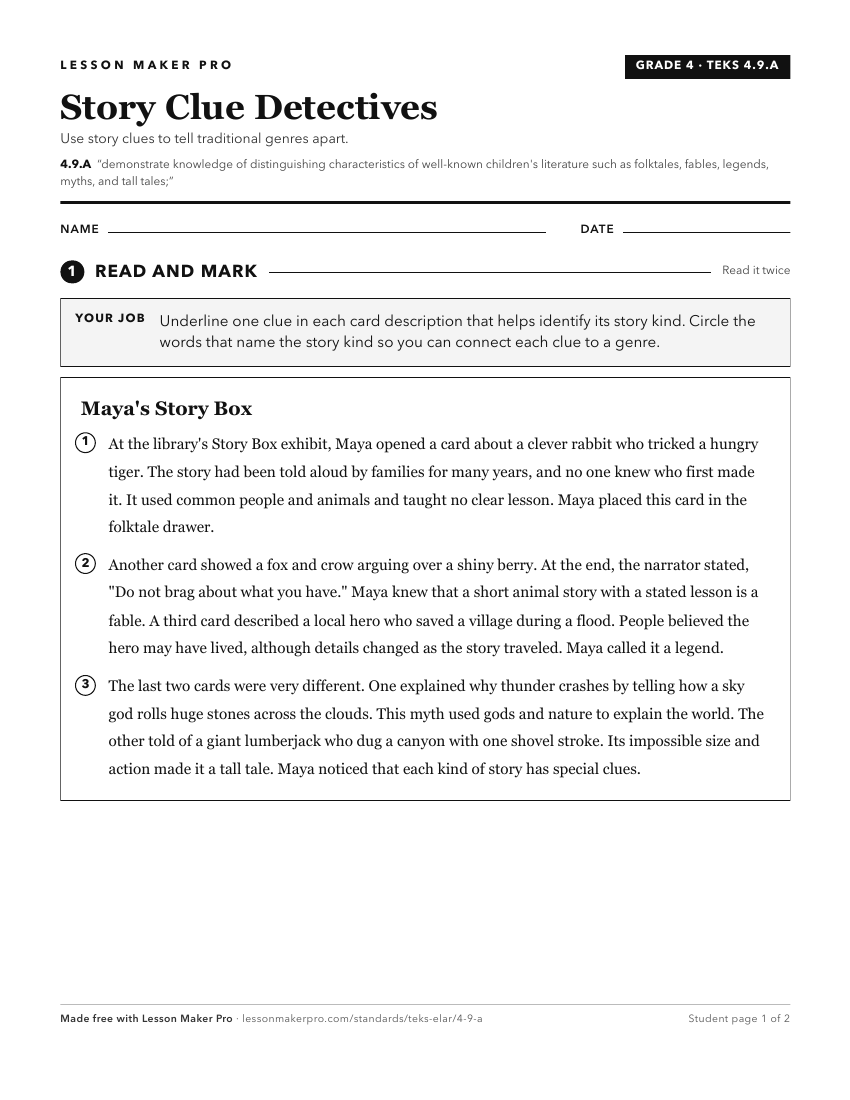
A ready-to-print activity worksheet aligned to 4.9.A, with an answer key for the teacher on its own page. No account needed.
PDF, US Letter, prints cleanly in black and white.
Download the worksheetKeep exploring
Related Standards
- 5.9.A
The 5th Grade version of this standard.
- 3.9.A
demonstrate knowledge of distinguishing characteristics of well-known children's literature such as folktales, fables, fairy tales, legends, and myths;
- K.8.A
demonstrate knowledge of distinguishing characteristics of well-known children's literature such as folktales, fables, fairy tales, and nursery rhymes;
- 2.9.A
demonstrate knowledge of distinguishing characteristics of well-known children's literature such as folktales, fables, and fairy tales;
Turn this exact standard into a lesson
Grade, subject, topic, and the complete standard are prefilled. Create one free, no account needed.
Also for this standard:Make a WorksheetMake a QuizMake a Sub Lesson