TEKS ELAR 2.9.A
The Standard
demonstrate knowledge of distinguishing characteristics of well-known children's literature such as folktales, fables, and fairy tales
Texas Essential Knowledge and Skills for English Language Arts and Reading
Teacher's field guide
What This Standard Means
What Students Need to Do
- Students recognize common features of folktales, fables, and fairy tales. They use story details, such as magic, talking animals, morals, and repeated events, to classify and compare texts.
What Mastery Looks Like
- Students can classify an unfamiliar story and point to two clues that support their choice. They can explain differences among magical events, lessons, repeated patterns, and traditional storytelling features.
Common Misconceptions
- Students may think every story with talking animals is a fable or every old story is a fairy tale. They may also expect fairy tales to include fairies and miss the moral in a fable.
How to Assess It
- Give students three short story summaries. Ask them to label each genre and underline one detail that supports each label.
Lesson moves
Ways to Teach It
Place story clue cards and book covers at stations, then have pairs sort them by genre and add a sticky note explaining each choice.
Read two short tales, then ask, “Which genre fits each story, and what details prove your answer?”
Play Genre Detective by reading one clue at a time while teams hold up folktale, fable, or fairy tale cards.
Compare a familiar animated fairy tale with a print version, and list which genre features stayed the same or changed.
Free download
Printable 2.9.A Worksheet
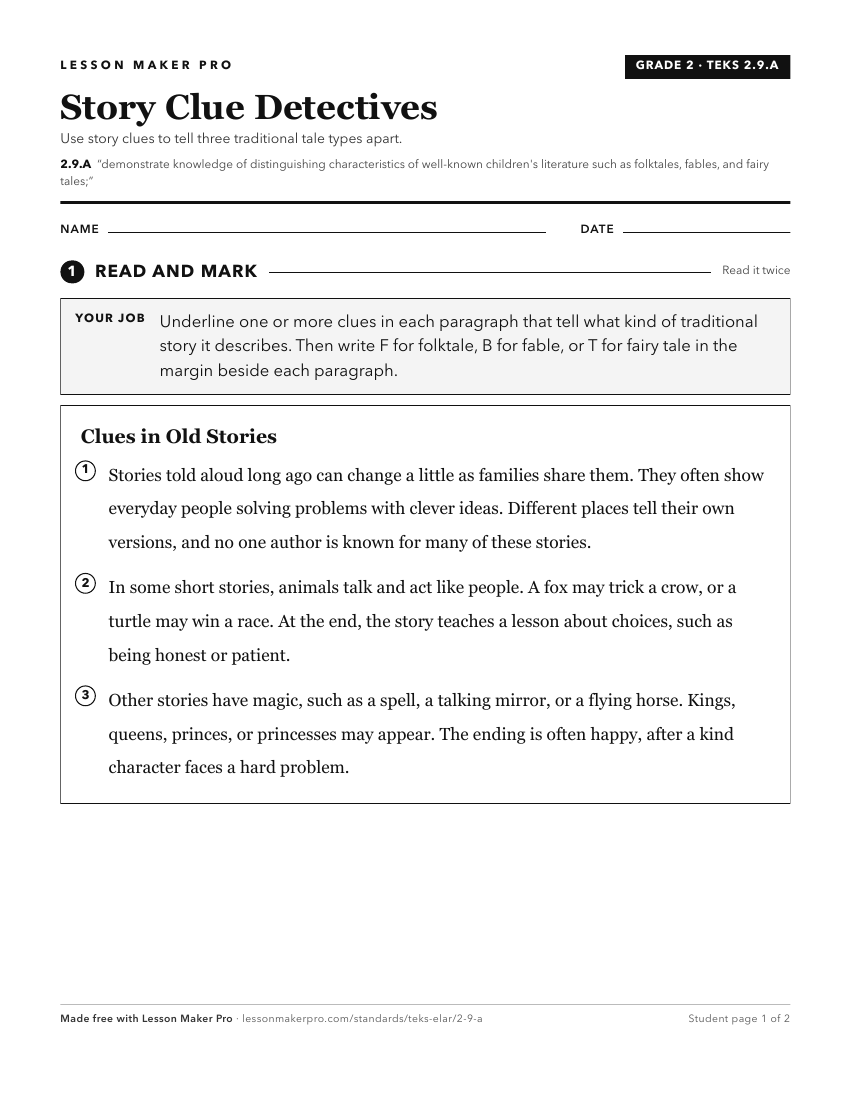
A ready-to-print activity worksheet aligned to 2.9.A, with an answer key for the teacher on its own page. No account needed.
PDF, US Letter, prints cleanly in black and white.
Download the worksheetKeep exploring
Related Standards
- 5.9.A
demonstrate knowledge of distinguishing characteristics of well-known children's literature such as folktales, fables, legends, myths, and tall tales;
- 3.9.A
demonstrate knowledge of distinguishing characteristics of well-known children's literature such as folktales, fables, fairy tales, legends, and myths;
- K.8.A
demonstrate knowledge of distinguishing characteristics of well-known children's literature such as folktales, fables, fairy tales, and nursery rhymes;
- 1.9.A
demonstrate knowledge of distinguishing characteristics of well-known children's literature such as folktales, fables, fairy tales, and nursery rhymes;
Turn this exact standard into a lesson
Grade, subject, topic, and the complete standard are prefilled. Create one free, no account needed.
Also for this standard:Make a WorksheetMake a QuizMake a Sub Lesson