TEKS ELAR 1.9.A
The Standard
demonstrate knowledge of distinguishing characteristics of well-known children's literature such as folktales, fables, fairy tales, and nursery rhymes
Texas Essential Knowledge and Skills for English Language Arts and Reading
Teacher's field guide
What This Standard Means
What Students Need to Do
- Students identify whether a familiar text is a folktale, fable, fairy tale, or nursery rhyme. They point to story features that explain their choice.
What Mastery Looks Like
- Students correctly sort familiar stories and rhymes into the four genres. They explain choices with details such as a lesson, magical events, repeated rhyme, or a tale passed down over time.
Common Misconceptions
- Students may think any story with animals is a fable or any story with magic is a fairy tale. They may also confuse nursery rhymes with all poems that rhyme.
How to Assess It
- Read four short excerpts, one from each genre. Have students label each excerpt and circle one clue that supports each choice.
Lesson moves
Ways to Teach It
Give pairs picture and text cards from familiar books to sort under folktale, fable, fairy tale, and nursery rhyme headings.
Ask students to finish the sentence, “I know this is a fable because,” using one detail from a read-aloud.
Play Genre Clue Bingo with squares such as talking animals, a lesson, magic, repeated lines, rhyme, and a story told over generations.
Visit the school library and record one title from each genre, using the cover and a short preview as evidence.
Free download
Printable 1.9.A Worksheet
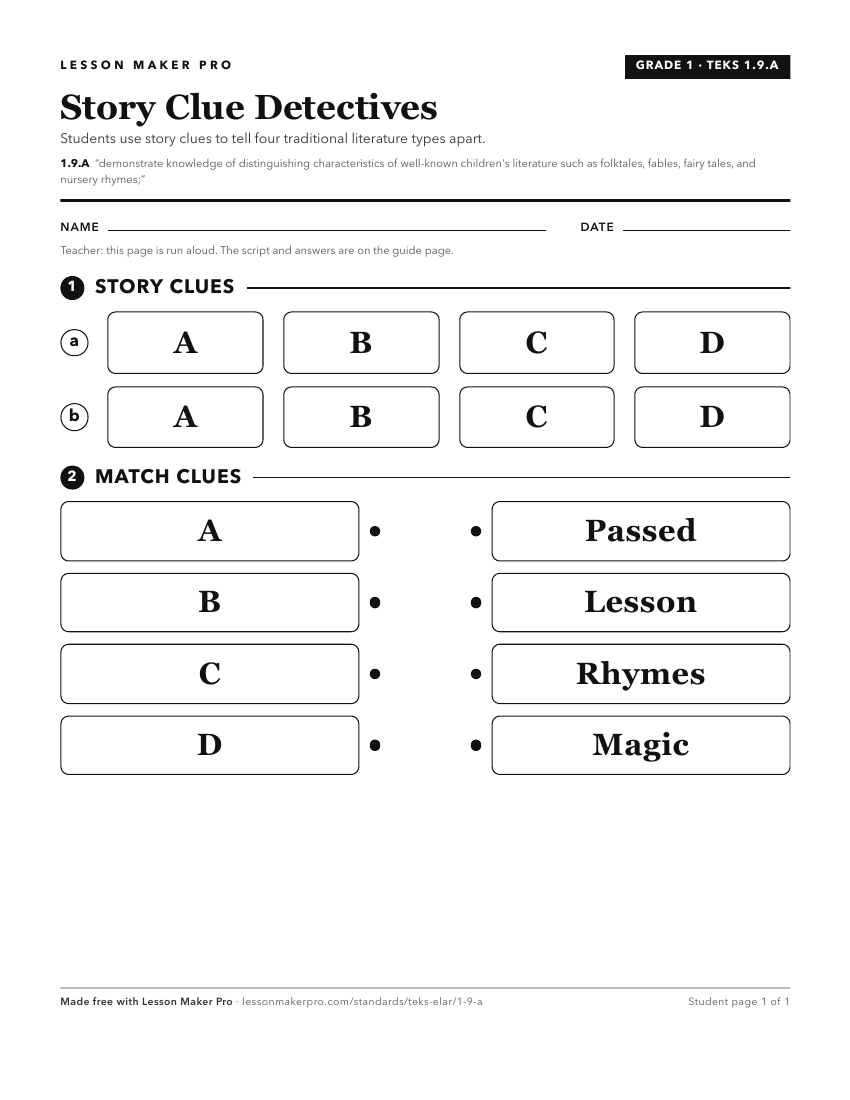
A ready-to-print activity worksheet aligned to 1.9.A, with an answer key for the teacher on its own page. No account needed.
PDF, US Letter, prints cleanly in black and white.
Download the worksheetKeep exploring
Related Standards
- 5.9.A
demonstrate knowledge of distinguishing characteristics of well-known children's literature such as folktales, fables, legends, myths, and tall tales;
- 3.9.A
demonstrate knowledge of distinguishing characteristics of well-known children's literature such as folktales, fables, fairy tales, legends, and myths;
- K.8.A
The Kindergarten version of this standard.
- 2.9.A
demonstrate knowledge of distinguishing characteristics of well-known children's literature such as folktales, fables, and fairy tales;
Turn this exact standard into a lesson
Grade, subject, topic, and the complete standard are prefilled. Create one free, no account needed.
Also for this standard:Make a WorksheetMake a QuizMake a Sub Lesson