TEKS ELAR 4.13.F
The Standard
recognize the difference between paraphrasing and plagiarism when using source materials
Texas Essential Knowledge and Skills for English Language Arts and Reading
Teacher's field guide
What This Standard Means
What Students Need to Do
- Students tell whether source information has been restated in original language or copied improperly. They distinguish paraphrases from exact quotations and give credit to sources.
What Mastery Looks Like
- Students restate a source idea fully in their own words and sentence structure. They credit the source and use quotation marks when copying exact words.
Common Misconceptions
- Students may think changing a few words makes copied text a paraphrase. They may also believe listing the source allows them to copy sentences without quotation marks.
How to Assess It
- Give students a two-sentence source and three versions of notes. Ask them to label each as paraphrasing, quoting, or plagiarism and explain one choice.
Lesson moves
Ways to Teach It
Give pairs a source card and sticky notes, then have them cover the card and rewrite its main idea from memory.
Ask students to explain why replacing three words in a copied sentence does not create an acceptable paraphrase.
Play Paraphrase Sort with cards showing original passages, strong paraphrases, exact quotations, and plagiarized versions.
Compare a news article with a student summary, then mark borrowed ideas, exact wording, source credit, and needed quotation marks.
Free download
Printable 4.13.F Worksheet
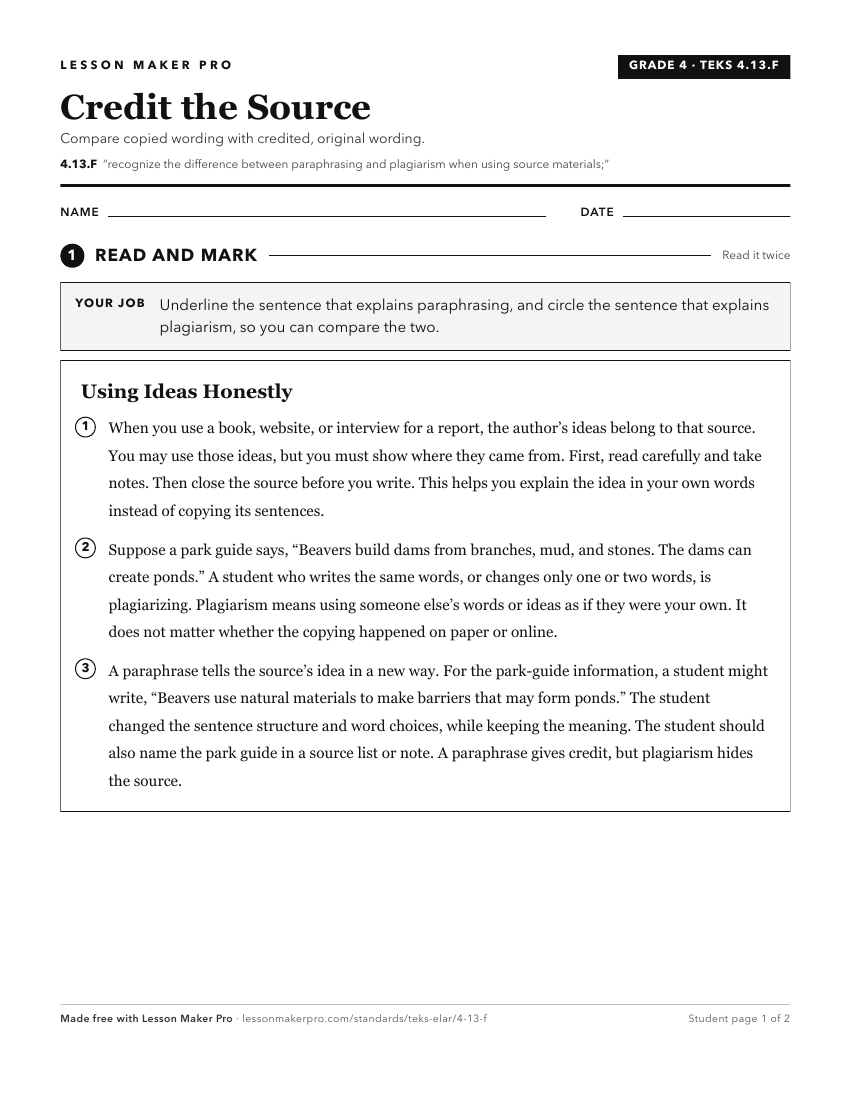
A ready-to-print activity worksheet aligned to 4.13.F, with an answer key for the teacher on its own page. No account needed.
PDF, US Letter, prints cleanly in black and white.
Download the worksheetKeep exploring
Related Standards
Turn this exact standard into a lesson
Grade, subject, topic, and the complete standard are prefilled. Create one free, no account needed.
Also for this standard:Make a WorksheetMake a QuizMake a Sub Lesson