TEKS ELAR 3.13.F
The Standard
recognize the difference between paraphrasing and plagiarism when using source materials
Texas Essential Knowledge and Skills for English Language Arts and Reading
Teacher's field guide
What This Standard Means
What Students Need to Do
- Students compare source material with a writer’s version and decide whether it is paraphrased or copied. They explain that paraphrasing uses new wording while giving credit to the source.
What Mastery Looks Like
- Students correctly sort examples as paraphrasing or plagiarism. They can explain that a paraphrase presents the source idea in new wording and still names the source.
Common Misconceptions
- Students may think changing one or two words makes copied text a paraphrase. They may also think copying is acceptable if they list the source or if the information is online.
How to Assess It
- Give students an original two-sentence source and two rewritten versions. Ask them to circle the paraphrase, label the plagiarism, and explain their choice in one sentence.
Lesson moves
Ways to Teach It
Give pairs source cards and rewrite cards to sort into paraphrase or plagiarism, then have them underline words copied directly from each source.
Ask students to respond in writing: How can you use an author’s idea without pretending the words are yours?
Play Paraphrase Detective by showing a source and three rewrites, then awarding points for choosing and explaining the true paraphrase.
Compare a copied website sentence with a student-friendly paraphrase for a class animal report, including the website name as the source.
Free download
Printable 3.13.F Worksheet
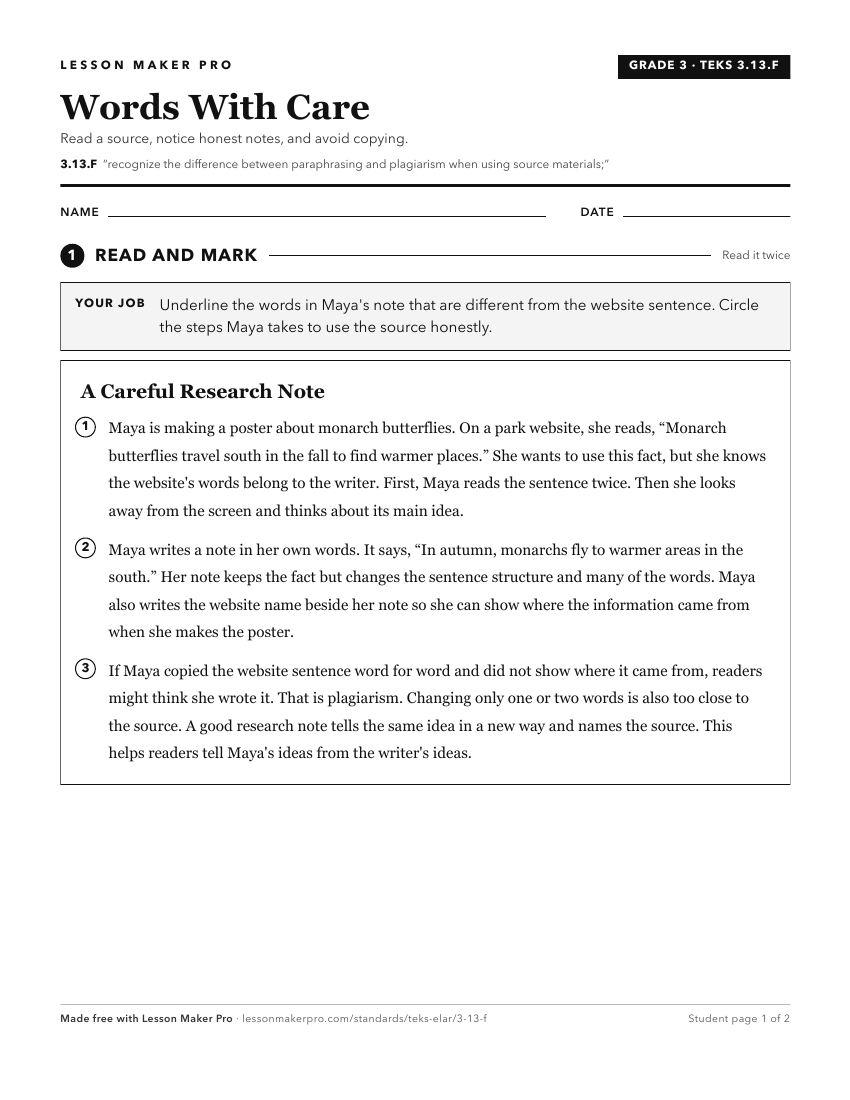
A ready-to-print activity worksheet aligned to 3.13.F, with an answer key for the teacher on its own page. No account needed.
PDF, US Letter, prints cleanly in black and white.
Download the worksheetKeep exploring
Related Standards
Turn this exact standard into a lesson
Grade, subject, topic, and the complete standard are prefilled. Create one free, no account needed.
Also for this standard:Make a WorksheetMake a QuizMake a Sub Lesson