TEKS ELAR 8.12.G
The Standard
differentiate between paraphrasing and plagiarism when using source materials
Texas Essential Knowledge and Skills for English Language Arts and Reading
Teacher's field guide
What This Standard Means
What Students Need to Do
- Students compare source material with a writer's version and decide whether the source was used honestly. They identify acceptable paraphrasing, copied wording, and missing credit.
What Mastery Looks Like
- Students correctly label paraphrases, direct quotations, and plagiarism. They explain that a paraphrase changes both wording and sentence structure while preserving the meaning and naming the source.
Common Misconceptions
- Students may think changing a few words makes copied sentences acceptable. They may also think a citation turns copied wording into a paraphrase, even without quotation marks.
How to Assess It
- Give students a source paragraph and two student versions. Ask them to label each as paraphrasing or plagiarism, cite one piece of evidence, and fix the plagiarism.
Lesson moves
Ways to Teach It
Give pairs a source paragraph, colored pens, and two sample responses to mark copied wording, changed structure, and source credit.
Ask students to explain in writing why replacing five words with synonyms does not create an acceptable paraphrase.
Play Paraphrase or Plagiarism by showing sample sentences and having teams hold up labeled cards, then justify each choice.
Compare a news article with a social media post that borrows its wording, then identify what credit or quotation marks are missing.
Free download
Printable 8.12.G Worksheet
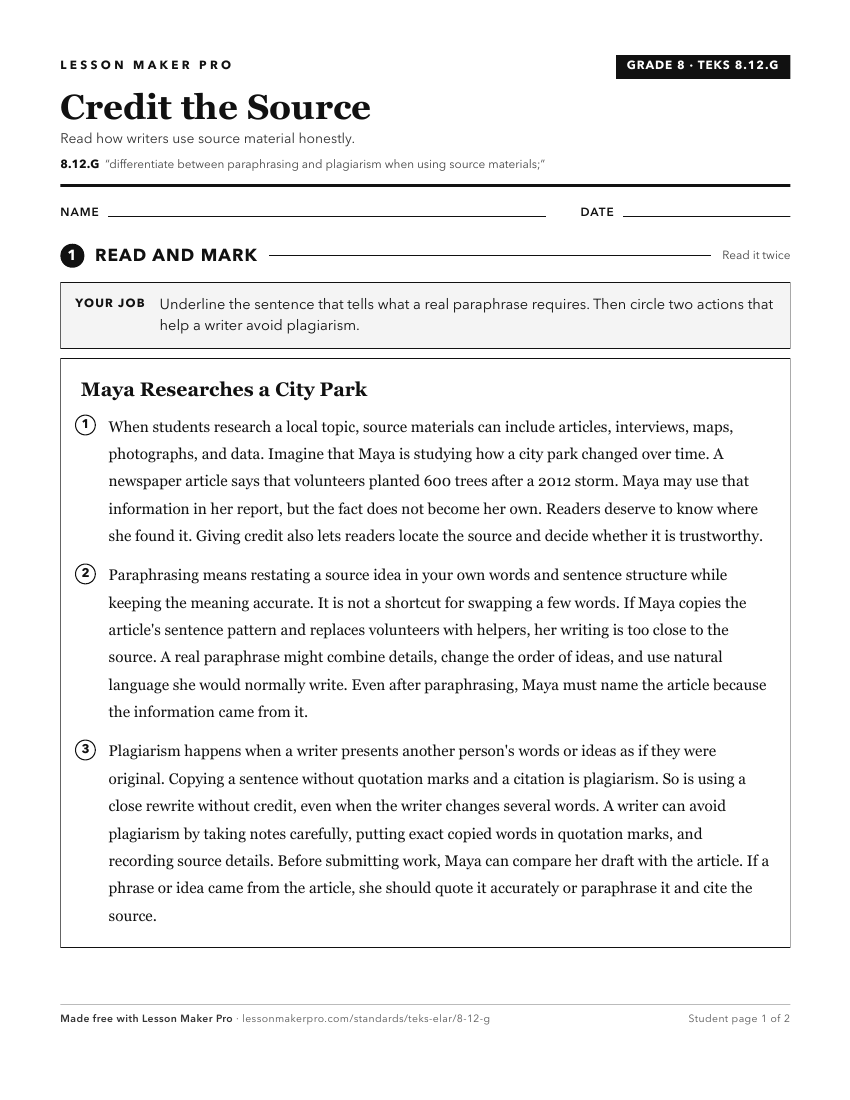
A ready-to-print activity worksheet aligned to 8.12.G, with an answer key for the teacher on its own page. No account needed.
PDF, US Letter, prints cleanly in black and white.
Download the worksheetKeep exploring
Related Standards
Turn this exact standard into a lesson
Grade, subject, topic, and the complete standard are prefilled. Create one free, no account needed.
Also for this standard:Make a WorksheetMake a QuizMake a Sub Lesson