TEKS ELAR 3.9.F
The Standard
recognize characteristics of multimodal and digital texts.
Texas Essential Knowledge and Skills for English Language Arts and Reading
Teacher's field guide
What This Standard Means
What Students Need to Do
- Students notice the different ways digital texts communicate, including words, images, sound, video, and clickable features. They explain what each feature does for the reader.
What Mastery Looks Like
- Students point out features such as images, captions, audio, video, menus, and hyperlinks. They explain how words and media work together to inform, entertain, or guide the reader.
Common Misconceptions
- Students may call any text shown on a screen a digital text. They may list pictures, sound, or links without explaining how each feature adds meaning.
How to Assess It
- Show a short webpage with a heading, photo caption, audio button, and hyperlink. Ask students to name two features and explain how one helps the reader.
Lesson moves
Ways to Teach It
Give pairs a printed webpage and sticky notes to label headings, images, captions, links, audio controls, and navigation tools.
Ask students to write which feature on a class webpage helps them most and explain why with one specific example.
Play Feature Match by having teams pair cards showing digital features with cards describing each feature's job.
Compare a printed weather report with a weather app, then list what the app adds through icons, animation, sound, or links.
Free download
Printable 3.9.F Worksheet
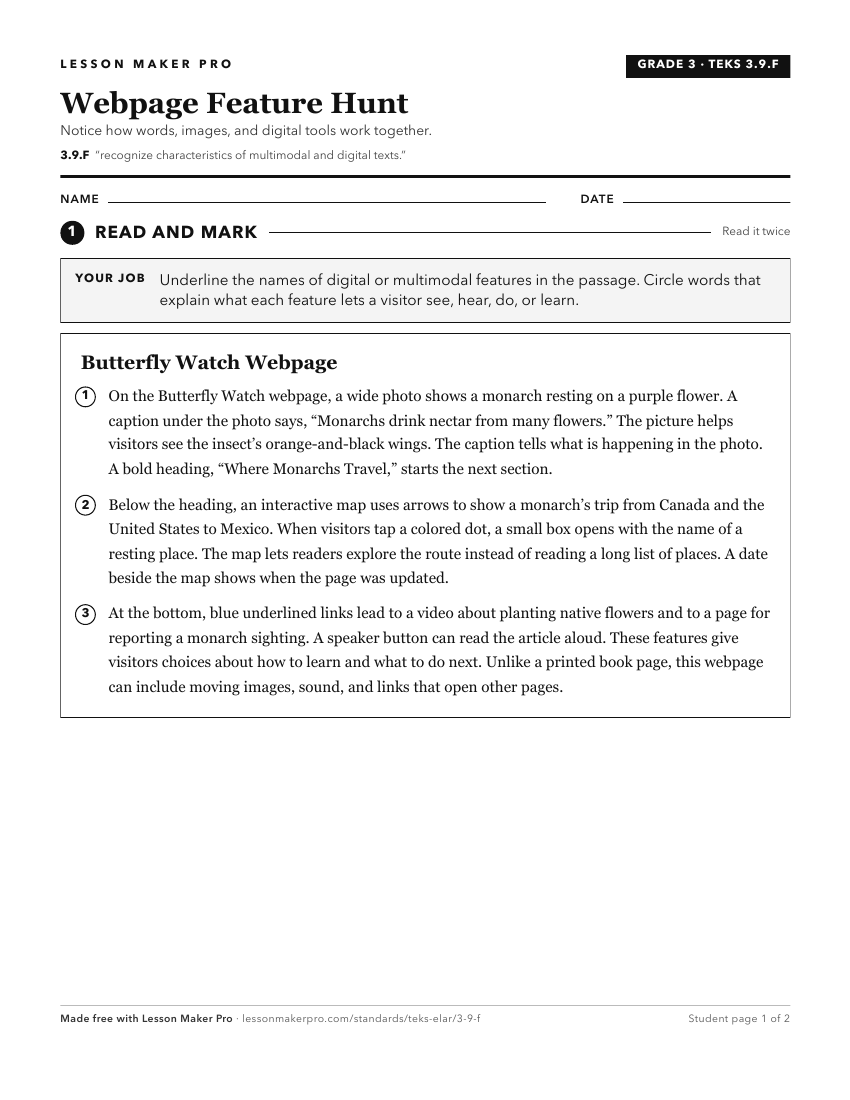
A ready-to-print activity worksheet aligned to 3.9.F, with an answer key for the teacher on its own page. No account needed.
PDF, US Letter, prints cleanly in black and white.
Download the worksheetKeep exploring
Related Standards
Turn this exact standard into a lesson
Grade, subject, topic, and the complete standard are prefilled. Create one free, no account needed.
Also for this standard:Make a WorksheetMake a QuizMake a Sub Lesson