TEKS ELAR 3.13.C
The Standard
identify and gather relevant information from a variety of sources
Texas Essential Knowledge and Skills for English Language Arts and Reading
Teacher's field guide
What This Standard Means
What Students Need to Do
- Students use a clear research question to decide which sources and facts are useful. They collect information from different source types, such as books, websites, maps, interviews, or photographs.
What Mastery Looks Like
- A student selects useful facts from at least two different source types. The student leaves out unrelated details and explains how each chosen fact answers the research question.
Common Misconceptions
- Students may choose facts because they are interesting, even when the facts do not answer the research question. They may rely on one source or copy whole sections instead of selecting useful details.
How to Assess It
- Give students a habitat question, a book excerpt, a web page, a map, and an unrelated recipe. Ask them to choose two useful sources and record one relevant fact from each.
Lesson moves
Ways to Teach It
Place books, printed articles, maps, and photographs at stations; students collect one fact from each that answers a question about frogs.
Students answer the prompt, "Which source best explains how weather affects recess, and what detail proves it?"
Play Source Detective Bingo by giving students a research question and source cards, then having them cover only cards with useful information.
Students use seed packets, a garden catalog, and a weather chart to recommend the best plant for the school garden.
Free download
Printable 3.13.C Worksheet
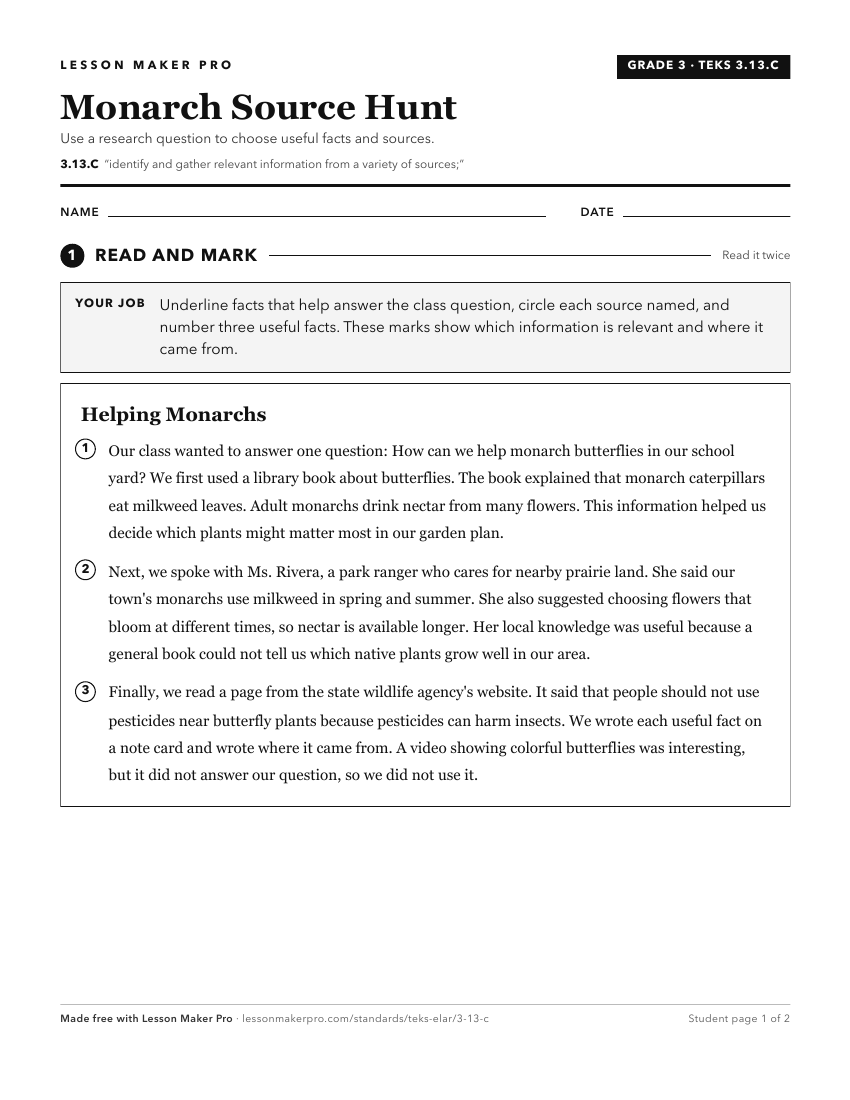
A ready-to-print activity worksheet aligned to 3.13.C, with an answer key for the teacher on its own page. No account needed.
PDF, US Letter, prints cleanly in black and white.
Download the worksheetKeep exploring
Related Standards
Turn this exact standard into a lesson
Grade, subject, topic, and the complete standard are prefilled. Create one free, no account needed.
Also for this standard:Make a WorksheetMake a QuizMake a Sub Lesson