TEKS ELAR 2.12.A
The Standard
compose literary texts, including personal narratives and poetry
Texas Essential Knowledge and Skills for English Language Arts and Reading
Teacher's field guide
What This Standard Means
What Students Need to Do
- Students write about one true experience using ordered events, details, thoughts, and feelings. They also create poems using line breaks, sensory words, repetition, rhyme, or comparisons.
What Mastery Looks Like
- A student writes a focused first-person story with events in order, specific details, and a clear ending. The student writes a poem with purposeful line breaks and vivid language.
Common Misconceptions
- Students may list events instead of focusing on one small moment. They may think any rhyming lines make a poem, or break prose into lines without choosing vivid words or patterns.
How to Assess It
- Exit ticket: Write three sentences about losing something, then turn one detail from the event into two lines of poetry using sensory words.
Lesson moves
Ways to Teach It
Give pairs picture cards showing a playground mishap, then have them order the cards and write a first-person small-moment story.
Ask, "What ordinary moment do you remember clearly?" Students share one sensory detail, then use it to begin a narrative.
Play Poetry Tool Match by matching sample lines to cards labeled repetition, rhyme, sensory detail, comparison, and line break.
Students interview a family member about a funny memory, then create a short narrative or poem to share with that person.
Free download
Printable 2.12.A Worksheet
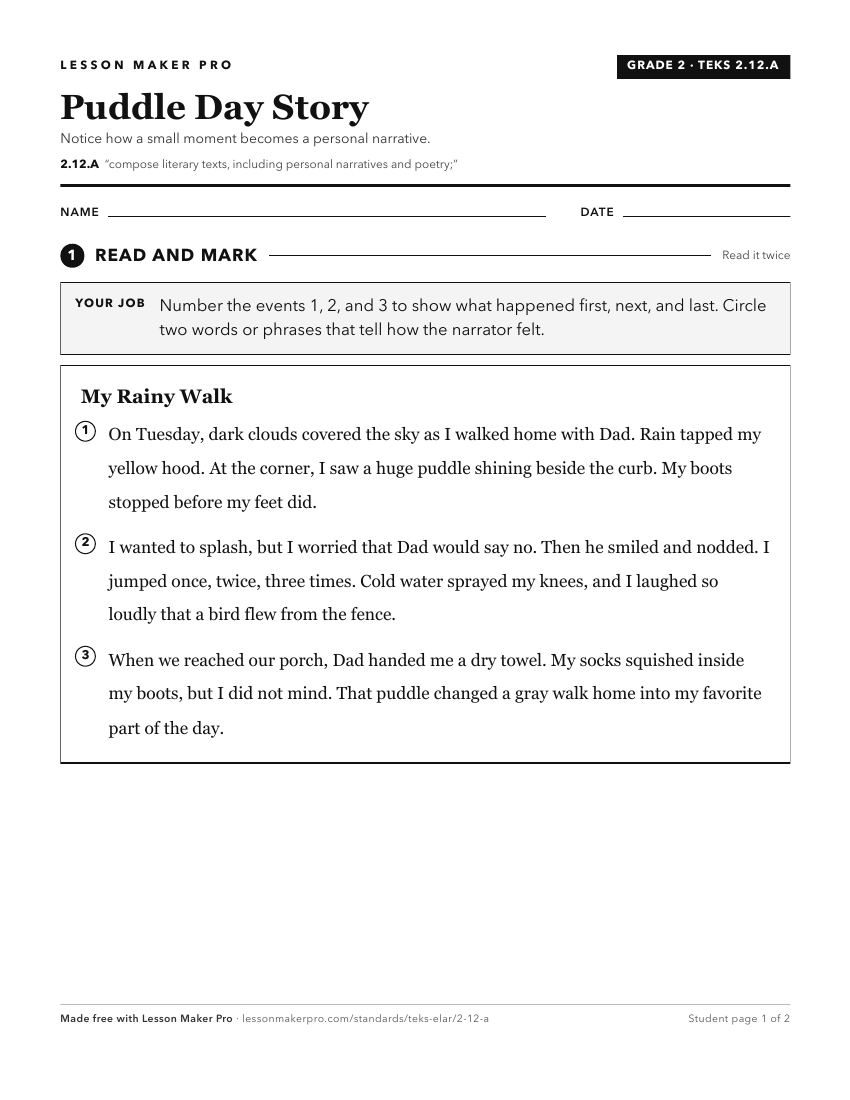
A ready-to-print activity worksheet aligned to 2.12.A, with an answer key for the teacher on its own page. No account needed.
PDF, US Letter, prints cleanly in black and white.
Download the worksheetKeep exploring
Related Standards
- 4.12.A
compose literary texts such as personal narratives and poetry using genre characteristics and craft;
- 3.12.A
compose literary texts, including personal narratives and poetry, using genre characteristics and craft;
- 8.11.A
compose literary texts such as personal narratives, fiction, and poetry using genre characteristics and craft;
- 6.11.A
compose literary texts such as personal narratives, fiction, and poetry using genre characteristics and craft;
Turn this exact standard into a lesson
Grade, subject, topic, and the complete standard are prefilled. Create one free, no account needed.
Also for this standard:Make a WorksheetMake a QuizMake a Sub Lesson