TEKS ELAR 8.11.A
The Standard
compose literary texts such as personal narratives, fiction, and poetry using genre characteristics and craft
Texas Essential Knowledge and Skills for English Language Arts and Reading
Teacher's field guide
What This Standard Means
What Students Need to Do
- Students write original personal narratives, short fiction, or poetry that fits the chosen form. They use structure, voice, dialogue, imagery, pacing, and other craft choices to shape meaning and interest readers.
What Mastery Looks Like
- A strong writer makes the genre clear from the opening and maintains it throughout. The piece has a purposeful structure and uses craft moves such as imagery, dialogue, line breaks, or pacing to create an intended effect.
Common Misconceptions
- Students may treat fiction as a list of events, add dialogue that serves no purpose, or confuse a personal narrative with a full autobiography. In poetry, they may force rhyme, break lines randomly, or assume any short paragraph is a poem.
How to Assess It
- Exit ticket: Write either a six-sentence story opening or an eight-line poem about an unexpected message. Underline one craft move that shapes the mood.
Lesson moves
Ways to Teach It
Give students plot, setting, and character cards, then have them arrange the cards and draft a scene with dialogue and sensory details.
Ask students to compare two openings, then write which craft move creates stronger tension and cite one phrase as evidence.
Play Craft Move Bingo while students revise a draft by adding imagery, dialogue, pacing, figurative language, and a purposeful ending.
Have students turn a true school experience into a one-page personal narrative for the class magazine, changing names when needed.
Free download
Printable 8.11.A Worksheet
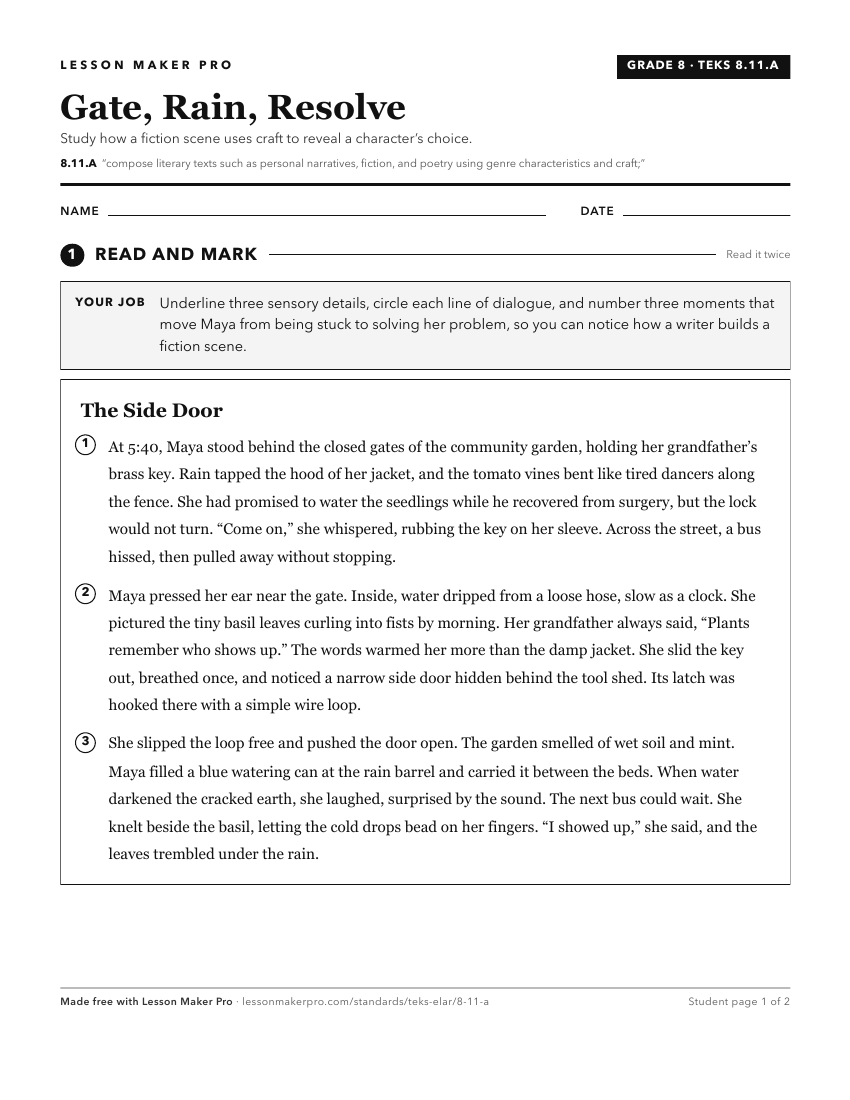
A ready-to-print activity worksheet aligned to 8.11.A, with an answer key for the teacher on its own page. No account needed.
PDF, US Letter, prints cleanly in black and white.
Download the worksheetKeep exploring
Related Standards
- 4.12.A
compose literary texts such as personal narratives and poetry using genre characteristics and craft;
- 3.12.A
compose literary texts, including personal narratives and poetry, using genre characteristics and craft;
- 6.11.A
The 6th Grade version of this standard.
- 5.12.A
The 5th Grade version of this standard.
Turn this exact standard into a lesson
Grade, subject, topic, and the complete standard are prefilled. Create one free, no account needed.
Also for this standard:Make a WorksheetMake a QuizMake a Sub Lesson