TEKS ELAR 3.12.A
The Standard
compose literary texts, including personal narratives and poetry, using genre characteristics and craft
Texas Essential Knowledge and Skills for English Language Arts and Reading
Teacher's field guide
What This Standard Means
What Students Need to Do
- Students write a personal narrative with a clear event sequence, specific details, and reflection. They also write poetry using purposeful line breaks, sensory language, repetition, rhythm, or figurative language.
What Mastery Looks Like
- A student can shape a true experience into a focused story with a clear sequence and carefully chosen details. The student can create a poem whose form and word choices support a clear feeling or idea.
Common Misconceptions
- Students may retell an entire day instead of focusing on one small moment. They may treat poetry as rhyming sentences only, or use repetition and line breaks without purpose.
How to Assess It
- Have students write a four-sentence small-moment narrative and a four-line poem about the same event, then underline one craft choice in each.
Lesson moves
Ways to Teach It
Have students arrange sentence strips from a small-moment story, then replace two plain details with sensory details before drafting their own.
Read two short poems aloud, then ask, “How do the line breaks, repetition, and word choices shape the feeling?”
Play Craft Choice Sort: teams match sample lines to repetition, sensory detail, dialogue, figurative language, or purposeful line breaks.
Students turn a family memory into a one-page keepsake, choosing either a personal narrative or poem for a real audience.
Free download
Printable 3.12.A Worksheet
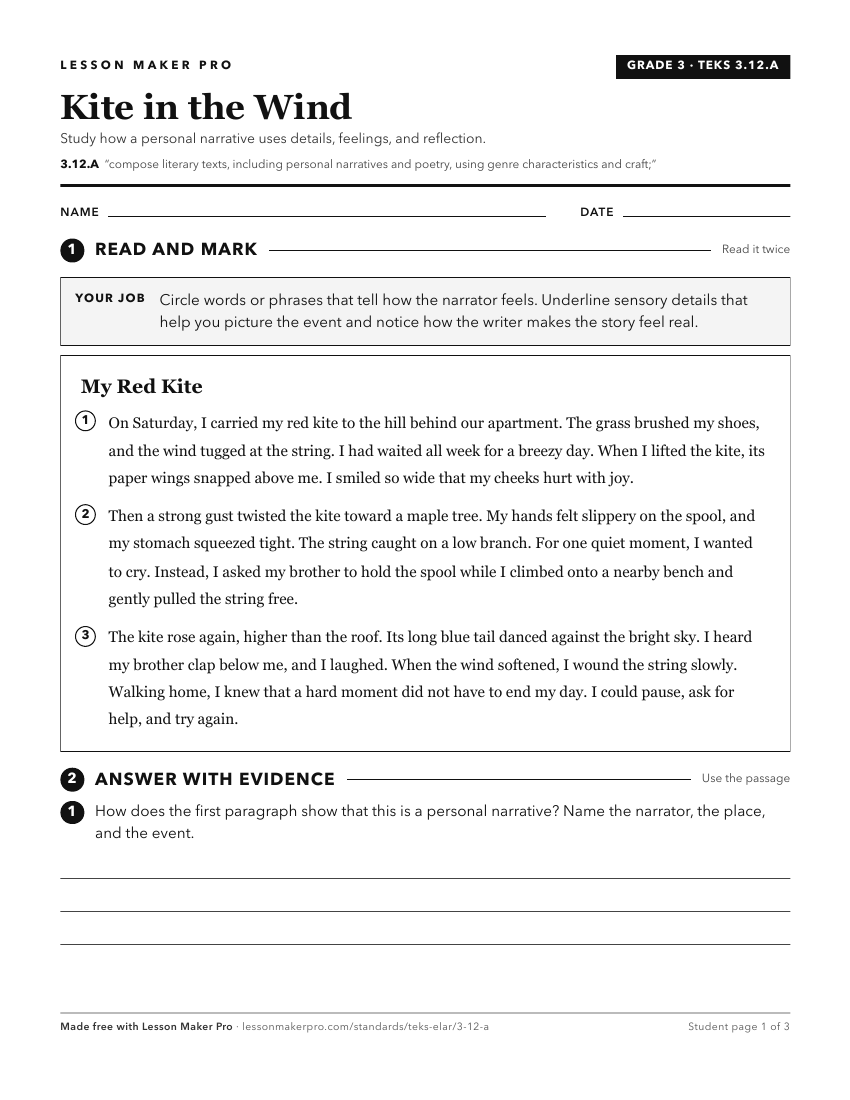
A ready-to-print activity worksheet aligned to 3.12.A, with an answer key for the teacher on its own page. No account needed.
PDF, US Letter, prints cleanly in black and white.
Download the worksheetKeep exploring
Related Standards
- 4.12.A
compose literary texts such as personal narratives and poetry using genre characteristics and craft;
- 8.11.A
compose literary texts such as personal narratives, fiction, and poetry using genre characteristics and craft;
- 6.11.A
compose literary texts such as personal narratives, fiction, and poetry using genre characteristics and craft;
- 5.12.A
compose literary texts such as personal narratives, fiction, and poetry using genre characteristics and craft;
Turn this exact standard into a lesson
Grade, subject, topic, and the complete standard are prefilled. Create one free, no account needed.
Also for this standard:Make a WorksheetMake a QuizMake a Sub Lesson