TEKS ELAR 2.10.D
The Standard
discuss the use of descriptive, literal, and figurative language
Texas Essential Knowledge and Skills for English Language Arts and Reading
Teacher's field guide
What This Standard Means
What Students Need to Do
- Students notice words and phrases that help readers picture people, places, objects, or actions. They tell whether language is exact or imaginative and explain why the author chose it.
What Mastery Looks Like
- Students can point to sensory details, an exact statement, and a comparison in a short passage. They can explain how each choice helps the reader understand or imagine something.
Common Misconceptions
- Students may think every vivid sentence is figurative. They may also read comparisons as facts or label any describing word as figurative.
How to Assess It
- Give students two sentences: “The sun is a star” and “The sun was a golden coin.” Ask which is exact, which creates a comparison, and what picture the comparison creates.
Lesson moves
Ways to Teach It
Give pairs phrase cards to sort into sensory details, exact meanings, and imaginative comparisons, then have them explain two choices.
Read a vivid paragraph and ask, “Which words help you picture the scene, and which phrase means more than its exact words?”
Play Language Detective: teams find one exact statement, one sensory detail, and one comparison in a page from a picture book.
Compare weather report sentences with weather slogans, then discuss how each uses words differently to inform or create a strong picture.
Free download
Printable 2.10.D Worksheet
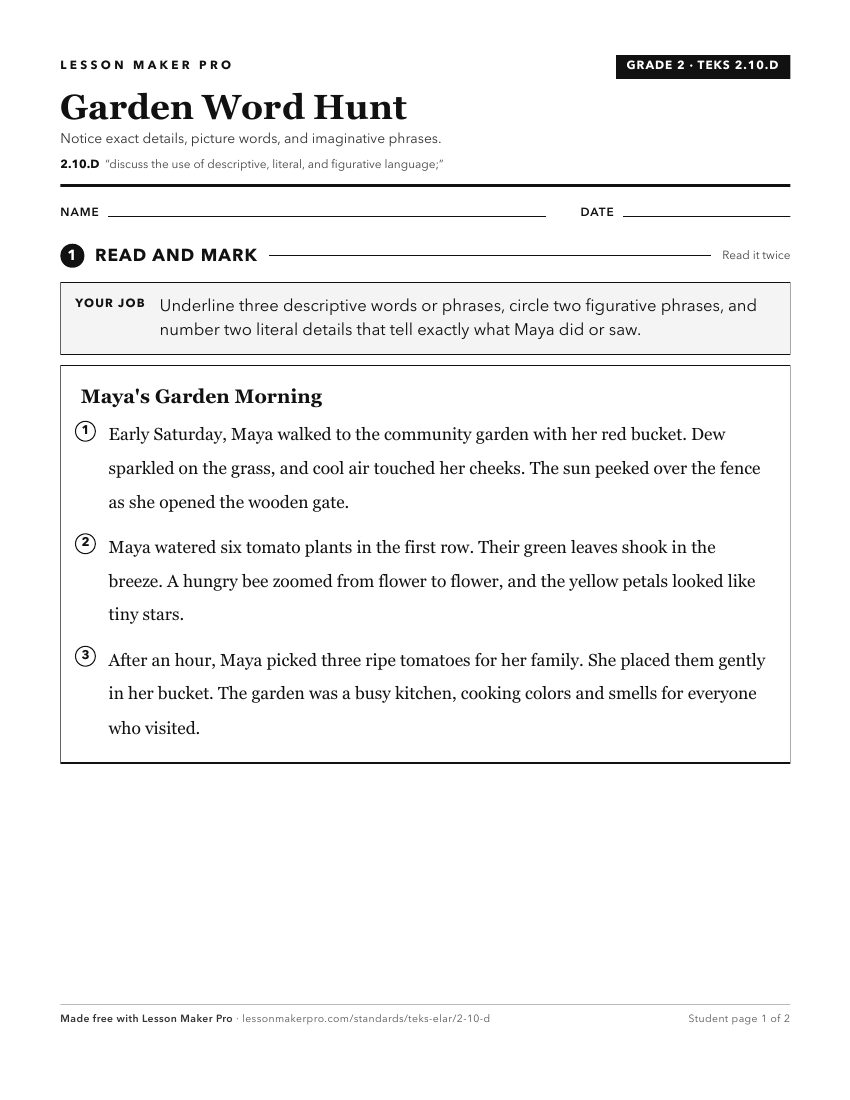
A ready-to-print activity worksheet aligned to 2.10.D, with an answer key for the teacher on its own page. No account needed.
PDF, US Letter, prints cleanly in black and white.
Download the worksheetKeep exploring
Related Standards
- 5.10.D
describe how the author's use of imagery, literal and figurative language such as simile and metaphor, and sound devices achieves specific purposes;
- 4.10.D
describe how the author's use of imagery, literal and figurative language such as simile and metaphor, and sound devices such as alliteration and assonance achi...
- 5.9.B
explain the use of sound devices and figurative language and distinguish between the poet and the speaker in poems across a variety of poetic forms;
- 6.9.D
describe how the author's use of figurative language such as metaphor and personification achieves specific purposes;
Turn this exact standard into a lesson
Grade, subject, topic, and the complete standard are prefilled. Create one free, no account needed.
Also for this standard:Make a WorksheetMake a QuizMake a Sub Lesson