TEKS ELAR 5.9.B
The Standard
explain the use of sound devices and figurative language and distinguish between the poet and the speaker in poems across a variety of poetic forms
Texas Essential Knowledge and Skills for English Language Arts and Reading
Teacher's field guide
What This Standard Means
What Students Need to Do
- Students find sound patterns and figurative comparisons in poems and explain what those choices add to meaning, mood, or rhythm. They also use clues to identify the poem’s speaker as separate from the poet.
What Mastery Looks Like
- Students correctly identify sound devices and figurative language, then explain how each shapes meaning, mood, or rhythm. They describe the speaker using text evidence without treating the speaker as the poet.
Common Misconceptions
- Students often name rhyme, simile, or personification without explaining its effect. They may also assume the poet personally experienced every event or feeling described by the speaker.
How to Assess It
- Give students an eight-line poem. Ask them to mark one sound device, explain one figurative phrase, identify the speaker, and cite evidence for each answer.
Lesson moves
Ways to Teach It
Give pairs poem strips to sort into rhyme, alliteration, repetition, simile, metaphor, personification, and onomatopoeia groups, then defend two choices.
Ask students to write: Who is speaking, what do they reveal, and why should readers avoid assuming the poet shares that identity?
Play Poetry Device Bingo while reading short poems aloud, requiring students to quote the matching word or line before marking a square.
Compare sound and figurative language in a song lyric, greeting card poem, and advertisement, then discuss how each affects its audience.
Free download
Printable 5.9.B Worksheet
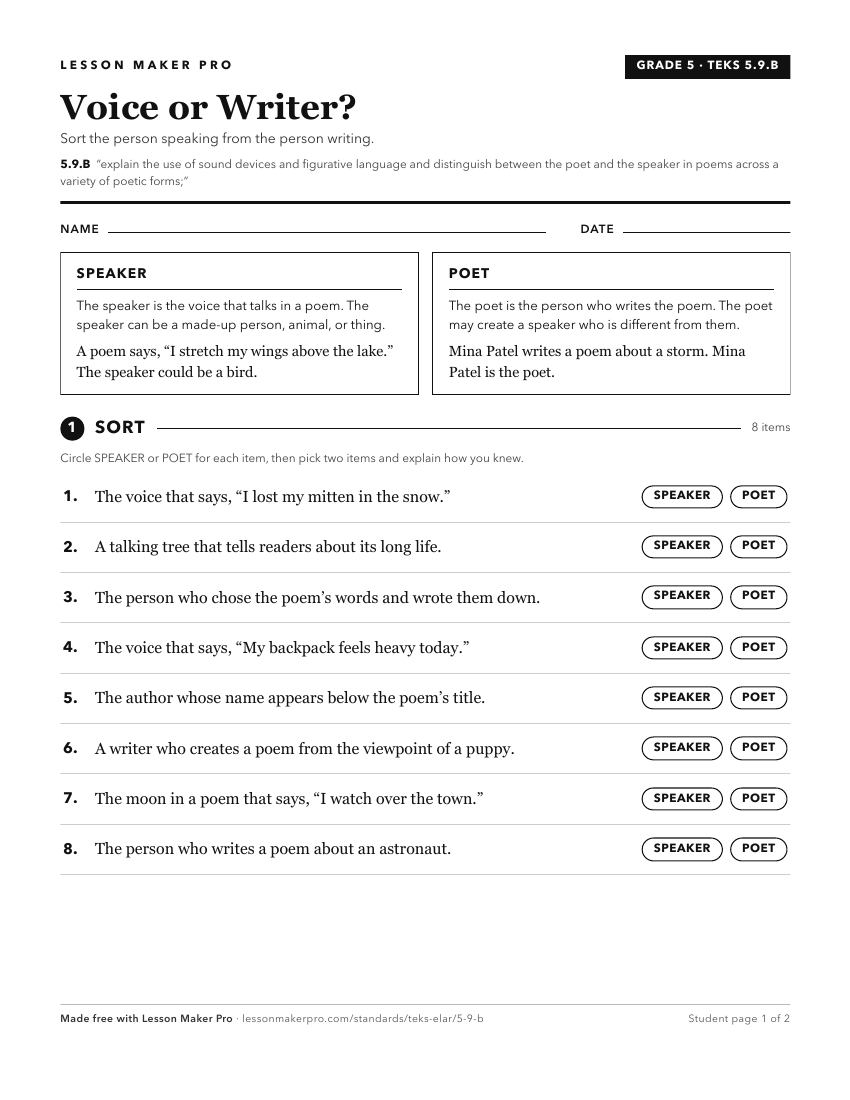
A ready-to-print activity worksheet aligned to 5.9.B, with an answer key for the teacher on its own page. No account needed.
PDF, US Letter, prints cleanly in black and white.
Download the worksheetKeep exploring
Related Standards
- 5.10.D
describe how the author's use of imagery, literal and figurative language such as simile and metaphor, and sound devices achieves specific purposes;
- 4.10.D
describe how the author's use of imagery, literal and figurative language such as simile and metaphor, and sound devices such as alliteration and assonance achi...
- 3.10.D
describe how the author's use of imagery, literal and figurative language such as simile, and sound devices such as onomatopoeia achieves specific purposes;
- 3.9.B
explain rhyme scheme, sound devices, and structural elements such as stanzas in a variety of poems;
Turn this exact standard into a lesson
Grade, subject, topic, and the complete standard are prefilled. Create one free, no account needed.
Also for this standard:Make a WorksheetMake a QuizMake a Sub Lesson