TEKS ELAR 5.10.D
The Standard
describe how the author's use of imagery, literal and figurative language such as simile and metaphor, and sound devices achieves specific purposes
Texas Essential Knowledge and Skills for English Language Arts and Reading
Teacher's field guide
What This Standard Means
What Students Need to Do
- Students find specific word choices and sound patterns in a text. They explain how those choices help the author create a picture, mood, emphasis, or meaning.
What Mastery Looks Like
- Students accurately find literal wording, imagery, comparisons, and sound patterns in a passage. They use text evidence to explain how each choice shapes meaning, mood, emphasis, or the reader's mental picture.
Common Misconceptions
- Students may label a simile or metaphor without explaining its effect. They may also confuse imagery with any description, or assume every repeated sound is meaningful.
How to Assess It
- Give students a short paragraph containing a metaphor and repeated consonant sounds. Ask them to underline both and explain what each helps the reader picture, feel, or notice.
Lesson moves
Ways to Teach It
Give pairs color-coded cards with phrases from a poem, then have them sort the phrases by language type and intended effect.
Ask students to explain which line in a short passage creates the strongest image and why the author chose those words.
Play Purpose Match by pairing quoted phrases with effect cards labeled mood, emphasis, mental picture, sound, or meaning.
Compare language from two food advertisements and identify how sensory details and comparisons make each product sound appealing.
Free download
Printable 5.10.D Worksheet
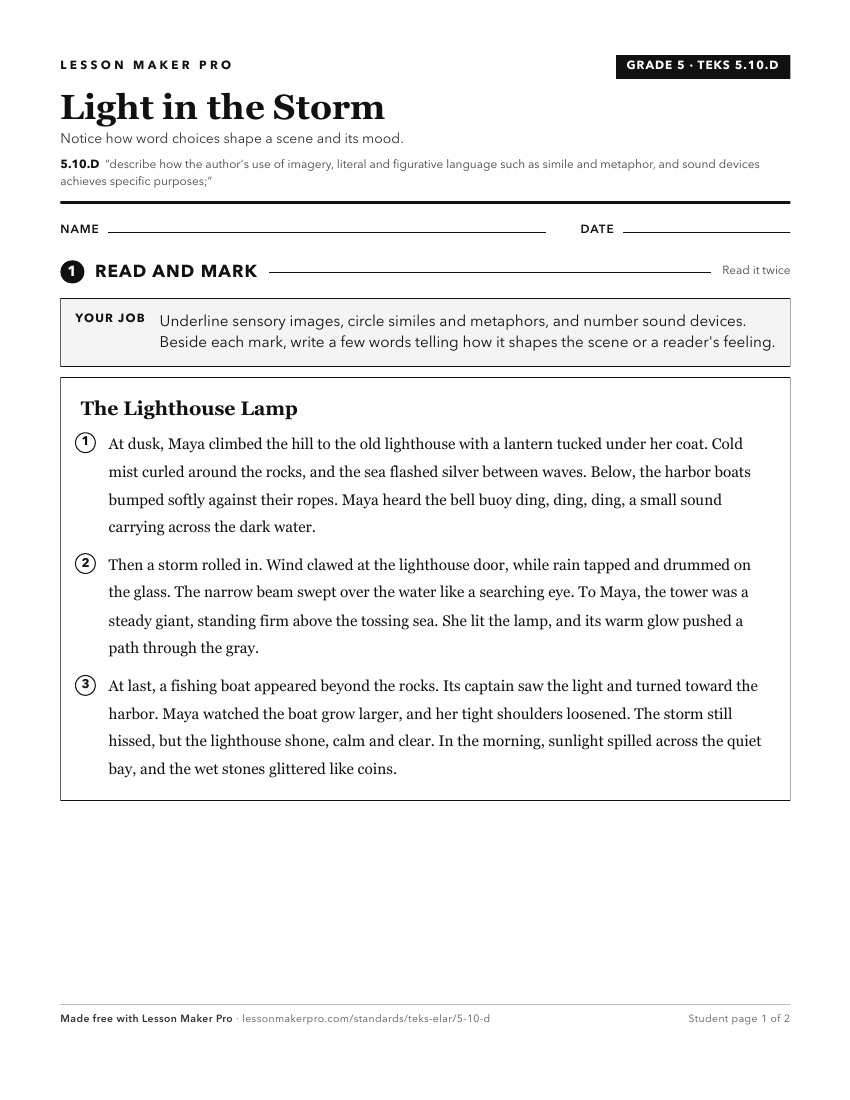
A ready-to-print activity worksheet aligned to 5.10.D, with an answer key for the teacher on its own page. No account needed.
PDF, US Letter, prints cleanly in black and white.
Download the worksheetKeep exploring
Related Standards
- 4.10.D
describe how the author's use of imagery, literal and figurative language such as simile and metaphor, and sound devices such as alliteration and assonance achi...
- 6.9.D
describe how the author's use of figurative language such as metaphor and personification achieves specific purposes;
- 8.9.D
describe how the author's use of figurative language such as extended metaphor achieves specific purposes;
- 3.10.D
describe how the author's use of imagery, literal and figurative language such as simile, and sound devices such as onomatopoeia achieves specific purposes;
Turn this exact standard into a lesson
Grade, subject, topic, and the complete standard are prefilled. Create one free, no account needed.
Also for this standard:Make a WorksheetMake a QuizMake a Sub Lesson