TEKS ELAR 1.2.A.ii
The Standard
recognizing spoken alliteration or groups of words that begin with the same spoken onset or initial sound
Texas Essential Knowledge and Skills for English Language Arts and Reading · The student develops word structure knowledge through phonological awareness, print concepts, phonics, and morphology to communicate, decode, and spell.
Teacher's field guide
What This Standard Means
What Students Need to Do
- Students listen to words and identify which ones start with the same sound. They recognize repeated beginning sounds in short spoken phrases without relying on print.
What Mastery Looks Like
- Given spoken words such as sun, sock, and map, the student selects sun and sock and says /s/. The student also notices repeated beginning sounds in phrases.
Common Misconceptions
- Students may group words by meaning or ending rhyme instead of the beginning sound. They may treat /sh/ as /s/ or miss that cat and kite begin alike.
How to Assess It
- Say, “moon, mouse, sun.” Ask the student to name the two words that begin alike and say their shared sound.
Lesson moves
Ways to Teach It
Place picture cards on a table and have students sort them into hoops labeled with picture clues for beginning sounds.
Read “Silly snakes sip soup,” then ask students which words begin alike and invite them to create another silly phrase.
Play Beginning Sound Bingo by saying words aloud while students cover pictures that start with the target sound.
Take a classroom sound hunt, naming objects aloud and recording pairs such as book and bin that begin alike.
Free download
Printable 1.2.A.ii Worksheet
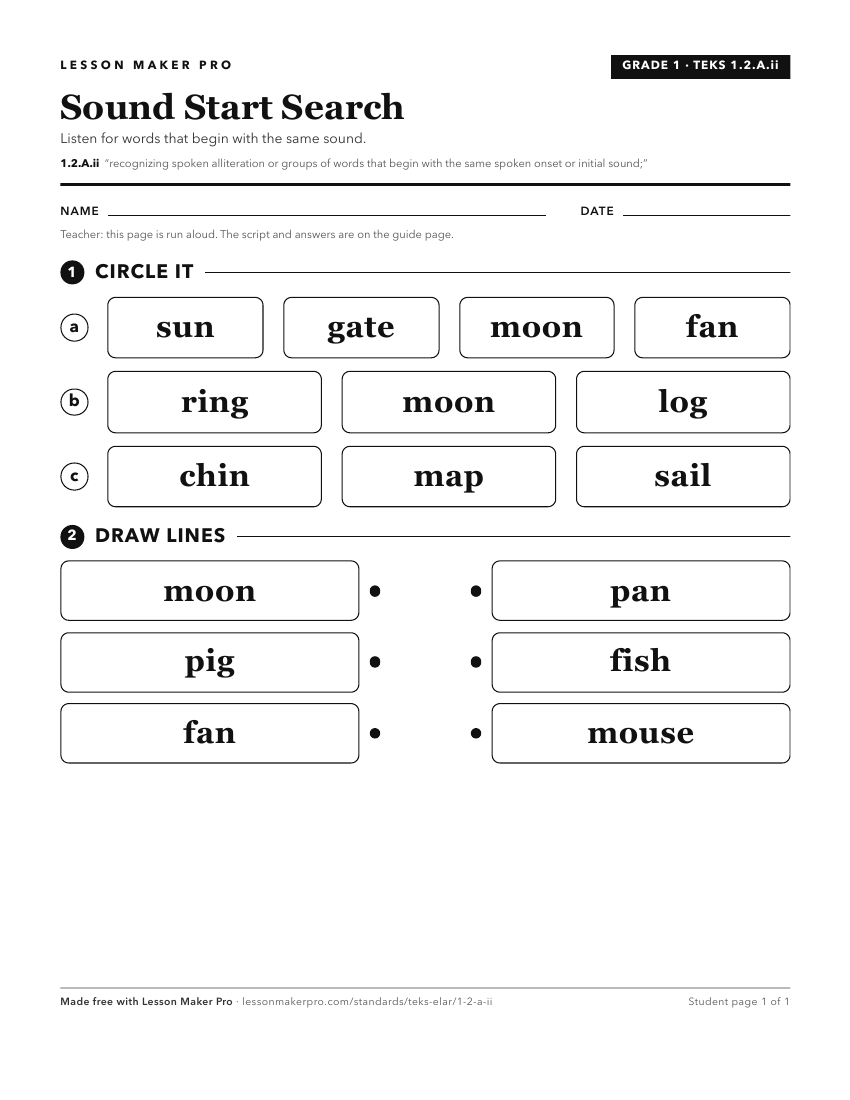
A ready-to-print activity worksheet aligned to 1.2.A.ii, with an answer key for the teacher on its own page. No account needed.
PDF, US Letter, prints cleanly in black and white.
Download the worksheetKeep exploring
Related Standards
- K.2.B.i
identifying and matching the common sounds that letters represent;
- 2.2.A.iii
recognizing the change in spoken word when a specified phoneme is added, changed, or removed; and
- K.2.A.ii
The Kindergarten version of this standard.
- 1.2.A.iv
recognizing the change in spoken word when a specified phoneme is added, changed, or removed;
Turn this exact standard into a lesson
Grade, subject, topic, and the complete standard are prefilled. Create one free, no account needed.
Also for this standard:Make a WorksheetMake a QuizMake a Sub Lesson