TEKS ELAR 1.2.A.i
The Standard
producing a series of rhyming words
Texas Essential Knowledge and Skills for English Language Arts and Reading · The student develops word structure knowledge through phonological awareness, print concepts, phonics, and morphology to communicate, decode, and spell.
Teacher's field guide
What This Standard Means
What Students Need to Do
- Students hear a target word and say several words with the same ending sound. They keep the ending sound while changing the first sound.
What Mastery Looks Like
- Given cat, a student can quickly say hat, mat, and sat without adding words that only share the first sound. The student can repeat the skill with several different target words.
Common Misconceptions
- Students may choose words with the same beginning sound, such as cat and cup. They may give related words, such as dog and bone, instead of listening for matching ending sounds. Some students may not realize that an invented word can still rhyme.
How to Assess It
- Exit ticket: Say “light” and ask each student to give three words that rhyme with it. Accept real or invented words with the correct ending sound.
Lesson moves
Ways to Teach It
Place picture cards in a bag, let students draw one, then build a three-word rhyme chain with counters for each word.
Ask, “What rhymes with sun?” Record responses, then have students explain which ending sounds match.
Play Rhyme Around the Circle, where each student adds a new rhyme and sits down if a word repeats.
Read a short nursery rhyme, pause before the rhyming word, and have students suggest words that fit the sound pattern.
Free download
Printable 1.2.A.i Worksheet
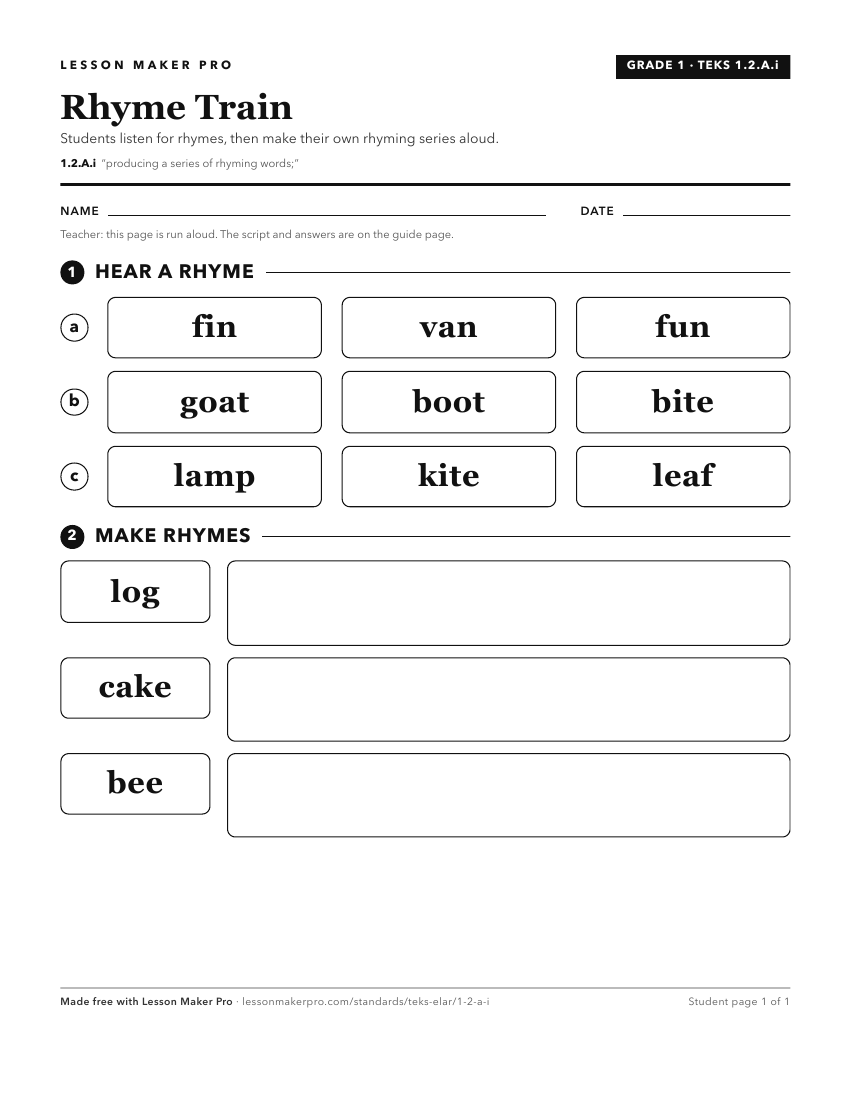
A ready-to-print activity worksheet aligned to 1.2.A.i, with an answer key for the teacher on its own page. No account needed.
PDF, US Letter, prints cleanly in black and white.
Download the worksheetKeep exploring
Related Standards
Turn this exact standard into a lesson
Grade, subject, topic, and the complete standard are prefilled. Create one free, no account needed.
Also for this standard:Make a WorksheetMake a QuizMake a Sub Lesson