TEKS ELAR 1.9.B
The Standard
discuss rhyme, rhythm, repetition, and alliteration in a variety of poems
Texas Essential Knowledge and Skills for English Language Arts and Reading
Teacher's field guide
What This Standard Means
What Students Need to Do
- Students listen to and read poems, then notice how words and sounds repeat. They name the sound pattern and talk about how it shapes the poem.
What Mastery Looks Like
- Students correctly find examples of each sound pattern in a short poem. They use simple evidence, such as naming rhyming words or repeating the matching beginning sounds.
Common Misconceptions
- Students may call any repeated sound a rhyme. They may also confuse rhythm with reading quickly or identify repeated words without noticing repeated beginning sounds.
How to Assess It
- Read a short four-line poem aloud. Ask students to circle one rhyme, underline a repeated word, and explain one sound pattern to a partner.
Lesson moves
Ways to Teach It
Give pairs word cards from a poem to sort into rhymes, repeated words, and matching beginning sounds.
Read two short poems aloud, then ask, "Which sound pattern did you notice, and how did it affect the poem?"
Play Poetry Sound Hunt, where students earn a point for finding and naming a sound pattern in each displayed line.
Examine a playground chant or advertising jingle and identify the sound patterns that make it easy to remember.
Free download
Printable 1.9.B Worksheet
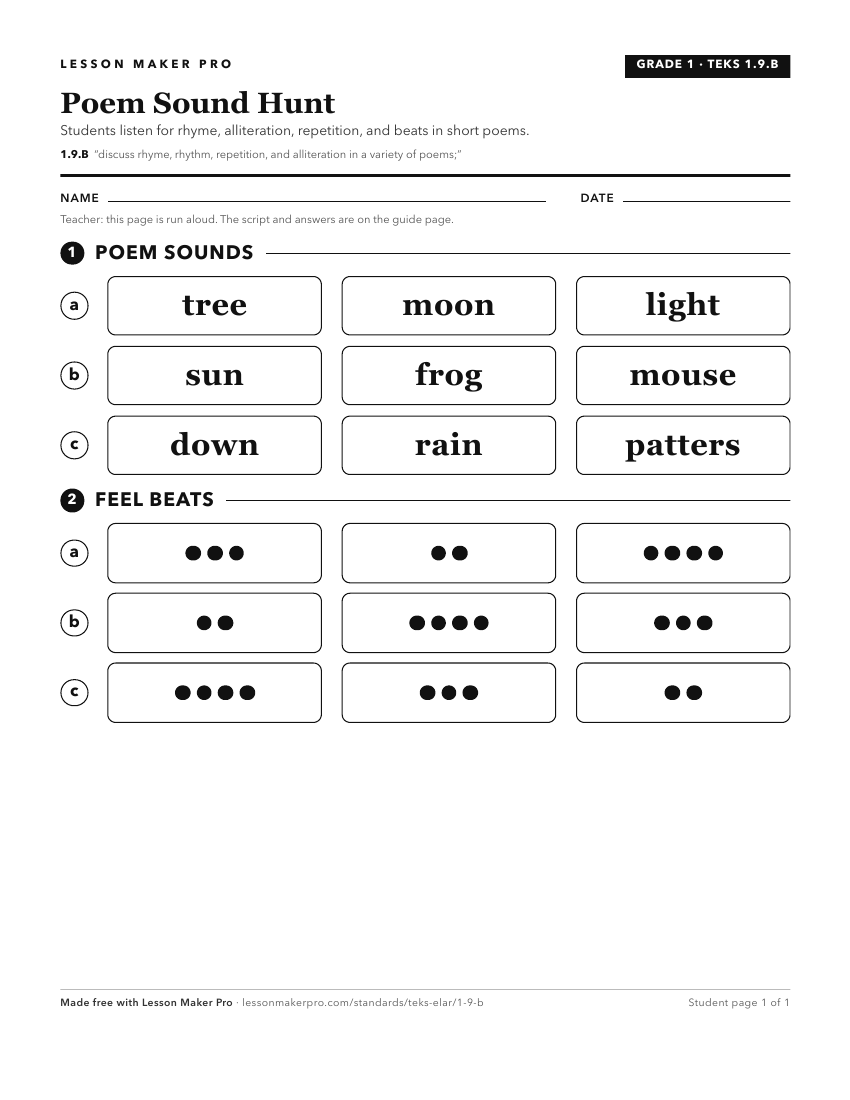
A ready-to-print activity worksheet aligned to 1.9.B, with an answer key for the teacher on its own page. No account needed.
PDF, US Letter, prints cleanly in black and white.
Download the worksheetKeep exploring
Related Standards
- K.8.B
discuss rhyme and rhythm in nursery rhymes and a variety of poems;
- 7.8.B
analyze the effect of rhyme scheme, meter, and graphical elements such as punctuation and capitalization in poems across a variety of poetic forms
- 2.9.B
explain visual patterns and structures in a variety of poems;
- 3.9.B
explain rhyme scheme, sound devices, and structural elements such as stanzas in a variety of poems;
Turn this exact standard into a lesson
Grade, subject, topic, and the complete standard are prefilled. Create one free, no account needed.
Also for this standard:Make a WorksheetMake a QuizMake a Sub Lesson