Oklahoma Social Studies USH.C.2.2.E
The Standard
- USH.C.2
- Analyze the social, economic, and political changes that occurred during the American Industrial Revolution, the Gilded Age, and reform movements.
- USH.C.2.2
- Evaluate the efforts of major reform movements in addressing social issues.
Compare the viewpoints of early civil right leaders, such as Booker T. Washington, W.E.B. DuBois, and Ida B. Wells, in response to rising racial tensions.
Oklahoma Academic Standards for Social Studies (2026) · USH.C.2.2
Teacher's field guide
What This Standard Means
What Students Need to Do
- Students read short excerpts by Washington, Du Bois, and Wells. They identify what each leader urged people to do about racism, then compare their reasons.
What Mastery Looks Like
- A student can explain Washington's focus on job training and economic progress, Du Bois's demand for voting rights, and Wells's anti-lynching reporting. They can point to a phrase in each excerpt that supports their answer.
Common Misconceptions
- Students may think Washington believed economic progress would end racism on its own. They may lump Du Bois and Wells together, missing the difference between his push for voting rights and her investigations of lynching.
How to Assess It
- Exit ticket: “What action did Washington, Du Bois, and Wells each urge? Explain one difference between their approaches.”
Lesson moves
Ways to Teach It
Cut quote strips from Washington's Atlanta speech, Du Bois's The Souls of Black Folk, and Wells's Southern Horrors; students sort them by proposed action.
Ask: “Would job training, voting rights, or public reporting do the most to challenge Jim Crow in 1900? Use two leaders' words.”
Read a short leader quote aloud; pairs hold up Washington, Du Bois, or Wells cards and explain the clue that led to their choice.
Give students a recent news article about a civil rights campaign; have them compare its use of evidence with Wells's reporting.
Free download
Printable USH.C.2.2.E Worksheet
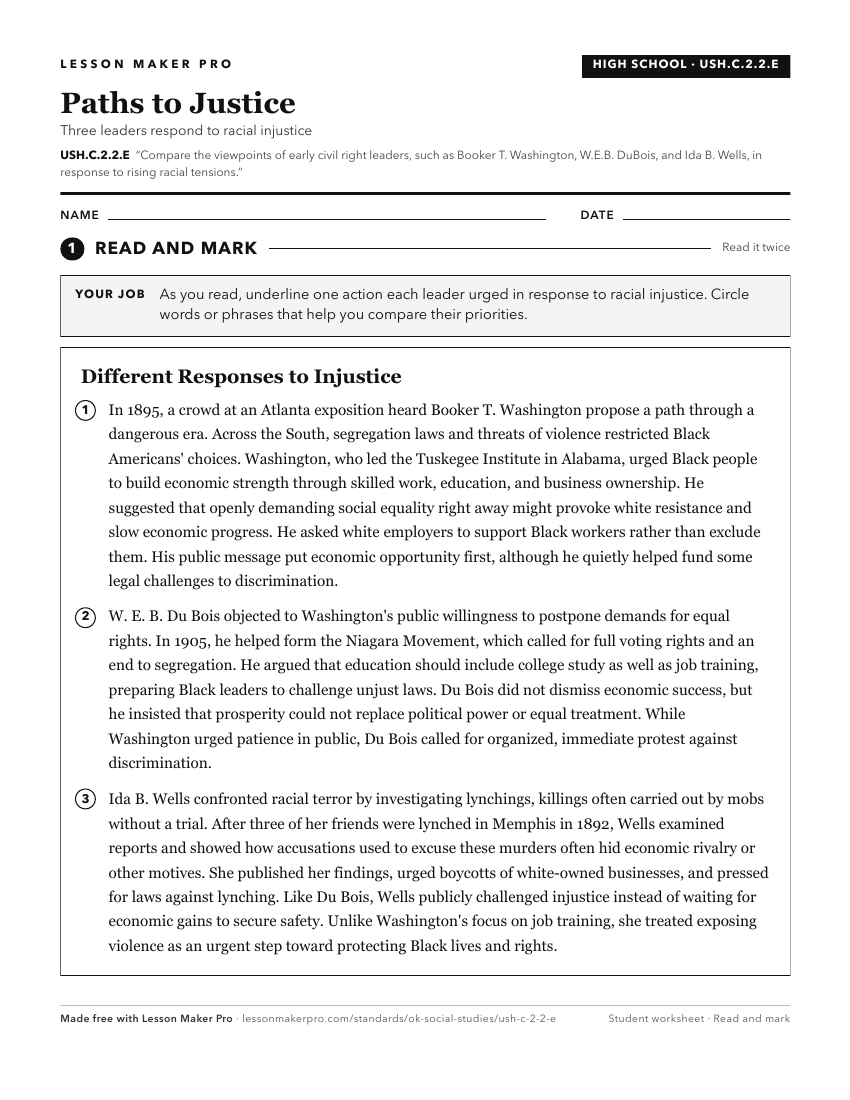
A ready-to-print activity worksheet aligned to USH.C.2.2.E, with an answer key for the teacher on its own page. No account needed.
PDF, US Letter, prints cleanly in black and white.
Download the worksheetKeep exploring
Related Standards
- USH.C.1.2
Analyze the post-Reconstruction civil rights struggles of African Americans.
- USH.C.7.1.E
Compare the viewpoints and influence of civil rights leadership (e.g., Dr. Martin Luther King, Jr. reflected in his I Have a Dream speech, the perspectives of M...
- USH.C.2.2.F
Evaluate the influence of the Niagara Movement and the National Association for the Advancement of Colored People (NAACP) on expanding opportunities for African...
- USH.C.4.1.F
Describe the rising racial tensions in American society, resulting in the resurgence of the Ku Klux Klan, lynchings, violence typified by the Tulsa Race Massacr...
Turn this exact standard into a lesson
Grade, subject, topic, and the complete standard are prefilled. Create one free, no account needed.
Also for this standard:Make a WorksheetMake a QuizMake a Sub Lesson