Oklahoma Social Studies USG.P.4
Standard Cluster
Develop a variety of evidence-based written products designed for multiple purposes. Summarize and paraphrase, integrate evidence, and cite sources to create written products, research projects, and presentations for multiple purposes related to social studies content. Compose informative essays and written products, developing a thesis, citing and incorporating evidence from multiple sources and maintaining an organized, formal structure. Compose argumentative written products, including a precise claim as distinguished from opposing claims, organizing logical reasoning, and providing credible evidence to develop an argument. Engage in authentic research to acquire, refine, and share knowledge through written presentations and products. Develop self-generated theses or claims related to independent research and investigations using credible and relevant sources. Integrate quotes and summaries of research findings into written products while avoiding plagiarism. Construct presentations or products for a designated audience, using research and reasoning to enhance understanding of a topic or issue.
Oklahoma Academic Standards for Social Studies (2026)
Cluster contents
Standards in This Cluster
USG.P.4 is a cluster heading. These are the individual standards under it.
- USG.P.4.1
Summarize and paraphrase, integrate evidence, and cite sources to create written products, research projects, and presentations for multiple purposes related to...
- USG.P.4.1.A
Compose informative essays and written products, developing a thesis, citing and incorporating evidence from multiple sources and maintaining an organized, form...
- USG.P.4.1.B
Compose argumentative written products, including a precise claim as distinguished from opposing claims, organizing logical reasoning, and providing credible ev...
- USG.P.4.2
Engage in authentic research to acquire, refine, and share knowledge through written presentations and products.
- USG.P.4.2.A
Develop self-generated theses or claims related to independent research and investigations using credible and relevant sources.
- USG.P.4.2.B
Integrate quotes and summaries of research findings into written products while avoiding plagiarism.
- USG.P.4.2.C
Construct presentations or products for a designated audience, using research and reasoning to enhance understanding of a topic or issue.
Teacher's field guide
What This Cluster Means
What Students Need to Do
- Students research a social studies question and write for a named audience. They explain a topic or defend a clear claim against another view. They use, paraphrase, and cite reliable sources without copying.
What Mastery Looks Like
- A strong paper has a focused thesis and clear sections. Each main point uses evidence from more than one credible source, with citations for quotes and paraphrases. In an argument, the writer answers a real counterclaim.
Common Misconceptions
- Students may copy sentences, change a few words, and call that a paraphrase. Some cite direct quotes but not paraphrases. Others give an opinion without evidence or mistake a broad topic for a claim.
How to Assess It
- Give students the 26th Amendment and a short article on voting age. Ask for a five-sentence explanation for new voters that states a thesis, paraphrases both sources, and cites each.
Lesson moves
Ways to Teach It
Print the 26th Amendment and two short articles on voting age; have pairs highlight claims, evidence, and source details in different colors.
Ask students to write a 100-word briefing for a new voter explaining why the voting age changed, with one cited paraphrase and one cited quote.
Run a citation relay: teams turn three source notes into paraphrases with citations, then check one another's wording against the originals.
Have students write a letter to a state representative about voting at 16 in local elections, citing two sources and answering one objection.
Free download
Printable USG.P.4 Worksheet
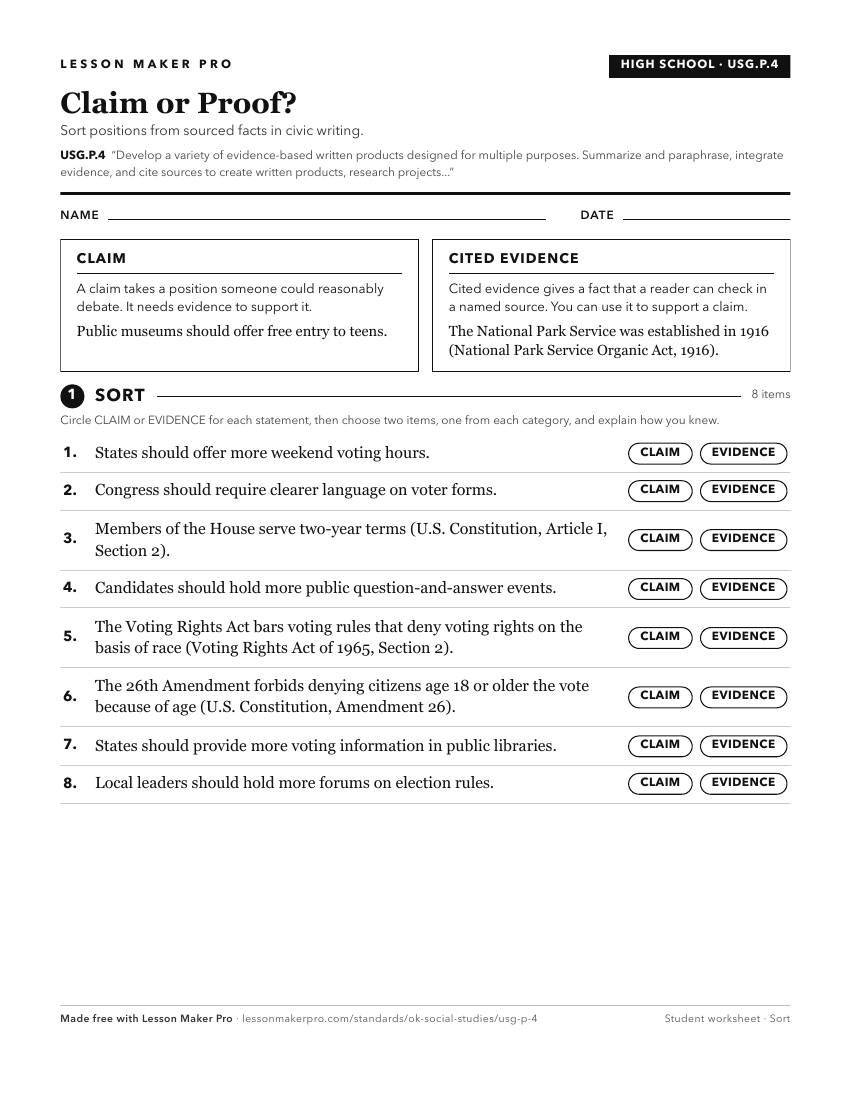
A ready-to-print activity worksheet aligned to USG.P.4, with an answer key for the teacher on its own page. No account needed.
PDF, US Letter, prints cleanly in black and white.
Download the worksheetKeep exploring
Related Standards
- 5.P.4
Develop a variety of evidence-based written products designed for multiple purposes.
- 2.P.4
Develop a variety of evidence-based written products designed for multiple purposes.
- 1.P.4
Develop a variety of evidence-based written products designed for multiple purposes.
- 4.P.4
Develop a variety of evidence-based written products designed for multiple purposes.
Turn this cluster into a lesson
Grade, subject, topic, and the complete cluster are prefilled. Create one free, no account needed.
Also for this cluster:Make a WorksheetMake a QuizMake a Sub Lesson