Oklahoma Social Studies USG.C.7.1
Standard Cluster
- USG.C.7
- Analyze the processes and implementation of public policy in the United States of America.
Explain how domestic policy is developed and implemented. Identify and explain powers that the Constitution of the United States of America grants to the President and Congress to develop and carry out domestic policy. Trace the budget process, including the impact of government shutdowns and risks from the national debt, explaining how economic trade-offs occur when addressing competing public needs. Identify the types and purposes of taxation that are used by local, state, and federal governments to fund public services. Examine how the government can influence the stability and growth of the economy through fiscal and monetary policy.
Oklahoma Academic Standards for Social Studies (2026) · USG.C.7
Cluster contents
Standards in This Cluster
USG.C.7.1 is a cluster heading. These are the individual standards under it.
- USG.C.7.1.A
Identify and explain powers that the Constitution of the United States of America grants to the President and Congress to develop and carry out domestic policy.
- USG.C.7.1.B
Trace the budget process, including the impact of government shutdowns and risks from the national debt, explaining how economic trade-offs occur when addressin...
- USG.C.7.1.C
Identify the types and purposes of taxation that are used by local, state, and federal governments to fund public services.
- USG.C.7.1.D
Examine how the government can influence the stability and growth of the economy through fiscal and monetary policy.
Teacher's field guide
What This Cluster Means
What Students Need to Do
- Students trace how Congress passes and funds a policy, the president signs or vetoes it, and agencies carry it out. They follow budget choices, shutdowns, and debt, and identify taxes that pay for local, state, and federal services. They distinguish tax and spending decisions from Federal Reserve interest-rate decisions.
What Mastery Looks Like
- Given a proposed housing program, a student can name who approves its funding and who carries it out. They can identify a tax that could help pay for it and explain what else might receive less money. They can explain why a shutdown may pause some work, why debt brings future costs, and why a Fed rate change does not fund the program.
Common Misconceptions
- Students may think the president can create and fund a program without Congress. They may think a shutdown stops every government service or confuse the national debt with a single year's deficit. Some assume the Federal Reserve sets taxes, or that only federal taxes pay for public services.
How to Assess It
- Exit ticket: Congress proposes a $2 billion housing program with no new revenue. Name who must approve its funding, who would carry it out, and one federal tax or spending cut that could pay for it; explain whether a Fed rate change could fund it.
Lesson moves
Ways to Teach It
Give groups a $100 federal budget, income-tax revenue cards, and requests for clinics, roads, and schools; require a balanced plan and one cut.
Ask: Should Congress borrow to repair bridges or cut another program, and what future costs could borrowing create?
Sort cards showing a spending bill, presidential veto, agency rule, and Fed rate change by actor, then label each fiscal, monetary, or implementation.
Compare a local property-tax bill, state sales-tax receipt, and pay stub showing federal income-tax withholding; name a service each could fund.
Free download
Printable USG.C.7.1 Worksheet
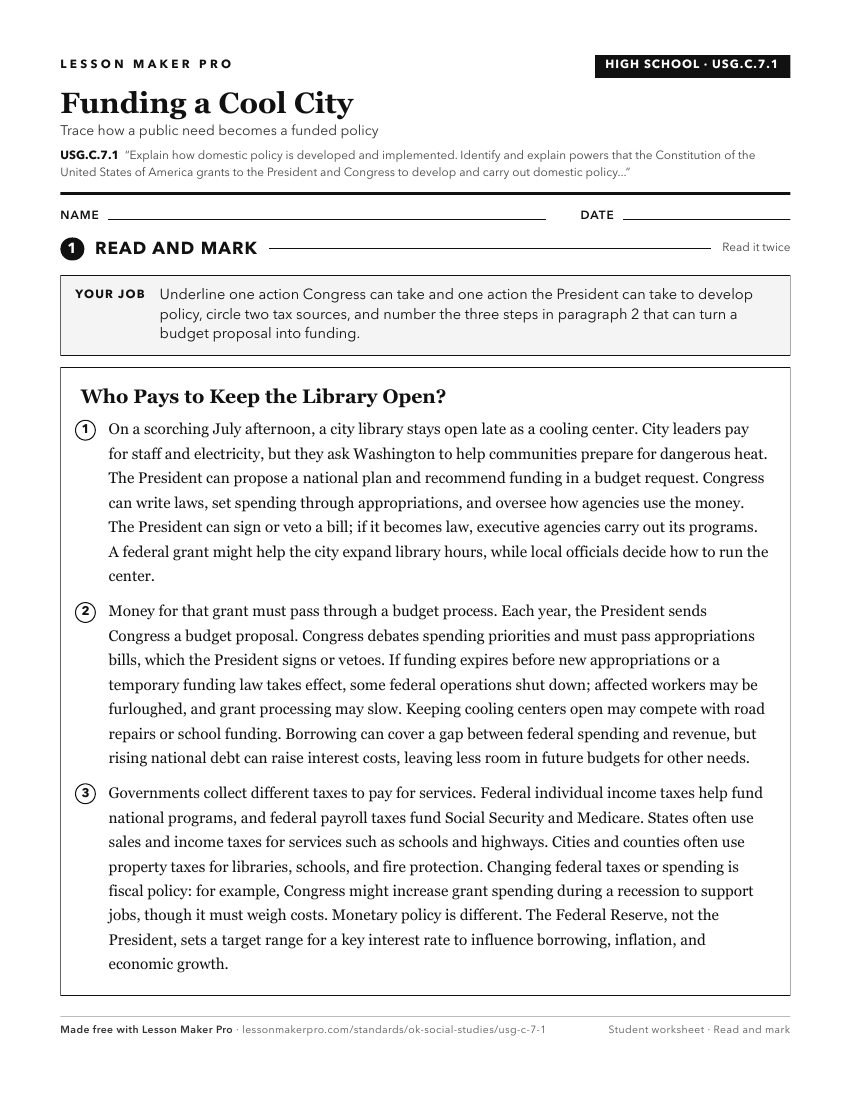
A ready-to-print activity worksheet aligned to USG.C.7.1, with an answer key for the teacher on its own page. No account needed.
PDF, US Letter, prints cleanly in black and white.
Download the worksheetKeep exploring
Related Standards
- USG.C.7
Analyze the processes and implementation of public policy in the United States of America.
- USH.C.7
Analyze the cause and effects of significant domestic events and policies impacting the lives of American citizens.
- USG.C.3.5.A
Explain how local, state, and national governments are involved in cooperatively shaping public policy and responding to public policy issues.
Turn this cluster into a lesson
Grade, subject, topic, and the complete cluster are prefilled. Create one free, no account needed.
Also for this cluster:Make a WorksheetMake a QuizMake a Sub Lesson