Oklahoma Social Studies USG.C.3.6.B
The Standard
- USG.C.3
- Analyze the fundamental principles of the American republic, as established in the Constitution of the United States of America.
- USG.C.3.6
- Analyze the constitutional and legal status of Tribal governments within the federal system.
Describe the trust relationship between the United States of America and Tribal governments, including the federal government’s legal obligations to protect Tribal lands, treaty rights, and resources. Students should understand that this relationship developed through treaties, legislation, and court decisions.
Oklahoma Academic Standards for Social Studies (2026) · USG.C.3.6
Teacher's field guide
What This Standard Means
What Students Need to Do
- Students explain that Tribal nations are governments and that the United States has legal duties to protect Tribal lands, treaty rights, and resources. They trace those duties through treaties, federal laws, and court rulings.
What Mastery Looks Like
- Given a treaty excerpt, a federal law, and a court ruling, a student can identify what each says about federal duties. They can explain how a ruling applies a treaty promise to a dispute over fishing or land.
Common Misconceptions
- Students may think Tribal governments are federal agencies or that the United States owns all Tribal land. Some assume treaty rights expired or that federal protection is a choice rather than a legal duty.
How to Assess It
- Exit ticket: The 1854 Treaty of Medicine Creek protected Tribal fishing at usual and accustomed places, and the 1974 Boldt ruling upheld treaty fishing rights. What federal duty does the treaty create, and why did the ruling matter?
Lesson moves
Ways to Teach It
Print excerpts from the Medicine Creek treaty, the 2016 Indian Trust Asset Reform Act, and the Boldt ruling; pairs highlight federal duties in each.
Ask students to write: Why is a treaty fishing right a legal obligation, not a federal favor? Require one treaty detail.
Have teams match Medicine Creek treaty, trust assets law, and Boldt ruling cards to short fishing rights or resource management scenarios.
Read the Northwest Indian Fisheries Commission's treaty rights page; students name a present-day salmon issue and the treaty right at stake.
Free download
Printable USG.C.3.6.B Worksheet
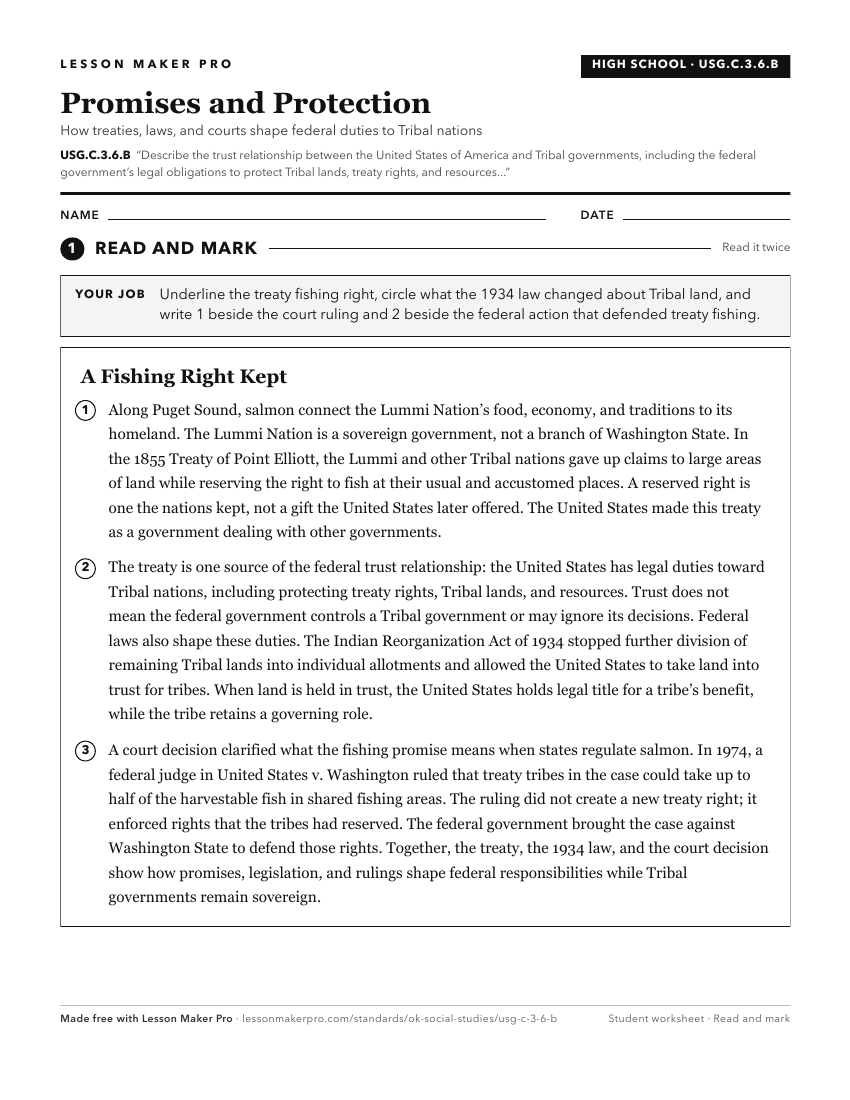
A ready-to-print activity worksheet aligned to USG.C.3.6.B, with an answer key for the teacher on its own page. No account needed.
PDF, US Letter, prints cleanly in black and white.
Download the worksheetKeep exploring
Related Standards
- USG.C.3.6.C
Explain how Tribal governments exercise powers of self-government and participate in federal programs through legislation that allows Tribes to contract or comp...
- 3.C.1.2
Describe how American Indian Tribal governments are also based upon written constitutions and exercise the right to govern themselves (sovereignty) by making la...
- 8.C.4.3.C
Explain that Tribal governments retain powers of internal self-government, including making and enforcing laws, determining citizenship, and managing lands and ...
- USG.C.3.6.D
Examine how Tribal governments enter into agreements with states under federal law, including the role of state constitutions and legislatures in authorizing su...
Turn this exact standard into a lesson
Grade, subject, topic, and the complete standard are prefilled. Create one free, no account needed.
Also for this standard:Make a WorksheetMake a QuizMake a Sub Lesson