Oklahoma Social Studies S.2.1
The Standard
- S.2
- Examine the influence of culture and the way cultural transmission is accomplished.
Describe the components of culture, including norms and values, material and non-material care.
Oklahoma Academic Standards for Social Studies (2026) · S.2
Teacher's field guide
What This Standard Means
What Students Need to Do
- Students identify objects, rules, beliefs, and values that people share in a group. They explain that objects are material culture, while norms, values, and other shared ideas are nonmaterial culture.
What Mastery Looks Like
- A student can name a lunch tray as a material object and waiting in line as a norm. They can explain how that norm might reflect a value such as fairness.
Common Misconceptions
- Students may think culture means only food and holidays. They may treat norms and values as the same thing, or assume a value must be written on a sign to be part of a culture.
How to Assess It
- Exit ticket: Describe one lunchroom norm and a value it might reflect. Name one physical object and one other shared idea found in the lunchroom.
Lesson moves
Ways to Teach It
Give pairs cards labeled tray, waiting in line, fairness, and cafeteria chant; have them sort objects from ideas, then mark norms and values.
Ask students to write two sentences explaining how waiting in a lunch line might show fairness.
Read examples aloud, such as backpack, greeting, and honesty; have teams hold up cards labeled object, norm, value, or other idea.
Examine a posted handwashing sign; identify the physical sign, the rule it states, and the value behind the rule.
Free download
Printable S.2.1 Worksheet
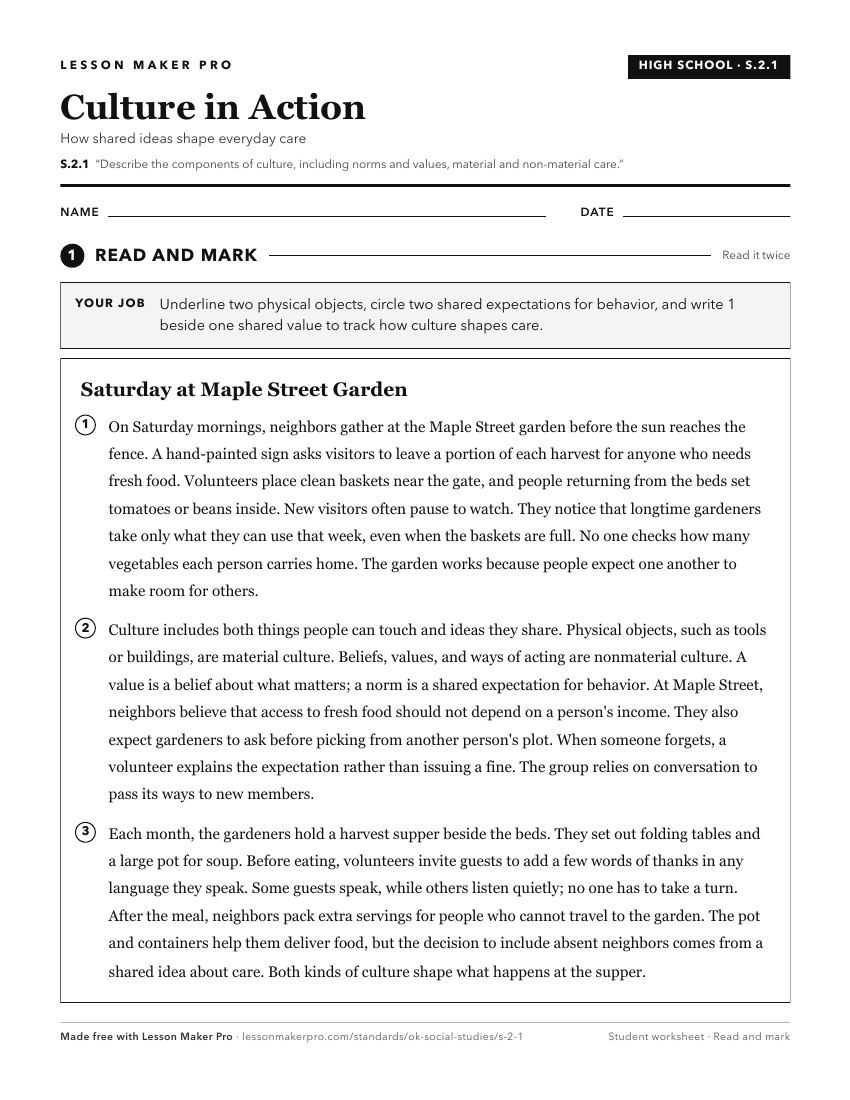
A ready-to-print activity worksheet aligned to S.2.1, with an answer key for the teacher on its own page. No account needed.
PDF, US Letter, prints cleanly in black and white.
Download the worksheetKeep exploring
Related Standards
- 2.C.3.10
Examine cultural traits of families and communities, understanding that while culture makes us unique all cultures share common features (e.g., language, custom...
- 1.C.3.10
Define culture and identify the elements of culture (e.g., language, customs, religion, food, clothing), using examples relevant to student experiences.
- 4.C.2.4.A
Identify the characteristics of culture (e.g., language, customs, religious beliefs, food, clothing, shelter) and compare cultural characteristics of different ...
- 6.C.3.2.B
Explain how culture provides individuals with a sense of identity and how it is transferred from one generation to the next.
Turn this exact standard into a lesson
Grade, subject, topic, and the complete standard are prefilled. Create one free, no account needed.
Also for this standard:Make a WorksheetMake a QuizMake a Sub Lesson