Oklahoma Social Studies PS.2
Standard Cluster
Investigate the structure, biochemistry, and circuitry of the brain and the nervous system to understand their roles in affecting behavior. Identify and describe the major divisions of the nervous system. Identify and describe the structure and function of major brain systems, including the major parts of the brainstem, limbic system and cerebral cortex. Identify the parts of a neuron and explain how the process of neural transmission affects behavior and mental processes. Explain the processes of sensation, including the structures and functions of visual, auditory, kinesthetic/vestibular, and chemical sensory systems.
Oklahoma Academic Standards for Social Studies (2026)
Cluster contents
Standards in This Cluster
PS.2 is a cluster heading. These are the individual standards under it.
- PS.2.1
Identify and describe the major divisions of the nervous system.
- PS.2.2
Identify and describe the structure and function of major brain systems, including the major parts of the brainstem, limbic system and cerebral cortex.
- PS.2.3
Identify the parts of a neuron and explain how the process of neural transmission affects behavior and mental processes.
- PS.2.4
Explain the processes of sensation, including the structures and functions of visual, auditory, kinesthetic/vestibular, and chemical sensory systems.
Teacher's field guide
What This Cluster Means
What Students Need to Do
- Students map the nervous system and explain what the brainstem, limbic system, and cortex do. They trace a signal through a neuron and explain how chemicals pass messages between neurons. They describe how the eyes, ears, body, nose, and tongue turn stimuli into nerve signals.
What Mastery Looks Like
- Given a sudden car horn, students can trace the signal from the ear through nerves to the brain and a response. They can distinguish central from peripheral nerves, label a neuron, and explain how different brain regions help shape the response.
Common Misconceptions
- Students may think electrical signals jump directly between neurons, rather than chemicals carrying messages across the gap. They may treat the inner ear as a hearing organ only and miss its role in balance.
How to Assess It
- Exit ticket: “You hear a car horn and step back. Trace the signal from your ear to a leg muscle, name one brain region involved, and mark where chemicals carry a message.”
Lesson moves
Ways to Teach It
Use clay and string to build two neurons, then place paper neurotransmitters in the gap to show how a message passes between them.
Have pairs write two sentences explaining why brainstem damage might affect breathing while cortex damage might affect speech.
Play a card sort matching nervous system divisions, brain regions, neuron parts, and sensory receptors to their jobs.
Have students trace how a phone alert reaches the ear, is processed by the brain, and prompts them to check the screen.
Free download
Printable PS.2 Worksheet
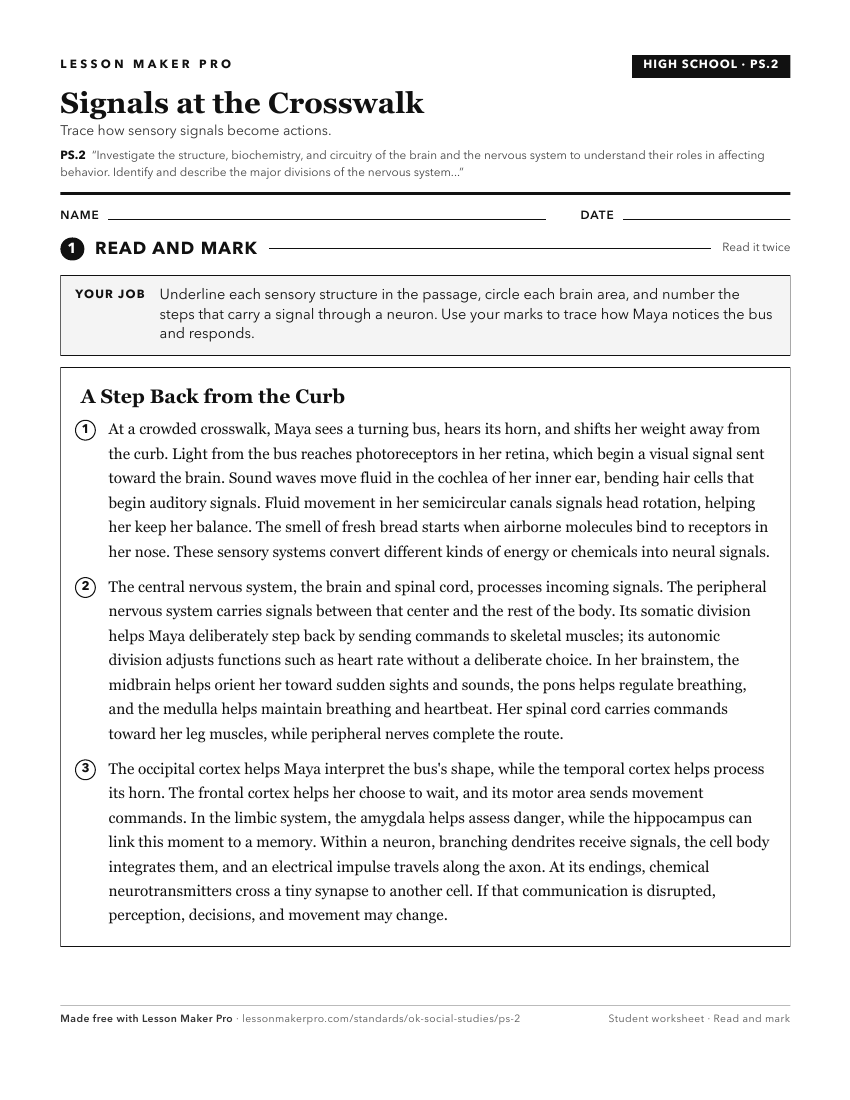
A ready-to-print activity worksheet aligned to PS.2, with an answer key for the teacher on its own page. No account needed.
PDF, US Letter, prints cleanly in black and white.
Download the worksheetKeep exploring
Related Standards
Turn this cluster into a lesson
Grade, subject, topic, and the complete cluster are prefilled. Create one free, no account needed.
Also for this cluster:Make a WorksheetMake a QuizMake a Sub Lesson