Oklahoma Social Studies K.C.3.7
The Standard
- K.C.3
- Identify and examine the basic concepts of physical and human geography.
Describe what makes one’s community alike or different from other communities by comparing family and community customs and traditions.
Oklahoma Academic Standards for Social Studies (2026) · K.C.3
Teacher's field guide
What This Standard Means
What Students Need to Do
- Students describe a family or neighborhood custom from a picture or story. They compare it with a custom from another community and tell what is alike and what is different.
What Mastery Looks Like
- Given two pictures or short stories, a student names one shared practice and one clear difference. They point to details, such as what people do, eat, or celebrate.
Common Misconceptions
- Students may think every family in a community follows the same tradition. They may say two communities are alike because both have people, without comparing what people actually do.
How to Assess It
- Read: 'In Pine Town, families bring soup to a fall fair. In Lake Town, families bring fruit to a spring picnic.' Ask, 'What do the communities do alike? What do they do differently?'
Lesson moves
Ways to Teach It
Give pairs picture cards of Pine Town's fall fair and Lake Town's spring picnic; children sort shared and different details onto a two-circle mat.
Read stories about Friday soup night and Sunday dumplings, then ask, 'How are these family customs alike and different?'
Play Match the Custom: children match picture cards of shared meals from two towns, then name one difference between the meals.
Compare a nearby town's festival flyer with your town's event flyer; children circle shared activities and point out one difference.
Free download
Printable K.C.3.7 Worksheet
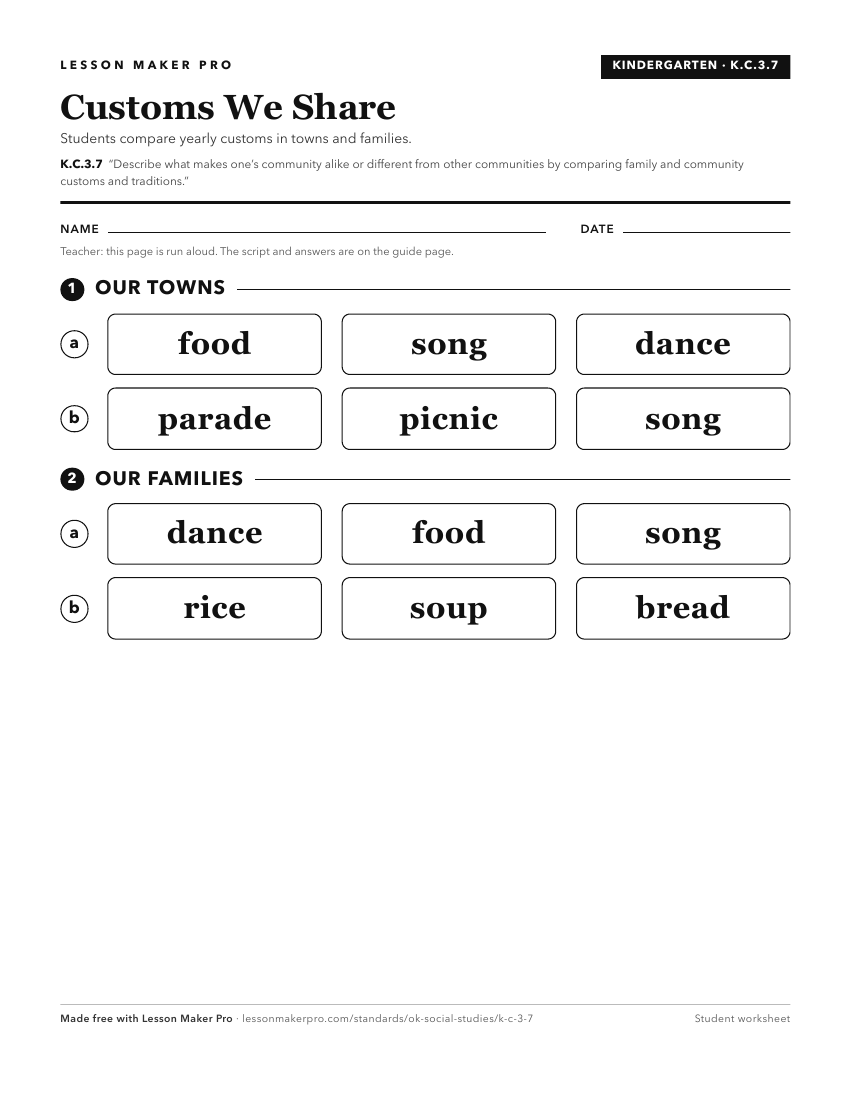
A ready-to-print activity worksheet aligned to K.C.3.7, with an answer key for the teacher on its own page. No account needed.
PDF, US Letter, prints cleanly in black and white.
Download the worksheetKeep exploring
Related Standards
- 1.C.2.4
Compare ways individuals and groups in the local community and region lived in the past with how they live today (e.g., housing, communication, transportation, ...
- 2.C.3.10
Examine cultural traits of families and communities, understanding that while culture makes us unique all cultures share common features (e.g., language, custom...
- 4.C.2.4.A
Identify the characteristics of culture (e.g., language, customs, religious beliefs, food, clothing, shelter) and compare cultural characteristics of different ...
- K.C.4.3
Identify examples of goods used by children, families, and communities (e.g., food, toys, clothing), drawing conclusions about where they come from and how they...
Turn this exact standard into a lesson
Grade, subject, topic, and the complete standard are prefilled. Create one free, no account needed.
Also for this standard:Make a WorksheetMake a QuizMake a Sub Lesson