Oklahoma Social Studies 8.C.2.2
Standard Cluster
- 8.C.2
- Examine key military and diplomatic events of the Revolutionary War that resulted in an independent nation.
Evaluate the motivations and points of view of various populations to remain loyal to Britain, join the patriot cause, or choose neutrality. Explain major arguments supporting the Patriot cause by analyzing the speech, Give Me Liberty or Give Me Death, attributed to Patrick Henry, and Common Sense by Thomas Paine. Compare political, economic, and family interests which influenced Loyalists views. Explain how the preservation of homelands, cultures, and trade affected the stance taken by many American Indians. Describe how the promise of political equality impacted the views of women, by examining the writings of Mercy Otis Warren and Phillis Wheatley. Examine the views of free and enslaved Blacks toward the revolution, including petitions to colonial governments for a ban on slavery and the British recruitment of enslaved Black men in exchange for freedom.
Oklahoma Academic Standards for Social Studies (2026) · 8.C.2
Cluster contents
Standards in This Cluster
8.C.2.2 is a cluster heading. These are the individual standards under it.
- 8.C.2.2.A
Explain major arguments supporting the Patriot cause by analyzing the speech, Give Me Liberty or Give Me Death, attributed to Patrick Henry, and Common Sense by...
- 8.C.2.2.B
Compare political, economic, and family interests which influenced Loyalists views.
- 8.C.2.2.C
Explain how the preservation of homelands, cultures, and trade affected the stance taken by many American Indians.
- 8.C.2.2.D
Describe how the promise of political equality impacted the views of women, by examining the writings of Mercy Otis Warren and Phillis Wheatley.
- 8.C.2.2.E
Examine the views of free and enslaved Blacks toward the revolution, including petitions to colonial governments for a ban on slavery and the British recruitmen...
Teacher's field guide
What This Cluster Means
What Students Need to Do
- Students compare why people supported Britain, backed independence, or stayed neutral. They use sources to connect those choices to rights, land, trade, slavery, and family ties. They explain how a person's circumstances shaped their point of view.
What Mastery Looks Like
- A student can explain Henry's and Paine's arguments for independence using a detail from each text. They can contrast Loyalist concerns with an American Indian nation's concerns about land or trade. They can use Warren, Wheatley, Black petitions, and British freedom offers to explain why liberty meant different things to different people.
Common Misconceptions
- Students may assume every colonist wanted independence, or that neutral people had no stake in the war. They may treat American Indian nations as one group with one position. They may assume Patriot promises of liberty applied equally to women and enslaved people.
How to Assess It
- Exit ticket: A merchant earns his living through British trade. An enslaved man hears a British offer of freedom for joining its forces. Why might they choose different sides, and what might each risk?
Lesson moves
Ways to Teach It
Have pairs sort six motive cards, including trade, family ties, and land, beside possible allegiances; require two possible placements for each.
Read short excerpts from Henry and Paine; ask, 'Which claim might sway a neutral colonist, and which would a Loyalist dispute?'
In teams, match claims to excerpts from Warren, Wheatley, a Black petition, and Dunmore's proclamation; explain each match.
Show a school boundary map; ask how travel, family ties, and costs shape views of a proposed change, then contrast wartime stakes.
Free download
Printable 8.C.2.2 Worksheet
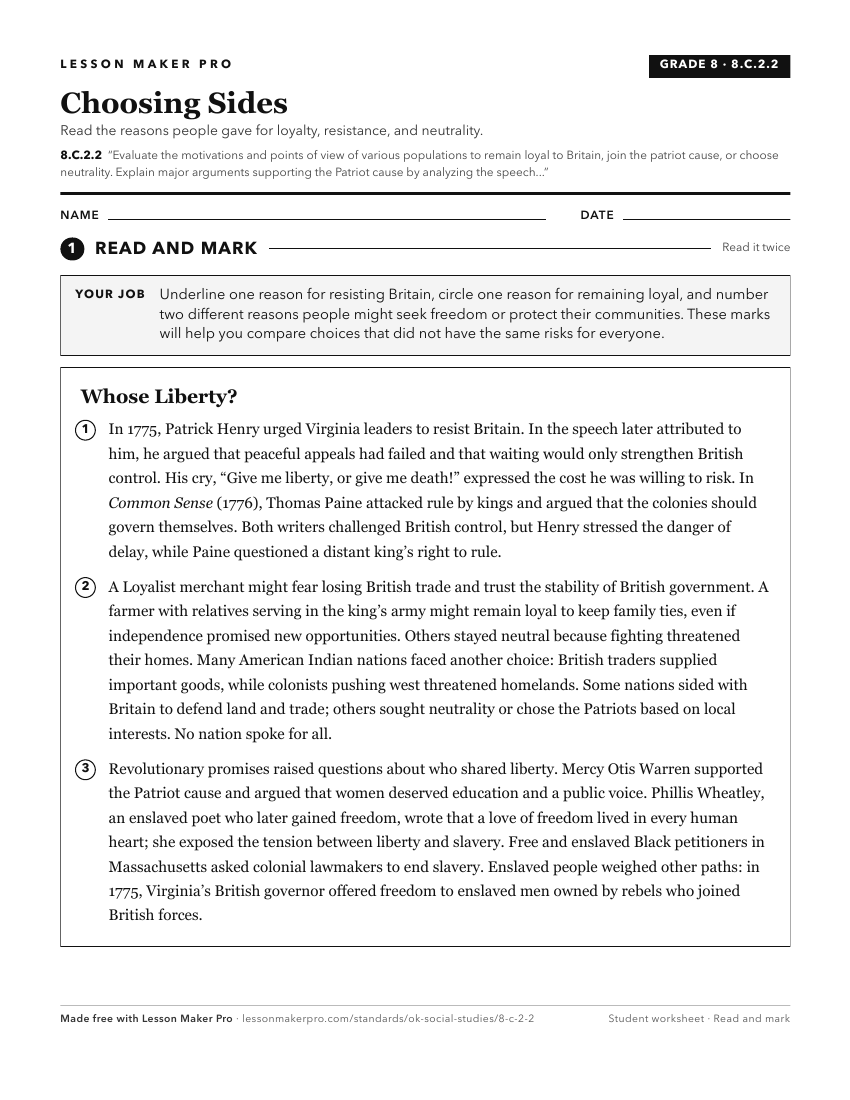
A ready-to-print activity worksheet aligned to 8.C.2.2, with an answer key for the teacher on its own page. No account needed.
PDF, US Letter, prints cleanly in black and white.
Download the worksheetKeep exploring
Related Standards
- 8.C.1.5.E
Evaluate the diverse political, economic, and religious influences that shaped colonial arguments for independence.
- 5.C.4.1
Explain how the colonists were divided toward the growing call for independence by identifying various points of view and motivations, including patriots, loyal...
- 5.C.4.2
Compare the advantages and disadvantages of the British and the American colonies during the Revolutionary War, including military leadership and strength, popu...
Turn this cluster into a lesson
Grade, subject, topic, and the complete cluster are prefilled. Create one free, no account needed.
Also for this cluster:Make a WorksheetMake a QuizMake a Sub Lesson